An EV maintenance schedule here is short. It’s not empty. Coast fog and Delta heat change what you actually watch. You can skip oil and spark plugs. You still owe the tires, the 12-volt battery, the brakes, and how you charge. Confirm every interval in the owner’s manual. No county office publishes an EV mileage chart.
Two climates, two calendars
The Bay Area isn’t one weather file. July at San Francisco International averages a 71.5°F high. That’s the 1961-1990 NWS normal via WRCC. Oakland Airport’s July normal high is 70.4°F. Livermore’s July normal high is 89.7°F. Antioch sits at 90.4°F, and Gilroy at 88.3°F. San Jose is about 82°F on that same vintage. September in San Francisco averages 73.1°F. That’s often warmer than July on the coast. The inland heat gap is real and large. A count of 100°F days was not verified. Concord and Brentwood normals weren’t resolved in that pass.
A car that sleeps in Pacifica lives in marine air. A car that sleeps in Antioch lives in Delta heat. Half Moon Bay and El Granada sit on the Coastside. Livermore and Pleasanton sit in the Tri-Valley. Same badge on the hatch. Different work for the thermal system. Write your habits around where you park overnight, not around a national brochure.
Housing stock splits the charging story too. Census ACS 2019-2023 table B25034 puts San Francisco at 77.2% pre-1980. Daly City is 78.7%, and Pacifica is 81.1%. San Bruno is 81.9%. Berkeley is 80.8%, and Oakland is 77.9%. Brentwood is only 10.9% pre-1980. Dublin is 21.0%, and San Ramon is 23.8%. Researchers use those older buckets as a proxy for panel-limited homes. That’s a proxy, not a map of your garage. Confirm what your panel can feed with a licensed electrician. Charge Pro SF doesn’t run electrical work.
What you can drop from a gas-car list
There’s no engine oil, and no oil filter. Spark plugs aren’t on the car. There’s no fuel filter and no timing belt. Many EVs use a single-speed drive unit. If that unit takes fluid, the interval is long and model-specific. Don’t guess a mileage for a flush. Read the booklet that came with the car.
Motors are usually sealed for life. They don’t get a short-interval personality. Some makers still want a drive-unit inspection at high mileage. That’s a shop job with the right fluid spec. It isn’t a parking-lot topping you do with a funnel.
What remains is a shorter list. It still strands people on I-80 and US-101. The high-voltage pack holds the range, and the small 12-volt battery wakes every computer. Tires take instant torque, and brake fluid still drinks moisture. Coolant still loops around the pack and inverters. The charge port still has to latch. Cabin air still clogs, and wipers still smear. Alignment still drifts after a nasty freeway seam.
The 12-volt battery comes first
The traction pack can show a healthy percentage. The car can still refuse to wake. The 12-volt battery feeds locks, lights, and the computer that closes the high-voltage contactors. When that little battery is done, the expensive pack sits unused.
Owners skip this item because the car is electric. It’s the item that looks like a total failure. Tesla still has a 12-volt path. So do Rivian, Ford, Hyundai, Chevy, and the other major brands. Chemistry changes by year. Some cars use a small lithium 12-volt pack. Some still use lead-acid. A single replace-by year for the whole metro isn’t something we can confirm. Have it load-tested when the car is already in a bay. Replace it when the manual or the test says so.
Symptoms are easy to miss. Watch for slow windows and a key that only works up close. A screen may boot, then die. The car may not unlock after a week away. SFO’s parking EV page exists on flysfo.com. It couldn’t be verified in this research pass. Confirm current lot rules on that site. No airport page we could read publishes a sitting-car 12-volt briefing. That’s on you and the shop.
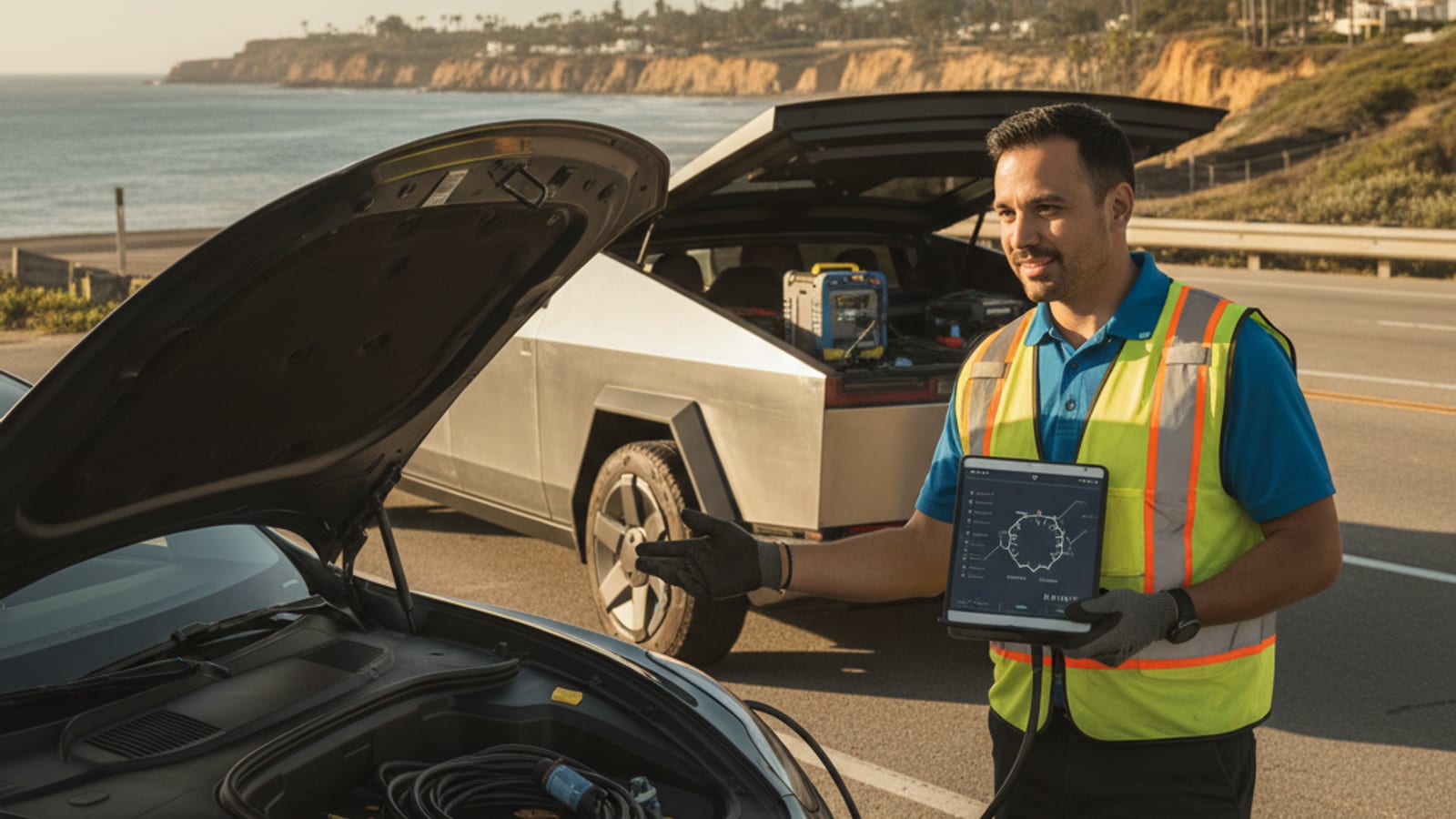
If the car already won’t wake, the calendar didn’t help. The operators we match can jump or replace a dead 12-volt battery on site. They handle Tesla and every major EV brand. They quote before they start, and they bill you directly. Charge Pro SF doesn’t employ technicians and doesn’t own the truck. For the warning signs, read EV 12V battery replacement signs. For model notes, use EV maintenance by brand: Tesla, Rivian, Ford, Hyundai, Chevy.
Tires, brakes, and the roads you drive
EVs are heavy, and torque is immediate. Factory tires often chase low rolling resistance. That mix wears rubber in a pattern a gas car doesn’t always copy. Rotation still sits on a short interval in most manuals. So does a cold pressure check. So does an alignment check after you hammer a plate.
We’re not going to invent a mile number and print it as law. Look at the door placard and the service booklet. Then rotate on that cadence. Coastside cars pick up wet film on SR-1 through Pacifica and Half Moon Bay. Inland cars cook on summer pavement in Livermore, Gilroy, and Antioch. Both wear tires, just not the same way. Inside-edge wear is an alignment clue. Don’t keep driving on it.
Regenerative braking spares pads. It doesn’t spare calipers. Pins still corrode, and fluid still takes on water. Many makers still want brake fluid changed on a year-based schedule. Confirm your model before you skip it. When the wheels are off for rotation, have someone look at pads, rotors, hoses, and slide pins.
Suspension bushings take the pack’s weight. Have them inspected when the car is on a lift. That’s especially true if you climb I-680 or I-580 every weekday. We don’t have a published grade table to quote for those corridors. You already know the hills. The bushings know them too.
Pack care when July is 71 or 90
The high-voltage battery is the part you don’t want to replace early. Daily charge limits live in the car’s software. They also live on the maker’s support pages. Tesla publishes daily-limit guidance on its support site. Confirm the current wording for your VIN and software version. Sitting at 100% every night isn’t a flex. Sitting at empty isn’t smart either.
Thermal systems work harder inland. Livermore, Antioch, and Gilroy July normals sit far above the coast. Park in shade when you can. Precondition the cabin while you’re still plugged in. That cuts the pack’s cooling job when you pull away. It’s a habit, not a shop coupon. We couldn’t confirm a public percentage for heat-related range loss. Don’t treat a round number on a forum as a lab result. Watch the car’s own estimate on I-580 toward Livermore. Watch it again on SR-4 toward Pittsburg and the Delta.
Over-the-air updates change how the battery is managed. Install them when the car is parked. Plug in first if the maker asks for that. Skipping updates is skipping maintenance you already paid for.
Coolant around the pack isn’t windshield washer fluid. Some loops are billed as long-life. Some have a drain interval. Neither is a city ordinance. Your booklet is the source. For East Contra Costa heat in particular, read how Antioch heat changes the way you care for an EV battery.
Cabin air, wipers, and the charge port
Cabin filters clog in fog and they clog in dust. Swap yours on the printed interval. Do it sooner if the HVAC smells tired. Coast air doesn’t cancel inland pollen on a weekend trip to Gilroy.
Marine air smears wiper blades here. Summer glare on US-101 does too. Replace blades when they chatter. There’s no award for stretching them.
The charge port is the inlet. Look for debris, moisture, and a door that won’t sit flush. Seat the connector until it latches. If you see standing water in the port, don’t plug in yet. Follow the maker’s wet-inlet steps, then try again. If a cable won’t release, don’t rip it out. Walk through what to try when your EV charging cable won’t come out.
Washer fluid still matters. A/C refrigerant still matters. Service both like any late-model car. They’re not EV mysteries.
Home charging is part of the schedule
How you charge is maintenance. It’s just quieter than an oil sticker on the door.
PG&E delivers power in most of the metro. It publishes residential EV rate names. Those names are Home Charging EV2-A, Electric Vehicle EV-B, and Electric Home E-ELEC. Confirm hours and price on pge.com before you set a timer. We don’t quote a tariff. Peninsula Clean Energy is the generation provider across San Mateo County. That includes Daly City, Pacifica, Half Moon Bay, and Redwood City. Silicon Valley Clean Energy covers much of Santa Clara County outside San Jose. San Jose Clean Energy covers San Jose. Ava Community Energy covers most Alameda County cities. It doesn’t cover the City of Alameda. MCE covers many Contra Costa members, including Richmond, Concord, Walnut Creek, and Pittsburg. Antioch and Brentwood were not on the MCE member list we checked. Treat that last point as medium confidence. Santa Clara is Silicon Valley Power. Palo Alto is City of Palo Alto Utilities. Alameda is Alameda Municipal Power.
Those names are local grounding. They aren’t a bill we can set. A slower overnight charge at home is often gentler than a rushed DC session. That’s general pack care. Your utility’s current page is the authority on cost. Don’t take a dollar figure from an article.
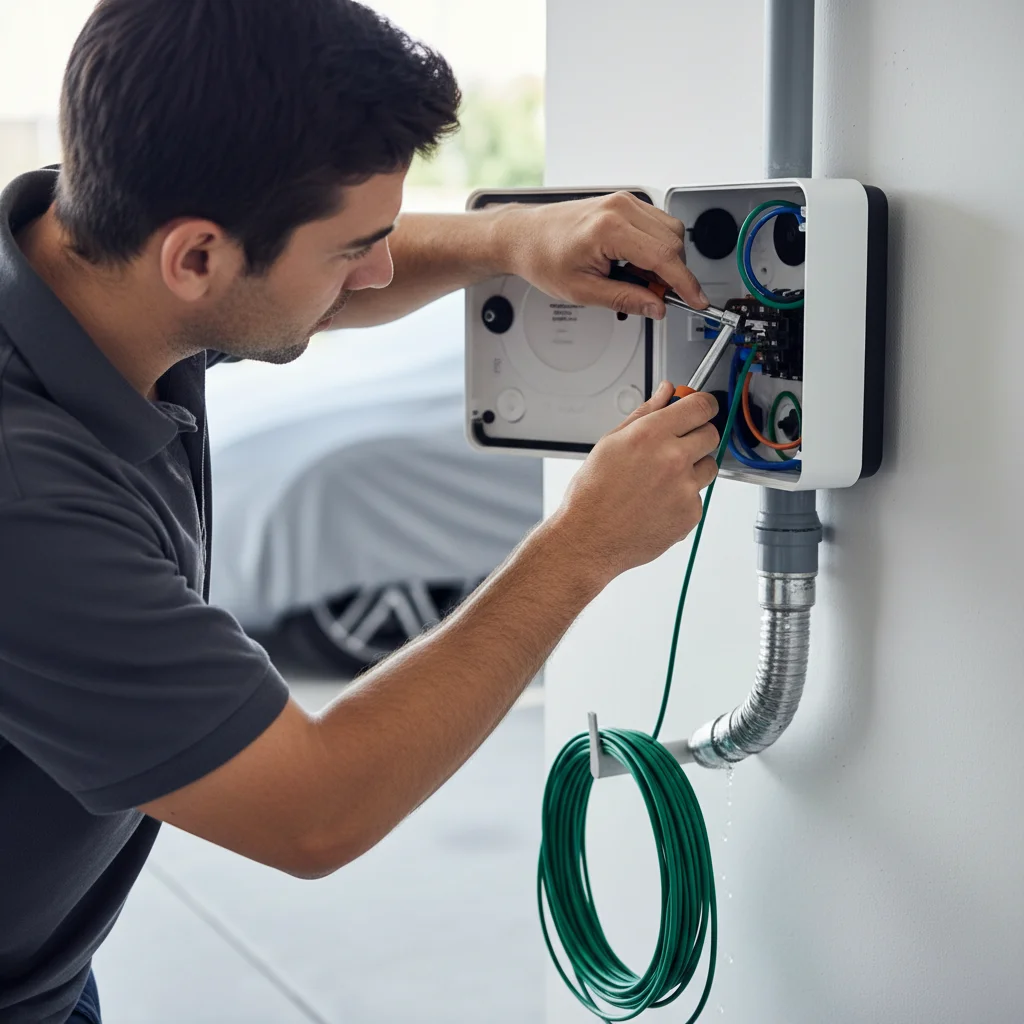
Older buildings in San Francisco, Berkeley, and Daly City can mean a shared garage. They can also mean a tempting extension cord. Don’t cheap out on that cord. Use listed equipment. Have a licensed electrician sign off on the outlet. Charge Pro SF is a referral line for stranded drivers. We don’t install wall chargers. We don’t hold a contractor license.
A working calendar, then the manual
Use this as a prompt, not a statute. Your glovebox book still wins.
Short interval, often with a rotation
Rotate and inspect the tires, and check pressures cold. Look at brake hardware while the wheels are off. Glance at coolant reservoirs and the brake-fluid level. Swap the cabin filter if it’s due, and check the wipers. Open the charge-port door and look inside. None of this needs an engine hoist.
Year-scale interval
Ask for a 12-volt load test, and replace key-fob cells if range got short. Confirm whether your model wants brake fluid on a year cadence. Inspect control-arm bushings and ball joints, because heavy cars hide that wear. Ask whether the maker wants a drive-unit fluid look at this mileage.
Long interval
High-voltage state of health is a diagnostic, not a driveway ritual. Traction-battery warranties are published by each manufacturer. Confirm years and miles on the maker’s site for your VIN. Don’t copy a round number from an article. Some drive units call for fluid at high mileage. Some coolant loops call for a drain and fill. The booklet still wins those calls.
Tesla posts model notes at tesla.com/support. Rivian, Ford, Hyundai, GM, and the others post theirs. Follow the badge on your hatch. A Peninsula car and a Delta car still share that document. Climate changes how often you’ll feel the effects. It doesn’t rewrite the OEM page.
When the calendar didn’t prevent a stall
A clean maintenance file doesn’t fill an empty pack. California Vehicle Code 21718 generally bars stopping on a freeway. It has a disabled-vehicle exception when another vehicle has been summoned to assist. CVC 22651(f) allows removal after more than four hours on a full-access-control freeway if the car can’t move under its own power. Those sections were verified at leginfo.legislature.ca.gov on 2026-09-18.
The Freeway Service Patrol is a partnership of MTC, CHP, and Caltrans. Hours on 511.org are Monday to Friday, 6 to 10 AM and 3 to 7 PM. Dial 511 and say “Freeway Assist.” The MTC FSP page lists a free gallon of gas, jump-starts, and radiator refills. It doesn’t mention charging an out-of-charge EV. We couldn’t confirm an EV fill on that program. If the traction pack is empty, don’t wait on a beat truck that may only carry gas and jumper cables. If the 12-volt is dead, a jump is the kind of help FSP does list. Confirm with 511. Beat and truck counts aren’t published.
Outside those hours, the CHP Rotation Tow Program assigns the wrecker. You don’t pick the company. Caltrans District 4 covers the nine Bay Area counties on QuickMap. 511 SF Bay is the regional traveler line.
If the 12-volt failed, a jump or a replacement may be enough. If the traction pack is empty, you need energy in the car. The operators we connect you with bring a 240-volt Level 2 source. They use a native NACS plug, plus CCS or J1772 adapters for non-Tesla EVs. They typically add 10 to 20 miles of range in 15 to 30 minutes of charging. That’s charging time. It isn’t an arrival time. The operator quotes before work starts. The operator bills you directly. Charge Pro SF doesn’t own equipment and doesn’t set the price.
For an empty pack, start with mobile EV charging. For a dark Tesla that still shows miles on the app, start with a Tesla 12V battery jump. Coastside weather is its own problem set. See EV roadside help in Half Moon Bay.
If you’re already stuck, call (415) 630-6268. We’ll match you with a local operator. There’s no published arrival window. There’s no promise the first truck is nearby.