An Ioniq 5 charging time depends entirely on the charger you have in front of you. A DC fast post can take a low pack to 80 percent in roughly 18 minutes when conditions cooperate. A Level 2 outlet at home or at a roadside operator will add 10 to 20 miles of range in 15 to 30 minutes of charging time, and that is the figure that matters when you are already low. A Level 1 outlet on a 120V garage circuit adds only a few miles per hour and is a maintenance top-up, not a rescue.
The Bay Area context changes the calculus. Most homes in San Francisco, Oakland, Berkeley, and Daly City park on the street or in a small lot. Apartment dwellers do not always have a Level 2 outlet at home. They live on public DC fast charging and on the question of whether the next post is full, broken, or 30 miles away on US-101.
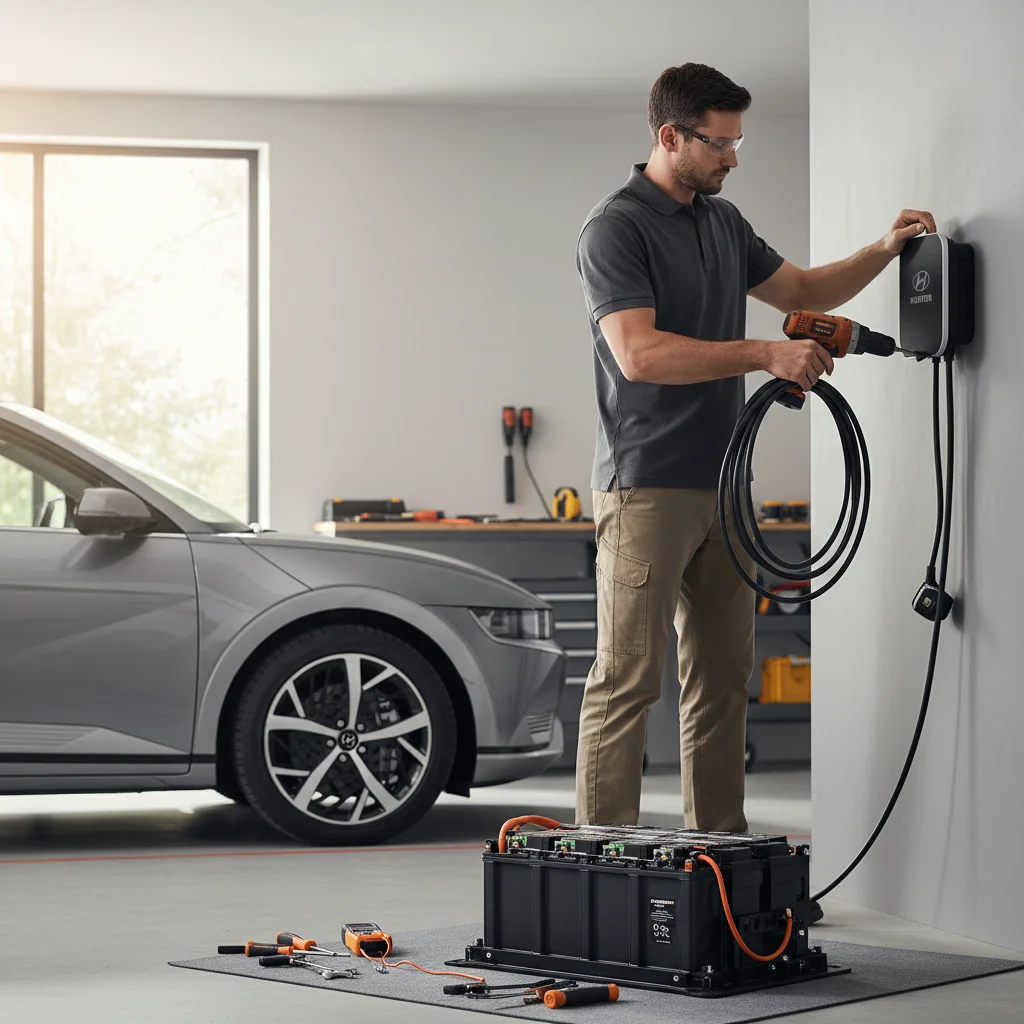
What each charger level does to an Ioniq 5
Level 1 is a standard 120V household outlet. The Ioniq 5 accepts about 1 kW through its portable charger brick. That is roughly 3 to 5 miles of range per hour. Fine for an apartment dweller who plugs in for a couple of days and just needs a maintenance top-up. Not a useful number when the pack is already low.
Level 2 is a 240V outlet. The Ioniq 5 takes up to about 10.9 kW on Level 2 AC charging, which works out to roughly 35 to 40 miles of range per hour at peak. A home Level 2 charger can refill a Long Range pack overnight. A roadside operator running a 240V Level 2 source can add 10 to 20 miles in 15 to 30 minutes of charging time because the goal is different. The operator is not filling the pack. The operator is putting enough range in the pack to reach a working DC fast charger, a home charger, or a garage outlet. That is the figure that matters when you are already low.
DC fast charging is the 800-volt architecture advantage. The Ioniq 5 takes a peak of about 239 kW at a compatible DC fast post. That is the figure Hyundai and the spec sheets quote. Real sessions land lower because the post, the weather, and the pack temperature all shape the curve. A 10 to 80 percent session on a healthy Ioniq 5 can land in roughly 18 minutes when conditions cooperate. A 20 to 80 percent session can land in the same window. A session starting at 5 percent on a cold morning will be slower because the pack has to warm up before peak power is allowed.
What roadside help actually delivers
When you call a local operator for a Level 2 add, you are getting a 240V source brought to the car. The operator runs a CCS adapter for an Ioniq 5. They bill you at the end. Charging time is 15 to 30 minutes. That is the figure, not a promise about when someone arrives.
Operators quote before they start. They do not publish an arrival clock. The work covers every Bay Area city and community, from Pacifica to Brentwood and from San Mateo to San Jose.
The 10 to 20 miles a Level 2 add provides is enough driving room to reach a working DC fast charger in most parts of the five core Bay Area counties. It is not enough to cross the Coastside or the Altamont on its own. Plan your top-off from a working post after the mobile charge gets you there.
Where Bay Area public posts fail
The DC fast network along US-101 and I-880 is dense enough that a working post is rarely more than a few exits away. The gaps show up at the edges of the network and after weather.
The Coastside from Pacifica to Half Moon Bay has long stretches of SR-1 with no DC fast at all. A driver who runs the coast on a low pack does not get a second chance. The same pattern shows up on SR-92 over the hill and on the run to La Honda and Woodside.
Atmospheric-river rain spikes post failures across the South Bay. A wet morning means a handshake that worked yesterday may not work today. The Ioniq 5 will retry a few times before it gives up and shows a fault. A driver who arrived at a post on 10 percent and now sits at the post on 8 percent is the canonical Bay Area mobile charge call.
Inland at Brentwood and Antioch, the SR-4 corridor is the main spine and the choke point. A driver who runs the BART extension at the end of the day with a thin pack has fewer backup options than a driver in San Mateo or Fremont.
When the pack is at zero percent
A Level 2 add on a pack that has already gone to zero requires the 12V to be alive. The contactors will not close if the 12V is dead. That is why a true zero-percent rescue is a 12V jump first, then a Level 2 add. The operator handles both in one visit.
A driver who catches the pack at 5 percent or 10 percent is in better shape. The 12V is still alive. The pack is just low. A mobile charge at that point adds enough range to reach a working post. No tow needed.
How to estimate your own charging time at a public post
Open the Ioniq 5 app before you plug in. The pack temperature and the state of charge drive the curve. A cold pack starts slow. A warm pack starts fast. A pack that has been DC fast charged recently may still be hot, and the post will throttle the next session.
A 20 percent to 80 percent session on a healthy pack at a 150 kW or higher post lands in roughly 20 to 30 minutes. A 50 percent to 80 percent session on the same post lands in roughly 10 to 15 minutes. Real sessions vary. The number you see on the post’s display is the one to trust.
Charging etiquette at busy Bay Area posts
Posts in Mountain View, Palo Alto, and Cupertino fill up during commute hours. A driver who leaves the car at 100 percent in a stall blocks the next driver. Charge to the level you need to reach the next stop or home, then move. A 70 or 80 percent target is the working etiquette.
If the post is full and your pack is at 20 percent, the next stop is a working post with a stall open. That may be one exit away, or it may be on the next street. The Ioniq 5 app shows nearby stalls and their status. Trust the app over a quick visual.
When to call roadside help instead of waiting
If the post is offline, leave. Drive to the next post on your remaining range. If you do not have the range to reach the next post, that is the call for a mobile charge. The operator brings the 240V source to you.
If the post is full and the next one is too far, that is the same call. Mobile charging is not a substitute for a public post network. It is a backstop when the network fails or your state of charge is too low to wait.
If your 12V has died and the car will not wake, that is the call. The operator jumps the 12V first, then adds range if needed. The cable will not release without a wake on most Ioniq 5 model years.
FAQ
How long does an Ioniq 5 take to charge on Level 2?
A Level 2 outlet at 10.9 kW adds about 35 to 40 miles of range per hour. A full refill from empty on a Long Range pack lands in roughly 7 to 8 hours.
How fast is DC fast charging on an Ioniq 5?
Peak is around 239 kW on a compatible post. A 10 to 80 percent session can land in roughly 18 minutes under ideal conditions. Real sessions depend on temperature and the post’s curve.
Can a Level 1 outlet charge an Ioniq 5 overnight?
It adds about 3 to 5 miles of range per hour. A Long Range pack at empty needs days on a Level 1 outlet, not overnight. Use Level 1 only as a maintenance top-up.
How long does a roadside Level 2 add take?
15 to 30 minutes of charging time, which adds 10 to 20 miles of range. Charging time, not an arrival window.
What if my pack is at zero percent?
A zero-percent pack needs the 12V jumped first. The contactors will not close otherwise. A local operator does both in one visit.
Call (415) 630-6268 when the pack is already low and the next working post is too far. The operator quotes a 240V add at the car. Nobody on this line promises an arrival clock.