A Pacifica Tesla and an Antioch Tesla don’t age the same pack. How long Tesla batteries last here tracks heat more than the badge. The high-voltage pack is built as a long-life part. The small 12V battery is usually what strands you first.
Two batteries, two clocks
Every Tesla carries two batteries with different jobs. The floor pack stores the miles you drive. It’s a high-voltage lithium-ion stack. The 12V unit wakes locks, screens, and contactors. When the 12V dies, the app can still show a full pack. The car still won’t open. That’s not traction-pack wear. It’s a small battery on a shorter cycle. We cover the split in Do Teslas have a 12V battery?. Operators we connect you with can jump or swap that 12V on site. They can also add range when the big pack is simply empty.
Coast air versus inland heat
The Bay Area isn’t one climate for cells. WRCC 1961-1990 normals make the split obvious. San Francisco’s July average high is 71.5F. Oakland Airport’s July high is 70.4F. Gilroy’s July high is 88.3F, Livermore’s is 89.7F, and Antioch’s is 90.4F. That inland gap is the wear story here. Lithium-ion chemistry ages faster when it stays hot. A car baking on a Pittsburg driveway isn’t living a Pacifica summer. Days at or above 100F weren’t confirmed in the station set we checked.
I-580 over the Altamont toward Livermore is a climb in a hot basin. SR-4 toward the Delta follows the same pattern. SR-1 through Pacifica and Half Moon Bay stays milder. A hotter climb doesn’t mean the pack is failing. It means the same car works harder inland than it does in marine air. See how long a Tesla charge lasts each day here. For East Contra Costa habits, see how Antioch heat changes EV battery care.
Charge habits that add wear
Tesla puts a charge-limit control in the car. Follow that limit for your pack chemistry. Don’t copy a forum number. Some Teslas use lithium-iron-phosphate cells. Those cars often ask for a regular 100% charge so the meter stays honest. If your screen tells you to fill it, do that. Other chemistries prefer a daily limit under a full charge. Sitting at 100% for days is the stressful sit for those packs. Sitting near empty for weeks is the other hard edge.
Supercharging is normal trip fuel. Making DC fast charging your only plug adds extra heat. That’s more cycling than overnight 240-volt charging. Home charging follows housing more than slogans. ACS 2019-2023 data show 77.2% of San Francisco housing predates 1980. Pacifica is 81.1% and Oakland is 77.9%. Dublin’s pre-1980 share is 21.0%. San Ramon is 23.8% and Brentwood is 10.9%. Older core-city stock often means curb parking and a shared panel. Newer Tri-Valley and Delta tracts more often have a garage circuit. That changes how often you lean on Superchargers. It doesn’t mean a city lacks public plugs.
PG&E lists EV2-A, EV-B, and E-ELEC home charging schedules. Generation sits with a CCA in most cities. Palo Alto, Santa Clara, and Alameda run municipal utilities. Confirm your current rate with the utility or CCA before you enroll. Read how long a Tesla charge takes on the coast vs inland.
How to read pack health
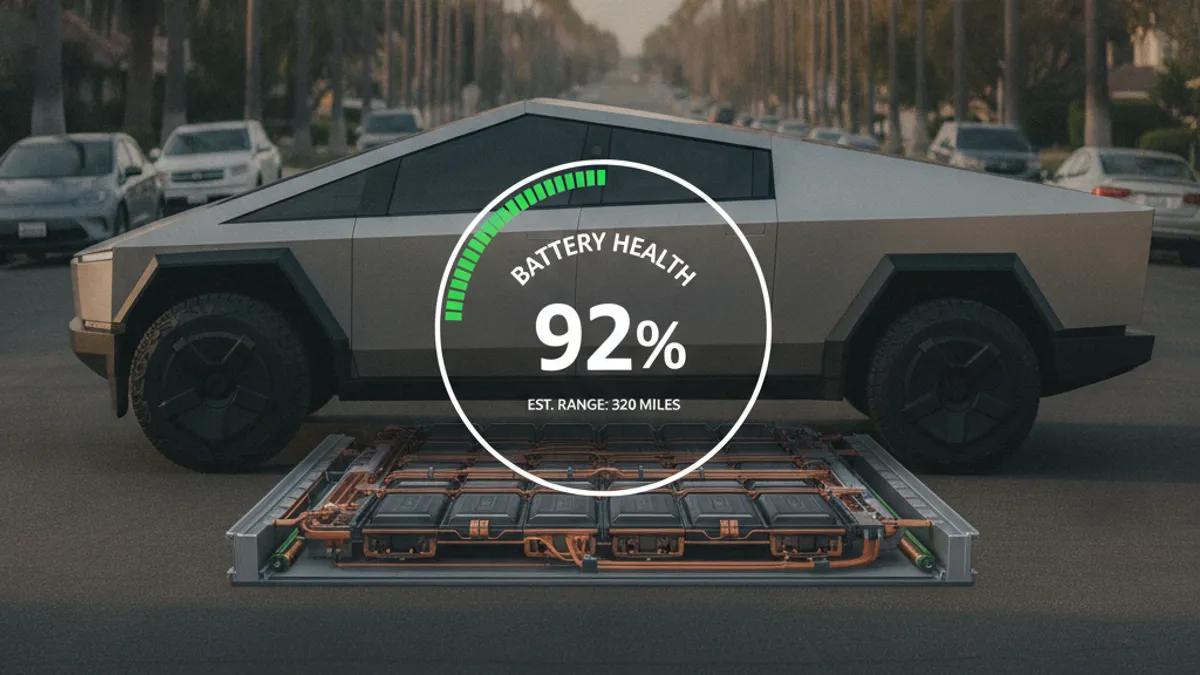
Tesla doesn’t show a phone-style battery-health percent. Open the car’s present rated max range. Compare it with the original rated range for that model year. Tesla prints those original ratings in the manual. A modest gap after the first seasons is ordinary lithium-ion behavior. Independent fleet dashboards publish their own fade curves. Those reports aren’t Tesla legal documents. This page didn’t verify their mile figures. A sudden drop is a service issue.
Tesla also publishes a battery and drive unit warranty. Years, miles, and the capacity floor vary by model. Coverage follows the in-service date, not the day you bought it used. Confirm the current terms on Tesla’s warranty page for your VIN. Our Tesla battery warranty explainer covers what that promise includes.
Buying a used Tesla in this metro
Mileage alone is a weak scare. Ask for the current max range on the screen. Compare it with that year’s rated range. Ask where the car lived. A Model Y that climbed I-680 through Concord took more heat. A garage car in Millbrae lived a cooler life. Stay inside the original warranty window if you can. If the range gap is steep, get Tesla service to look before you sign. Outright pack replacement outside a crash is uncommon. When it happens, the warranty is the first document to open. See pack replacement versus a 12V roadside fix.
Empty pack versus a worn pack
A Tesla at 0% on the Bay Bridge approach isn’t a failed pack. It’s an empty one. A worn pack still drives. It just shows less rated range than it did new. An empty pack doesn’t move until it takes energy. CVC 21718 allows a freeway stop when the car is disabled and help is coming. CVC 22651(f) allows a tow after four hours on a full-access-control freeway. The Freeway Service Patrol runs weekdays, 6 to 10 AM and 3 to 7 PM. Dial 511 and say “Freeway Assist.” MTC’s FSP page lists gas, jump-starts, and radiator refills. It doesn’t mention out-of-charge EV help. The operators we connect you with bring a 240-volt Level 2 source. Native NACS on Tesla, plus CCS or J1772 adapters for mixed brands. Typical add is 10 to 20 miles in 15 to 30 minutes of charging. That’s charge time, not an arrival clock.
If the car won’t wake after a long sit, start with the 12V. SFO, OAK, and SJC don’t publish a dead-car-after-a-trip guide. If the car won’t start, use Tesla roadside rescue.
Frequently asked questions
Do Tesla batteries lose a lot of range over time?
Most packs lose some capacity early, then fade more slowly. Tesla doesn’t publish a single Bay Area degradation percent. Compare rated max range with the original rating.
Does daily Supercharging ruin a Tesla battery?
Occasional Supercharging is normal trip charging. Using it as your only plug adds more heat than overnight 240-volt charging. Mix in home charging when you have a safe place to park.
Does Bay Area weather help or hurt a Tesla pack?
Coastal air is mild on cells. Inland July highs near 90F in Livermore and Antioch are the harder climate. Follow Tesla’s charge limit. Don’t leave the pack empty for weeks.
If the car won’t wake, or the pack is empty, call (415) 630-6268. Charge Pro SF is a referral line. We match you with an independent local operator. That operator quotes you before work starts, and bills you directly.