A Tesla charge isn’t one wait across the Bay Area. Coast nights in Pacifica and Half Moon Bay stay mild. They sit close to SFO’s July normal of 71.5F. That’s the 1961-1990 WRCC station vintage, not a live reading. Inland pavement in Livermore sits near 89.7F in July. Antioch’s July normal high is 90.4F. Cool packs and hot packs both stretch a session versus a mild overnight garage. From near empty to about 80% often takes 25 to 40 minutes on a Supercharger. A 240V Level 2 overnight run is typically 6 to 10 hours. A 120V wall outlet can take two to three days.
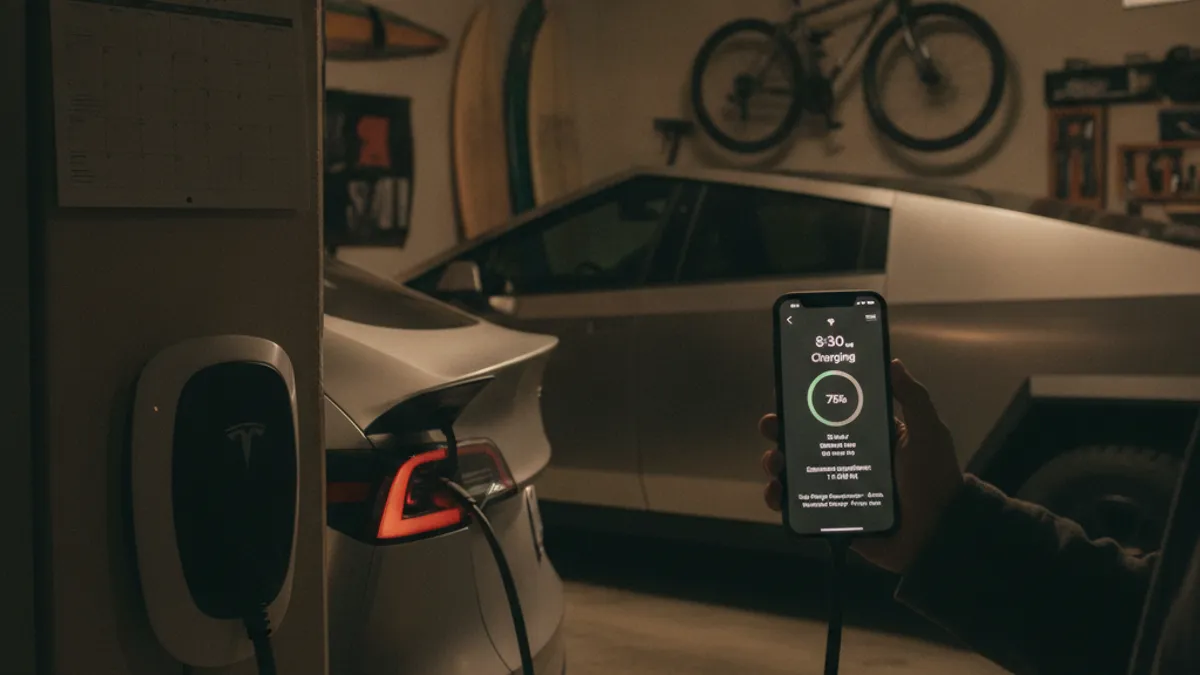
Cool coast nights versus inland lots near 90F
The Coastside marine layer keeps summer highs gentle. Oakland Airport’s July normal is 70.4F. San Francisco’s September normal high is only 73.1F. A pack that sat outside in Pacifica or Half Moon Bay often stays cooler. One that sat on a valley lot usually doesn’t. Cool cells accept DC fast charging more slowly until they warm. Tesla navigation preconditions the battery when you route to a Supercharger. Set that stop before you leave so a foggy morning session can start warmer.
Inland valleys don’t get that marine buffer. San Jose sits around 82F in the July normals. Gilroy’s July normal high is 88.3F. Livermore and Antioch push July normals to about 90F. On a hot lot, the car’s thermal system works to hold pack temperature. Fast charging can taper earlier than it would on a Coastside evening. A foggy morning can turn into a 90F afternoon. Plan the Supercharger stop for the cooler part of the day when you can.
Superchargers and other DC fast stalls
DC fast charging feeds the pack directly and skips the onboard charger. Newer Supercharger stalls are the short stop. CCS posts from Electrify America and EVgo do the same job for cars on that plug. A current Model 3 or Y often runs from about 10% to 80% in 25 to 35 minutes. Older Model S and Model X cars run slower, and so do older stalls.
Past 80%, every fast charger eases off to protect the cells. Pushing to 100% can take nearly as long as the first stretch. For the levels that help when you’re already stuck, see EV charging levels that actually help a stranded driver.
If you can’t make a stall, that’s a roadside job. Independent operators we connect you with bring a 240V Level 2 source to the car. They typically add 10 to 20 miles of range in 15 to 30 minutes of charging. That’s plug-in time, never an arrival promise. Native NACS plugs cover Teslas. CCS or J1772 adapters cover other EVs.
Overnight Level 2 at home and in public lots
A 240V Level 2 unit is the daily habit. It adds about 20 to 44 miles of range per hour. The spread comes from the car’s onboard charger and the circuit. From near empty to full, plan on 6 to 10 hours. Compare that window with a truck in home 240-volt charging versus a roadside 240-volt rescue.
Home charging still differs by housing age. Census ACS 2019-2023 pre-1980 stock is a rough stand-in for older panels. San Francisco is 77.2% pre-1980, Pacifica is 81.1%, and Brentwood is 10.9%. An older Peninsula or San Francisco building may need an electrician before a wall connector goes in. Charge Pro SF doesn’t install equipment and doesn’t hold a contractor license.
Public Level 2 still helps when you can sit. BART publishes Level 2 charging at Warm Springs / South Fremont with 42 plugs, and at Lafayette with 4 plugs. Those are sit-and-wait posts, not a Supercharger sprint.
A wall outlet when that’s all you have
A standard household outlet is Level 1. It adds roughly 3 to 5 miles of range per hour. From near empty, a Model 3 or Y can sit two to three days filling that way. It can cover a short local day if the car stays plugged in all night. It won’t rebuild a pack after a long South Bay, Altamont, or Delta-side run.
Why the last 20% crawls
Lithium-ion cells take charge fastest in the middle of the range. They slow as they near full. Plan around 80% unless you truly need every mile for a grade. Inland heat care is its own walkthrough in how Antioch heat changes the way you care for an EV battery.
When you can’t wait at a stall
A Supercharger stop fits a short break. A home Level 2 charge fits a night’s sleep. A wall outlet only works if the car can sit a day or more. Drivers often misjudge that middle window and run short. A Coastside SR-1 run or an I-580 approach toward Livermore can leave you low if the session tapered.
The car can stop on a freeway when it’s disabled. CVC 21718 allows that stop if help is already on the way. CVC 22651(f) covers a freeway vehicle that can’t move under its own power. It can be removed after more than four hours. The Bay Area Freeway Service Patrol is an MTC, CHP, and Caltrans partnership. It runs weekdays 6 to 10 AM and 3 to 7 PM. It lists gas, jump-starts, and radiator refills. The MTC FSP page, read 2026-09-18, doesn’t mention electric vehicles or an out-of-charge fill. Outside those hours, CHP Rotation Tow is the highway path. That’s a tow, not a charge.
Out-of-charge recovery is the referral when the pack is already empty. Mobile EV charging is the same idea when range has to come to the car. Operators quote you before they start and bill you directly. Charge Pro SF doesn’t own trucks, employ technicians, or set a price.
Frequently asked questions
How long does it take to charge a Tesla from empty on a Supercharger?
About 25 to 40 minutes to reach roughly 80%, depending on the model and the stall. Charging past 80% slows a lot. Most drivers stop there on a trip.
How long does a home Tesla charger take overnight?
A 240V Level 2 home charger usually needs 6 to 10 hours from near empty to full. That window matches a normal night if you can plug in.
Does Bay Area weather change how long a Tesla charge takes?
Cool Coastside nights keep packs mild. Inland July normals near 90F in Livermore and Antioch can make fast charging taper sooner. Navigate to the Supercharger first so the car can precondition.
If you’re stranded before you can sit at a charger, call (415) 630-6268. We’ll connect you with a local operator who quotes the job before any charging starts.