A loaded delivery van that dies in Oakland still has a route to finish. The usual fix is a mobile 240V charge at the curb. A tow pulls the van off remaining stops and burns the rest of the window. Last-mile electric vans work the Port of Oakland and the Nimitz. They climb the hills all day too. When the pack or the 12V gives out, the packages don’t get a pause.
Where Oakland delivery days actually stall
Oakland is an Alameda County city of about 56 square miles. Census ACS figures put the population at 438,072. About 77.9% of housing went up before 1980. That older stock means dense street drops in Fruitvale, Temescal, and West Oakland.
A typical shift can start at the Port. From there the van rolls I-880, the Nimitz. It may cut across I-980. Then it climbs SR-13, the Warren, or SR-24 toward the Caldecott Tunnel. I-580, the MacArthur, backs up. So does the Bay Bridge approach. Fog sits on the flats. The Oakland Hills run warmer and drier. Cargo weight, stop-and-go, and all-day climate control chew range. A wait at the Coliseum complex or a BART park-and-ride adds idle draw.
PG&E runs the wires. Ava Community Energy is the CCA that supplies generation. Overnight depot charging is a fleet problem for later. It does not help a van that’s already empty on the route. Local context for drivers is on the Oakland EV charging page.
Empty pack versus a dead 12V
Most stalled delivery EVs fail in one of two ways.
The traction pack hit empty. Screens still wake. The van will not roll. The day’s work used the range.
Or the 12V auxiliary battery is dead. No dash. No fob. Liftgate, locks, and telematics sit down with it. The big pack may still hold energy.
Both are roadside jobs when the right rig shows up. For the 12V path versus a pack boost, read Can roadside help jump-start an EV.
A loaded van raises the clock. Windows don’t slide because the vehicle sat. Timed cargo cannot wait on a flatbed. Every extra hour parked is a missed door.
Why a tow often takes the rest of the shift
Towing a commercial van is slower than towing a sedan. You need a bed that fits. You have to secure a loaded box. Then the van still has to reach a charger or a yard.
On a freeway shoulder, the rules get tighter. California Vehicle Code 21718 bars stopping on a freeway except in limited cases. One exception is a van so disabled that stopping is unavoidable. Help must already be on the way. CVC 22651(f) covers a van left more than four hours on a freeway. Officers can remove it if it cannot move under its own power. Waiting on the Nimitz for a depot hook wastes that clock.
The Bay Area Freeway Service Patrol covers those beats on weekdays. Hours are 6 to 10 a.m. and 3 to 7 p.m. Dial 511 and say “Freeway Assist.” FSP lists crash and debris clearance, a free gallon of gas, jump-starts, and radiator refills. MTC’s page does not mention electric vehicles or an empty traction pack. Outside those hours, the CHP Rotation Tow Program assigns the company. A rotation tow moves the van. It does not put miles back in the pack.
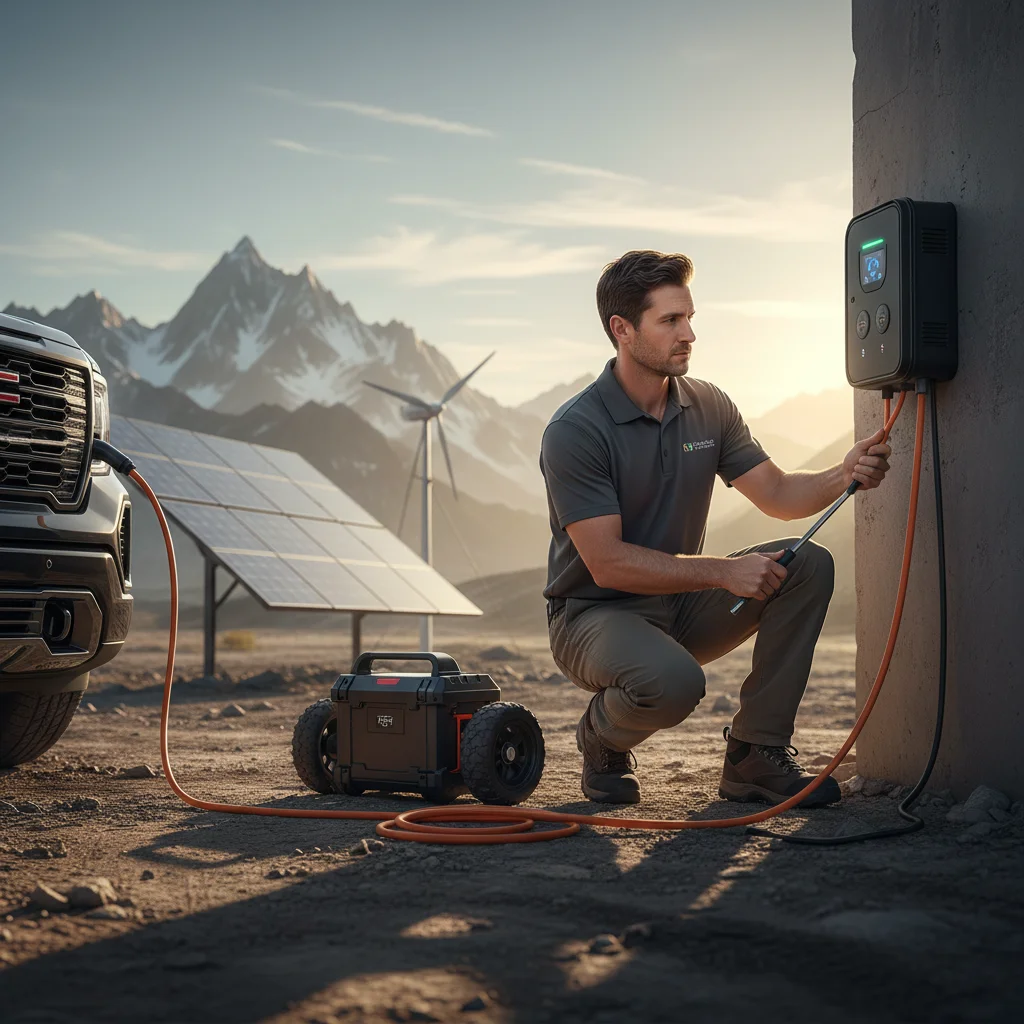
A mobile 240V source stays with the van. An independent operator comes to the stall, the lot, or a legal curb. The rig typically adds 10 to 20 miles. That takes 15 to 30 minutes of charging time. That is charging time, never an arrival time. Native NACS covers Tesla. CCS or J1772 adapters cover the other major EV brands. That includes electric cargo vans.
Charge Pro SF is a referral line. It matches you with a local operator. The operator quotes before work starts and bills you directly. We don’t own trucks, and we don’t run the charge. Compare the two paths in mobile EV charging or a tow. See what’s on the truck, and who bills you.
What to do when the van will not roll
Get it legal and visible. Hazards on. Stay with the van if it’s safe. That includes I-880, I-580, I-980, and the Bay Bridge approach. Do not walk the shoulder.
Name the make. Say whether the dash lights. Pin the closest landmark you can. The Port, Jack London Square, and Lake Merritt pin a location. So does the Coliseum complex. Fruitvale, West Oakland, and Rockridge help too.
If nothing powers on, treat it as a 12V job first. If the van wakes and shows zero miles, it needs a pack boost. The operator confirms the quote with you before they plug in. Details sit on mobile EV charging. A public post may fail after you reach it. This Oakland charger-down guide covers that case.
Frequently asked questions
Do operators help commercial delivery vans, or only passenger EVs?
They handle both. The same 240V source and 12V jump work on cargo vans. That includes Rivian-built delivery vans and other electric box trucks. Confirm the make when you call so the operator brings the right adapter.
Can they charge a van that’s still loaded with packages?
Yes. A 12V jump or a range top-off does not need the cargo out. The driver stays with the van. Once there’s enough range, the remaining stops can resume.
What if the van shows a fault instead of an empty battery?
Tell the operator up front. If they find a fault a boost will not clear, they should say so. Don’t pay for a fix that will not roll the van. From there you go to the fleet shop or the maker’s service line.
A dead pack does not have to kill the rest of the shift. Call Charge Pro SF at (415) 630-6268 to get matched with a local operator. They quote you before they start.