You’re parked in Fruitvale with the handle in and a red kiosk error. For many Oakland renters, that public stall was tonight’s charge. A dead post isn’t a small delay on an errand. It’s how a Lake Merritt stop becomes a stranding. That’s sharper if you still need SR-13 into the Oakland Hills. The same is true on SR-24 toward the Caldecott.
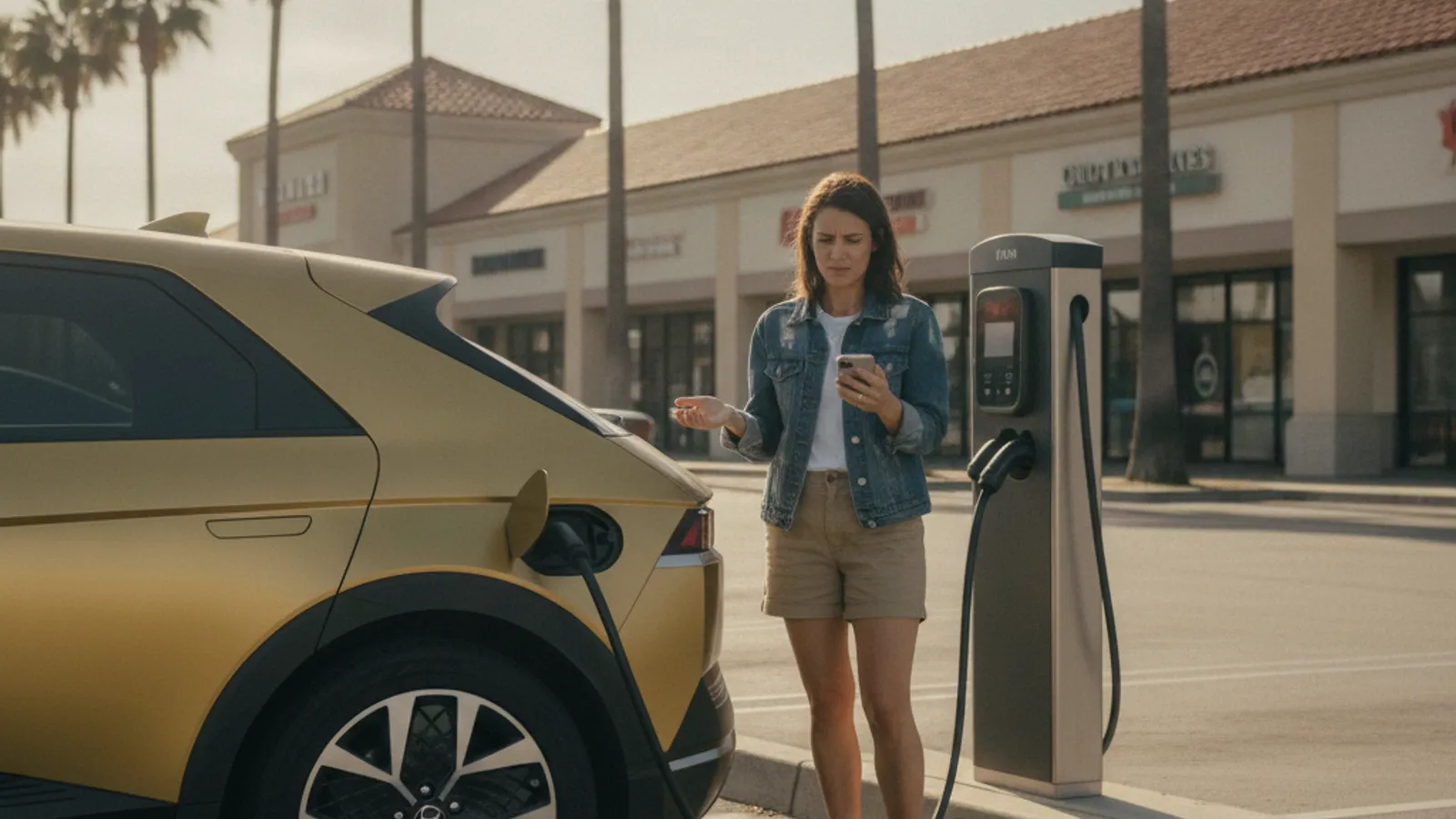
Oakland renters live on public charging
Census ACS 2019-2023 population for Oakland is 438,072. The 2024 Census estimate sits at 443,554. About 77.9% of the housing stock was built before 1980. That’s older buildings, and many of them are flats. Panels and parking never planned for a wall box. This page treats that pre-1980 share as a proxy for plug-less homes. A huge renter population here depends on public charging. When the stall fails, there’s often no driveway outlet waiting.
PG&E distributes power across Oakland. Ava Community Energy is the community choice aggregator. Ava publishes an Ava Charge fast-charging network. Confirm whether a stall is actually live in that network’s app. This article doesn’t publish a stall count for any Oakland lot. A verified inventory didn’t turn up in the research. Check the site you’re standing in. Don’t treat a citywide map as proof a handle will work.
Downtown, Temescal, West Oakland, and the Lake Merritt blocks mix street parking with shared lots. Rockridge and the Oakland Hills add grade after the flats. Fog sits on the bayside more than it does on the ridge. The hills run warmer and a lot drier. Oakland Airport’s 1961-1990 July normal high is 70.4F. That’s the shore pattern, not a ridge afternoon. Cabin climate control still costs you range, and so does the climb off the flats.
The Nimitz (I-880) and the MacArthur (I-580) stack traffic onto any backup plan. The Port of Oakland and the Coliseum complex add cargo and event congestion. I-980 and the Bay Bridge approach can do the same. A renter leaving Jack London Square late still has to reach a working post. If the stall in that lot is down, staying put can beat a hill run.
Work the stall before you spend miles
Stay in a legal parking spot until you’ve ruled out a handshake fail. Leaving on a rumor is how a lot problem becomes a shoulder problem.
Reseat the connector first
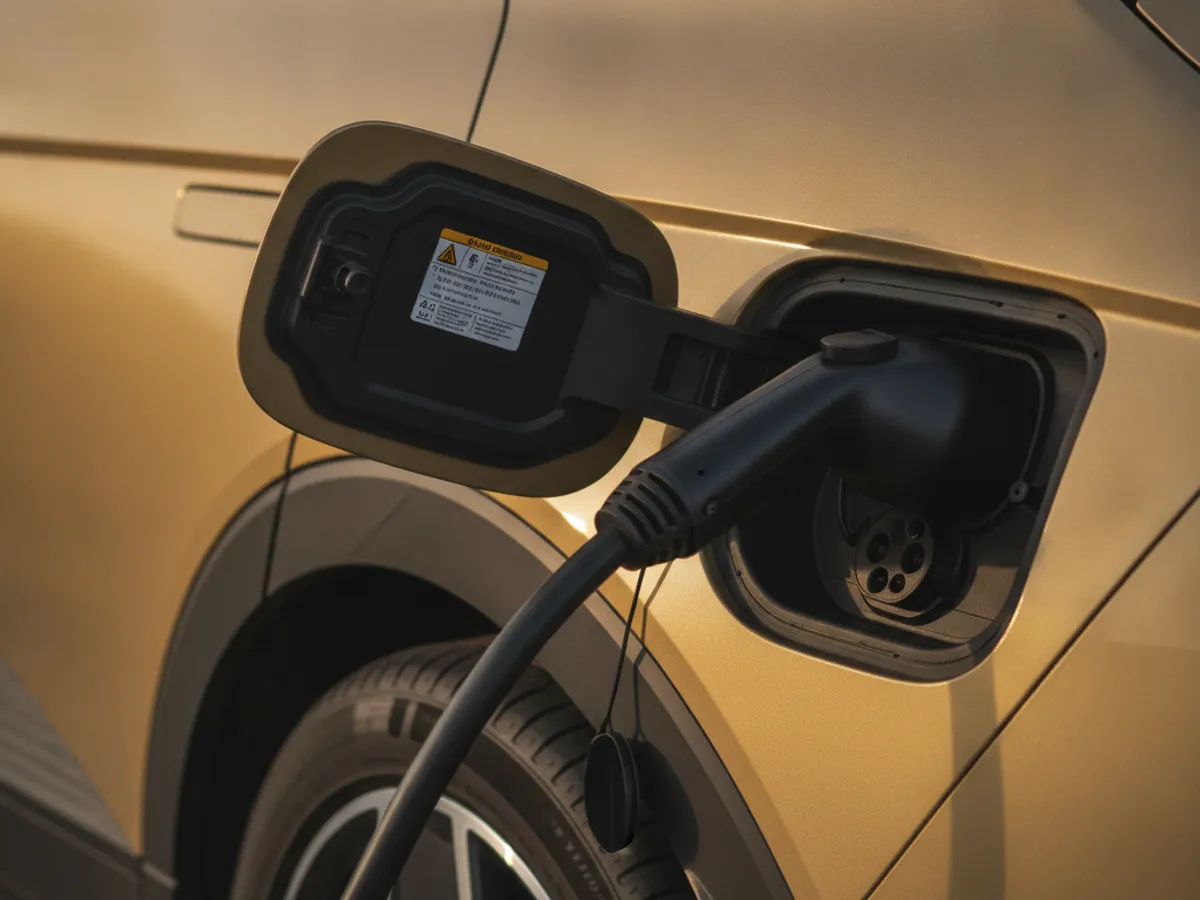
Unplug the handle all the way and check the pins. Look for grit, moisture, or a bent contact. Fog on the flats can leave the port damp. Dry what you can see on the latch, then seat the handle until it clicks. A loose latch is a common reason a session never starts. The car may say connected and still refuse power. Use the fixes for a public charger that won’t actually charge.
Try the stall next to you
Fast cabinets often feed more than one parking space. One screen in error doesn’t prove the row is dead. Move one stall over if that space is open. On a dual-cable unit, try the other handle before you write off the cabinet.
Restart the session in the app
ChargePoint, EVgo, and Electrify America sessions usually start in software, not on the kiosk. Force-close the app, then open it again and start from your phone. Repeated taps on the screen rarely fix a billing handshake.
Confirm status, then stop poking
If the stall showed unavailable before you plugged in, the network may already know. Try a second payment method only once. A declined card can look like dead hardware. After a few minutes of this, stop troubleshooting.
Why public networks fail more often than Superchargers
Tesla builds, owns, and services Superchargers as one system. That single owner is why those stalls tend to get fixed as Tesla hardware. ChargePoint, EVgo, and Electrify America often split the work. A property owner may own the cabinet, while the network runs software and payments. A repair can wait until both sides agree who touches it.
Public cables also take a hard beating. Dozens of drivers a day yank the same handle, drop it, or force it into the wrong port. That’s different from a home cord you plug in every night.
There’s a third fail that’s easy to miss. A DC fast charger has to reach a server to approve you and start billing. If that link drops, a mechanically fine stall still won’t start. That’s software wearing a hardware mask, which is why the app restart matters.
Superchargers go dark too. If that’s the site you’re in, read what to do when a Supercharger is down or full. Some Superchargers have Magic Dock for non-Tesla cars. Don’t assume the site in your nav has one. Check the Tesla app for the stall type before you spend remaining range.
Hunting a backup on a low pack is a different risk
Census land area for Oakland is 55.963 square miles. That’s enough room to waste a buffer on the wrong hop. Your car’s map is usually slower than a driver-report app. Sit still in the lot and open PlugShare or the network app. Look for a fresh check-in. Charging apps to check before you’re stranded is the habit to build before the kiosk goes red.
Only roll when a second site shows as working in a recent report. If you can’t confirm that, stay with the car.
Grade eats the estimate. The Warren (SR-13) isn’t a Lake Merritt loop, and neither is the SR-24 climb into the Caldecott. The Oakland Hills sit above the fog and run warmer. Air conditioning and the climb both take more than a crawl past the water. A nav line that leaves you a sliver is using a clean-road guess. It isn’t modeling the Nimitz at rush hour.
If you’re already low, what to do before you’re stranded is how to stretch what’s left. It isn’t a green light to go hunting. Berkeley, Emeryville, Alameda, San Leandro, and Piedmont sit next door, but crossing a city line only adds miles. Alameda even runs a different utility, Alameda Municipal Power, while Oakland stays on PG&E and Ava. None of that is a verified charger at the end of the block.
A freeway hop changes the law
A dead stall in a lot is a parking problem. An empty pack on the Nimitz, the MacArthur, or the Bay Bridge approach is a disabled-vehicle stop.
California Vehicle Code 21718 generally bars stopping on a freeway except in limited cases. One exception is a vehicle so disabled that the stop is unavoidable, and you’ve already summoned help. California Vehicle Code 22651(f) lets a vehicle be removed after more than four hours on a full-access-control freeway. That applies when the car can’t move under its own power.
The Bay Area Freeway Service Patrol is a partnership of MTC, CHP, and Caltrans. Dial 511 and say “Freeway Assist,” or use a call box. Published hours are Monday to Friday, 6 to 10 AM and 3 to 7 PM. The MTC FSP page lists gas, jump-starts, and radiator refills. It doesn’t mention electric vehicles or an out-of-charge charge. Don’t count on a patrol truck to fill a traction pack.
Outside those hours, freeway tows often run through the CHP Rotation Tow Program. You don’t pick the vendor. California doesn’t cap ordinary consensual tow rates statewide, so get the quote before a hook goes on. Oakland has private-property tow pages, but the specific municipal text wasn’t verified for this article. If a lot posts a removal sign, read the board. Caltrans District 4 covers the nine Bay Area counties, and 511 SF Bay is the traveler line. None of that puts energy in the pack.
When you should stay put and call
Ask for a mobile charge instead of another hop when any of this is true. You’ve already tried two stalls or two apps at this lot, and nothing starts. Your pack is low enough that the next unconfirmed site is a gamble. You still have the hill into Rockridge or the Oakland Hills, and you can’t waste the buffer. You’re on a clock for BART, a shift, or a flight through OAK. You’re in an unfamiliar lot after dark and don’t want to keep driving empty.
OAK’s parking page lists the Economy lot, ValuPark, the Hourly lot, and the Park & Call cell-phone zone. It doesn’t show EV charging on that page, so confirm on site or in a live app. Don’t treat the airport as a backup charger unless you can see a working stall.
BART’s published Level 2 charging that we could confirm sits at Warm Springs / South Fremont and at Lafayette. Those lots aren’t in Oakland. A USDOT grant is funding more BART Level 2 by 2027. Don’t treat that grant as installed now. If you’re in a Coliseum park-and-ride or another Oakland BART lot, confirm the stall you can see. Don’t assume the agency list includes that lot.
What the operator actually brings
Charge Pro SF is a referral line. We match stranded EV drivers with independent local operators. We don’t hold a contractor license for the work, and we don’t own yards or charging gear. We don’t employ the technician who shows up. The operator quotes you before starting and bills you directly.
Those operators bring a 240V Level 2 source to the car. Tesla drivers get a native NACS plug, and other EVs use a CCS or J1772 adapter. A typical session adds 10 to 20 miles of range in 15 to 30 minutes of charging time. That’s charging time, never an arrival time.
They can also jump or replace a dead 12V on site. A kiosk error and a silent car aren’t the same fault. If the dash is dark, the 12V may be the real problem. The traction pack can still hold energy you can’t reach. Say which symptoms you have so the operator brings the right gear.
For a pack that won’t take a public session, mobile EV charging is the path that comes to the bumper. We serve Oakland and the other East Bay cities on our map. The Oakland city page is the local hub. The pros we connect you with are licensed and insured. They handle Tesla and every major EV brand.
Call before the pack hits zero
A broken public stall isn’t your fault. Waiting only helps if a second stall is actually live. If you’ve reseated the cable, restarted the app, and tried a neighbor stall, stop spending range on the next rumor.
Call (415) 630-6268 when you want us to match you with a local operator. The operator sets the quote.
Frequently asked questions
Why won’t a public EV charger start a session?
Most no-starts are a loose handle, a network handshake, a payment fail, or one bad stall. Fog on the Oakland flats can leave moisture in the port. Restart the app, try the next stall, then stop. The whole site isn’t always down.
Is it the charger or my car?
If the car charges at home or at another public post, the stall or the network is the likely fault. A true car-side charging fault usually throws a message on your dash, not only on the kiosk. A dark car with no dash is more often the 12V.
What if I can’t make another station from this Oakland lot?
Stay with the car in a legal, visible spot. Don’t spend the last miles on the Nimitz or SR-24 on a guess. Ask for a mobile Level 2 charge to the bumper. The operator quotes you first and bills you directly. FSP trucks aren’t published as EV pack rescue.