There’s no published sticker price for a mobile EV charging service cost when your car is already stopped. Charge Pro SF doesn’t set rates. The operator quotes you before they start. Then they bill you directly.
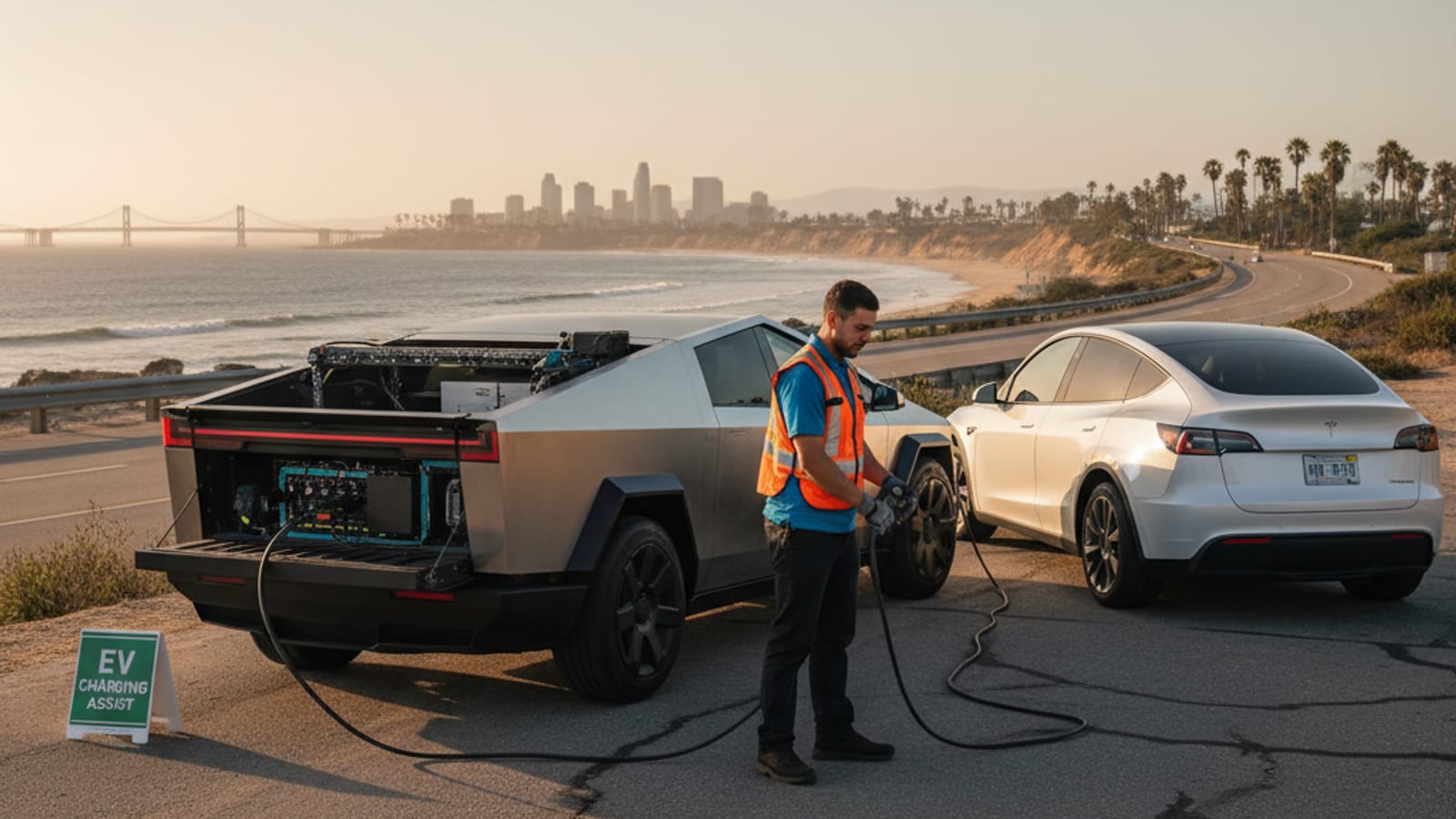
You’re not paying a garage kWh on a posted screen. You’re paying a person to bring 240-volt power to a car that can’t move. The pin you drop changes the work. A San Francisco hill curb is one job. An I-580 shoulder near Livermore is another. A downtown San Jose garage after an event is a third. Hear the number. Repeat it. Nothing starts until you agree.
Who sends help, and who you pay
Charge Pro SF is a referral line for the Bay Area. We match stranded drivers with independent local mobile rescue operators. We don’t do the charging. We don’t own trucks or a yard. We don’t employ technicians. We don’t hold a shop license. We don’t publish hours. We don’t promise an arrival window.
The operator on scene does the work. They quote first. They bill you. We don’t stack a connection fee on that invoice.
When you call, a recording notice may play. That’s California Penal Code 632. Confidential calls in this state need all-party consent. The notice is required. It isn’t marketing.
The pros we connect you with are licensed and insured. That’s a claim about the network. It isn’t a claim that this brand holds a contractor license.
What a mobile EV charging service cost is made of
There’s no metro-wide rate sheet we could verify. Operators price the call in front of you. Ask them to name the pieces.
Travel is one piece. San Jose spans about 178 square miles. Fremont spans about 78. San Francisco spans about 47. Those 47 miles are packed onto hills and stacked garages. Emeryville is about 1.3 square miles. A short city hop and a Tri-Valley freeway run are different dispatches. The operator prices the drive they actually have to make.
Energy is the next piece. This is a short top-off, not a fill. Operators bring a 240-volt Level 2 source to the car. Teslas take a native NACS plug. Other EVs take a CCS or J1772 adapter. They typically add 10 to 20 miles of range. On-site charging time is usually 15 to 30 minutes. That window is charging time after they’re plugged in. It isn’t a promise about when the truck appears.
Access is a third piece. Gated lots, tow-away curbs, and bridge approaches take longer to stage. California Vehicle Code 21718 generally bans stopping on a freeway. The exception is a vehicle so disabled that stopping is unavoidable. Help has to have been summoned. If the car still can’t move under its own power, CVC 22651(f) applies. It allows removal after four hours on a full-access-control freeway. That’s the legal clock on a shoulder. It isn’t our clock.
Time of day may show up. We couldn’t confirm a published after-hours card for these operators. Ask if night or weekend work changes the number. Don’t guess.
Tell them the make when you call. The lead they bring should match the port. A Tesla and a Chevy aren’t the same plug visit. Neither is a Rivian, a Ford, or a Hyundai.
If they won’t quote before they start, wait. You don’t have a price yet.
A roadside charge isn’t a Supercharger session
A public DC fast stall and a mobile Level 2 job solve different problems. Fast charging helps when you can still drive to the stall. Mobile charging helps when the car has already quit.
The operator isn’t filling the pack to 100%. They’re adding enough range to roll to a working stall. Or to a driveway. Or to a lot you can sit in. That’s why your home tariff doesn’t belong in this math. Home kWh is a utility schedule. This is a service call.
For the hardware side, read what’s an EV charging truck, and who actually bills you.
Why one Bay Area number would be a fiction
This metro isn’t one climate or one housing pattern. A quote that ignores the region is a guess.
San Francisco and the inner East Bay
San Francisco’s ACS 2019-2023 population is about 836,000. About 77.2% of housing predates 1980. That’s street parking and older panels. Many buildings have no dedicated 240-volt plug. A dead EV here is often on a grade. Or in a garage stack. Or on a tight curb.
PG&E owns the wires. CleanPowerSF supplies generation for many city accounts. CleanPowerSF publishes EV Charge SF, the Driving Clean Assistance Program, and Electrify My Ride. Those names belong to home and e-bike programs. They don’t set a roadside invoice.
Oakland’s ACS population is about 438,000. About 77.9% of its housing predates 1980. Berkeley is about 80.8% pre-1980. Daly City is about 78.7%. San Bruno is about 81.9%. El Cerrito is about 81.9%. Pacifica is about 81.1%. Older stock doesn’t stall a car by itself. It does mean more overnight street parking. It also means more drivers who never plug in at home.
Ava Community Energy covers most Alameda County cities. The City of Alameda is the exception. Alameda Municipal Power is the municipal utility on the island. It publishes an optional EV time-of-use rate and a Level 2 charger rebate. Again, that’s home equipment. It isn’t the shoulder quote.
The Peninsula and the airport cities
San Mateo County sits with PG&E plus Peninsula Clean Energy. That includes Daly City, South San Francisco, San Bruno, Millbrae, and Burlingame. It includes San Mateo, Foster City, San Carlos, Redwood City, Menlo Park, and East Palo Alto. It also includes Pacifica, Half Moon Bay, and El Granada. PG&E still delivers the wires. Peninsula Clean Energy publishes an EV Incentives Program and an EV Ready Program. Those don’t price a rescue.
SFO has an EV charging parking page at flysfo.com/parking/electric-vehicle-charging. Automated reads of that page failed. Stall counts and posted rates could not be confirmed here. Check the airport page in a browser before you leave a car for a long trip. A 12-volt that dies after a week in a garage is a different failure than an empty pack. The airport doesn’t publish a playbook for a car that won’t wake.
OAK’s parking page lists Economy, ValuPark, Hourly, and a Park & Call cell-phone zone. No EV charging showed on that parking page when it was read. SJC lists Economy Lot 1 and the Terminal A and B hourly garages. It also lists Daily Lot 4, Lot 5, and a cell-phone waiting area. No EV charging showed there either. Confirm at the garage or in the airport app. Don’t treat this article as a stall map.
South Bay heat versus coast air
San Jose’s ACS population is about 990,000. It’s the largest city in this service area. San Jose Clean Energy is the CCA. Santa Clara runs Silicon Valley Power, a municipal utility with no CCA. Palo Alto runs City of Palo Alto Utilities. Mountain View, Sunnyvale, Cupertino, and Campbell sit with PG&E plus Silicon Valley Clean Energy. So do Los Gatos, Milpitas, Morgan Hill, and Gilroy.
PG&E publishes Home Charging EV2-A, Electric Vehicle EV-B, and Electric Home E-ELEC. Silicon Valley Power pages we could read showed no dedicated EV rate. Palo Alto showed a utility service capacity fee rebate and a multifamily EVSE rebate. None of those schedules is what an operator charges you on the road.
Summer isn’t one temperature here. San Francisco’s 1961-1990 July average max is 71.5°F. September’s is 73.1°F. Oakland Airport’s July average max is 70.4°F. San Jose is about 82°F. Gilroy is 88.3°F. Livermore is 89.7°F. Antioch is 90.4°F. Cabin cooling and pack thermal loads use energy inland. The coast can still feel mild on those same days. We did not find a verified count of 100°F days. We aren’t publishing one.
Campus lots in Palo Alto, Mountain View, Berkeley, and Santa Clara add another pattern. The car sat through a workday. The 12-volt sagged, or the pack was already low. Don’t mix those two stories on the call. Event garages around Oracle Park, Chase Center, and Levi’s Stadium are access problems first. Tell the operator the garage name and the level. A street pin won’t get them through a gate.
Tri-Valley, the Delta, and the Coastside
Newer housing is more common once you leave the core. Brentwood’s pre-1980 share is about 10.9%. Dublin is about 21.0%. San Ramon is about 23.8%. Driveways and garages show up more often. The stall that still happens is often a grade. Think I-580 toward the Altamont. Think I-680 through Sunol. Think SR-4 toward the Delta. That isn’t the same as a missing wall plug.
MCE covers many Contra Costa cities. That list includes Richmond, Concord, Walnut Creek, Martinez, and Pittsburg. It also includes San Ramon, Danville, Lafayette, and El Cerrito. Antioch and Brentwood are not on MCE’s member list. They look like bundled PG&E. Confirm on your own bill. Don’t take a blog as your generation supplier.
Pacifica, El Granada, and Half Moon Bay sit on SR-1. Pacifica housing is about 81.1% pre-1980. Half Moon Bay is about 46.9%. El Granada is an unincorporated CDP. Its ACS population is about 5,231. Fog and a two-lane coast road change how a rig stages. We’re not claiming those towns lack chargers. We’re saying the car is already stopped. The quote has to reach that pin.
I-880 through Hayward is a common call-in corridor. So is I-80 along Richmond. So is SR-237 through the South Bay. So is SR-24 toward the Caldecott. So are the Bay Bridge approaches. For the freeway version of this problem, read your EV died on a Bay Area freeway.
Freeway patrol is free, and it may not charge the pack
The Bay Area Freeway Service Patrol is a partnership of MTC, CHP, and Caltrans. Private tow companies bid on freeway beats. Published hours are Monday through Friday, 6 to 10 a.m. and 3 to 7 p.m. Dial 511 and say Freeway Assist. You can also use a call box.
FSP lists a free gallon of gas, jump-starts, and radiator refills. It also clears crashes and debris. MTC says the program handles over 100,000 incidents a year. The MTC FSP page, read 2026-09-18, does not mention electric vehicles. It also doesn’t mention out-of-charge help. Use it for a 12-volt jump if that’s the failure. Don’t wait on it for a pack charge.
Outside those hours, freeway tows often go through the CHP Rotation Tow Program. You don’t pick the company. Caltrans District 4 covers the nine Bay Area counties on QuickMap. 511 SF Bay is the regional traveler line.
A consensual mobile charge is a different contract. California doesn’t cap ordinary private or consensual tow rates statewide. The statutory ceiling that exists sits in the private-property tow context under CVC 22658. It’s tied to a CHP-approved or law-enforcement rate. For a charge you asked for, the operator sets the number. You agree before they start.
Bridges and express lanes change the stop, not a public price
The seven state-owned bridges are Caltrans-owned. BATA and MTC set the tolls. Cash ended in March 2020. Open Road Tolling is all-electronic. That’s FasTrak, a license-plate account, or an invoice. Antioch, Benicia-Martinez, and Carquinez toll eastbound only. Dumbarton, Richmond-San Rafael, the Bay Bridge, and San Mateo-Hayward toll westbound only. The Golden Gate Bridge is a separate district. It tolls southbound only into San Francisco.
No published disabled-vehicle-on-a-bridge policy turned up in this research. If you’re on a span or an approach, put the hazards on. Stay in the car if that’s the safe choice. Call 511 or CHP as well as a rescue line. Don’t treat a blog as bridge operations.
Express lanes run on I-80, I-580, I-680, I-880, US-101, and SR-237. FasTrak is required. Hours are generally 5 a.m. to 8 p.m. weekdays. We couldn’t verify from a primary page that those lanes sit in the median. We’re not telling you to pull left. Follow CHP. Follow the car’s own hazard lights.
A tow is a different bill
If a short charge can wake the car, a hook is usually the heavier path. EV towing needs a flatbed. It needs the right transport mode. It needs care with the motors. For the local version of that math, read why towing a dead EV in the Bay Area gets costly. For the choice itself, see mobile EV charging or a tow.
Private-property tows are a tighter statute. CVC 22658 requires a posted sign at least 17 by 22 inches. Lettering has to be at least one inch. The sign must state removal at the owner’s expense. It must list the enforcement number. It must list each tow company’s name and number. The operator must notify law enforcement within one hour. Overcharging beyond the approved rate creates liability for four times the amount charged.
San Francisco’s SFMTA towing contractor is TEGSCO, LLC, doing business as AutoReturn. SFMTA publishes administrative, tow, storage, and dolly fees on sfmta.com. Those figures change. They vary by weight and income status. We’re not reprinting them. Check the SFMTA page for the current schedule.
San Jose Municipal Code Chapter 6.66 and Title 23 set local private-property rules. Oakland’s towed-vehicle pages do the same. The specific rate text wasn’t verified in this pass. Use the phone number on the posted sign.
A mobile charge you requested is not that tow. Keep the invoices separate.
Home charging math doesn’t travel to the shoulder
People search this keyword after they’ve already googled home kWh. Those markets don’t share a price.
Peninsula Clean Energy, Silicon Valley Clean Energy, and San Jose Clean Energy run rebate and charger programs. So do Ava, MCE, and CleanPowerSF. Names you’ll see include EV Ready and EV Instant Rebates. You’ll also see the Alameda County Incentive Project and Ava Charge. Charge Up Contra Costa and MCE EV Instant Rebate are on that list too. Alameda Municipal Power publishes that optional EV time-of-use rate. None of it is the operator’s invoice.
If you want Tesla home-charging context, that’s a separate article: what shapes Tesla charging cost in the Bay.
BART publishes Level 2 park-and-ride charging at Warm Springs / South Fremont, with 42 plugs. Lafayette has 4 plugs. Caltrain publishes no park-and-ride EV charging. A BART stall still requires a car that can drive there. It isn’t a truck at your bumper.
Club, maker, and insurer plans don’t set this quote
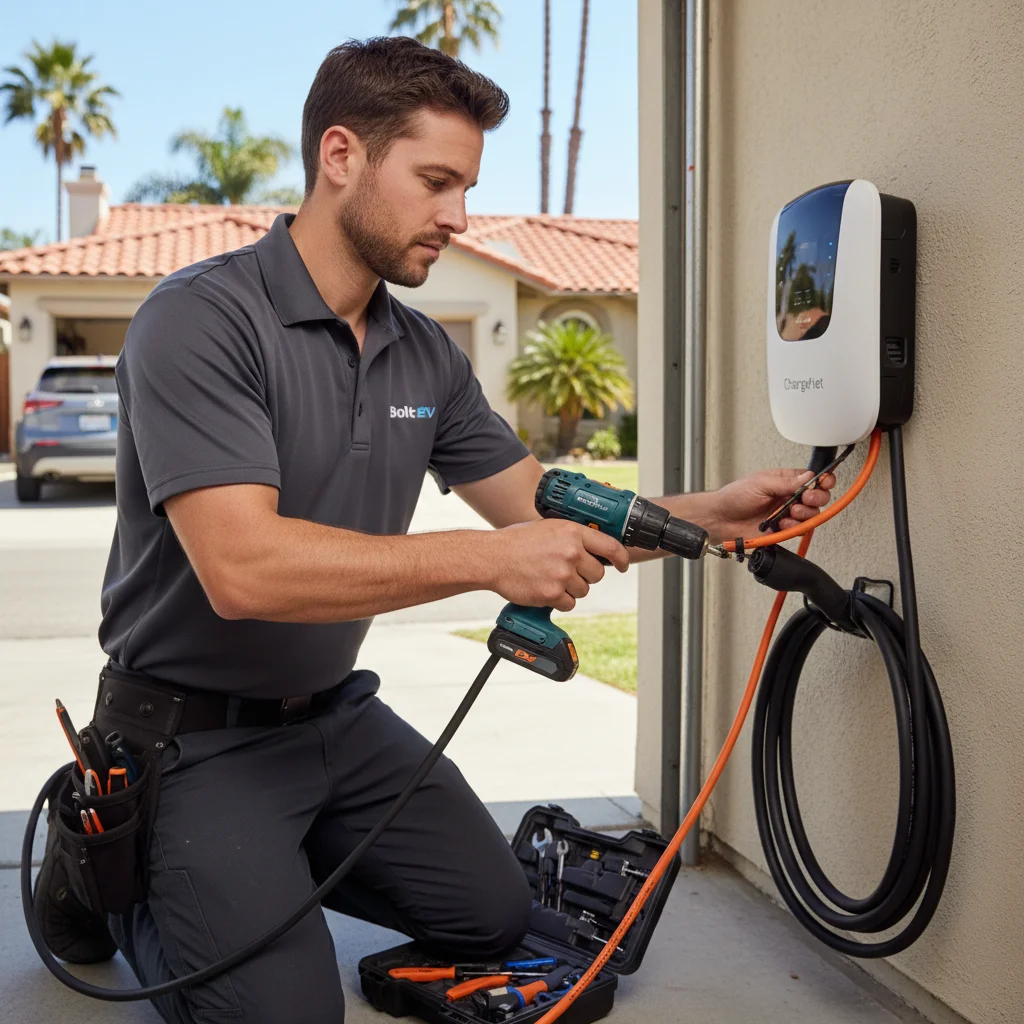
Tesla roadside, AAA, and insurer add-ons are contracts you already bought. They may send their own vendor. They may reimburse a charge. They may only jump or tow. Coverage changes by model year and plan. Tesla’s support pages are the source for Tesla’s policy. We don’t speak for Tesla, AAA, or any insurer.
Charge Pro SF doesn’t bill your membership. The operator bills you. If your plan reimburses, you sort that after. Get the quote in a text if they’ll send one. Keep the invoice.
Don’t assume roadside included means a 240-volt truck. Ask the plan what they dispatch. Then decide whether to accept a local quote.
A dead 12-volt isn’t an empty pack
A lot of won’t-start calls are the 12-volt battery. Screens stay dark. Handles don’t pop. The traction pack may still have range. Pricing a 12-volt jump as a pack charge is the wrong job.
Operators we connect you with can jump or replace a dead 12-volt on site. They can also charge the pack when that’s the actual failure. Tell them the symptom. A car that went dark after a week at an airport hotel is often the 12-volt. A car that rolled to zero on SR-24 is often the pack.
This shows up after long parking near SFO. It shows up in campus lots in Palo Alto or Mountain View. It shows up in downtown garages after a night game. The quote should match the diagnosis, not the panic.
What to say so the number is real
Have this ready.
Your exact pin. City and a cross street beat a vague near-880 pin. If you’re on a span, name the direction. Eastbound on the Bay Bridge approach is not westbound. Southbound on the Golden Gate is the tolled run into the city.
Make, model, and year. NACS versus CCS versus J1772 is the first-try plug.
Whether the car is fully dark or showing a low-pack warning.
Whether you can unlock, shift, or open the charge port. A locked-out Tesla is a different scene.
Whether you’re on a freeway shoulder, a city curb, a driveway, or a garage. CVC 21718 and the four-hour CVC 22651(f) clock are why freeway stops aren’t casual.
Whether FSP or a rotation tow is already assigned. Don’t pay two rigs for one car.
Then listen. Repeat the quote. If they can’t name a number before they start, wait. You still don’t have a price.
What we can confirm, and what we won’t invent
No Bay Area operator we could cite publishes a public, metro-wide rate card for this work. We aren’t filling that hole with a made-up range. Confirm the figure with the person standing at your bumper.
We also won’t say a neighborhood has no chargers. Maps change. A stall that’s down tonight may be up in the morning. If this research didn’t verify a site, we don’t invent the nearest one.
What we can say is how the work runs. Charge Pro SF covers the Bay Area. Operators bring 240-volt Level 2 to the car. They handle Tesla and every major EV brand. On-site charging typically adds 10 to 20 miles in 15 to 30 minutes. They quote first. They bill you.
City-level charging context lives on the Bay Area EV charging hub.
If the car is already stopped
Hazards on. Stay out of live lanes. On a freeway, stay with the vehicle if that’s the safe call. CVC 21718 is a disabled-vehicle exception. It isn’t a place to wait for a view.
During weekday peak hours, dial 511. FSP can still jump a 12-volt or run a tow beat. Don’t expect that truck to refill the pack.
Then request a charging operator. Leave the pin, the car, and the symptom. Hear the quote. Say yes or no before anyone plugs in.
Charge Pro SF is at (415) 630-6268. That’s the number to request a match. It isn’t a promise about when someone arrives.
Questions to sort before you accept a quote
Does Charge Pro SF set a mobile EV charging service cost?
No. We don’t set prices. The independent operator quotes you before starting and bills you directly. Ask them to name travel and energy. If they can’t, you don’t have a quote.
How much range does a roadside charge usually add?
Operators typically add 10 to 20 miles of range. On-site charging time is usually 15 to 30 minutes. That’s not a full pack. It also isn’t an arrival time.
Will Tesla, AAA, or my insurer cover this?
Only if your plan pays for a mobile charge or reimburses one. Many plans still only jump or tow. Check the plan. The operator still bills you first.