Tesla quietly rewrote parts of its roadside assistance policy in early 2026, and the changes show up the moment you tap for help on a Bay Area freeway. More of the response now flows through the app. More of the dispatched truck is a third party. And the old flat “free tow within 50 miles” line is gone, replaced by language tied to warranty status and vehicle age. If you drive a Tesla anywhere from San Francisco to Walnut Creek, this is worth reading on a calm day, not on the shoulder of I-880.
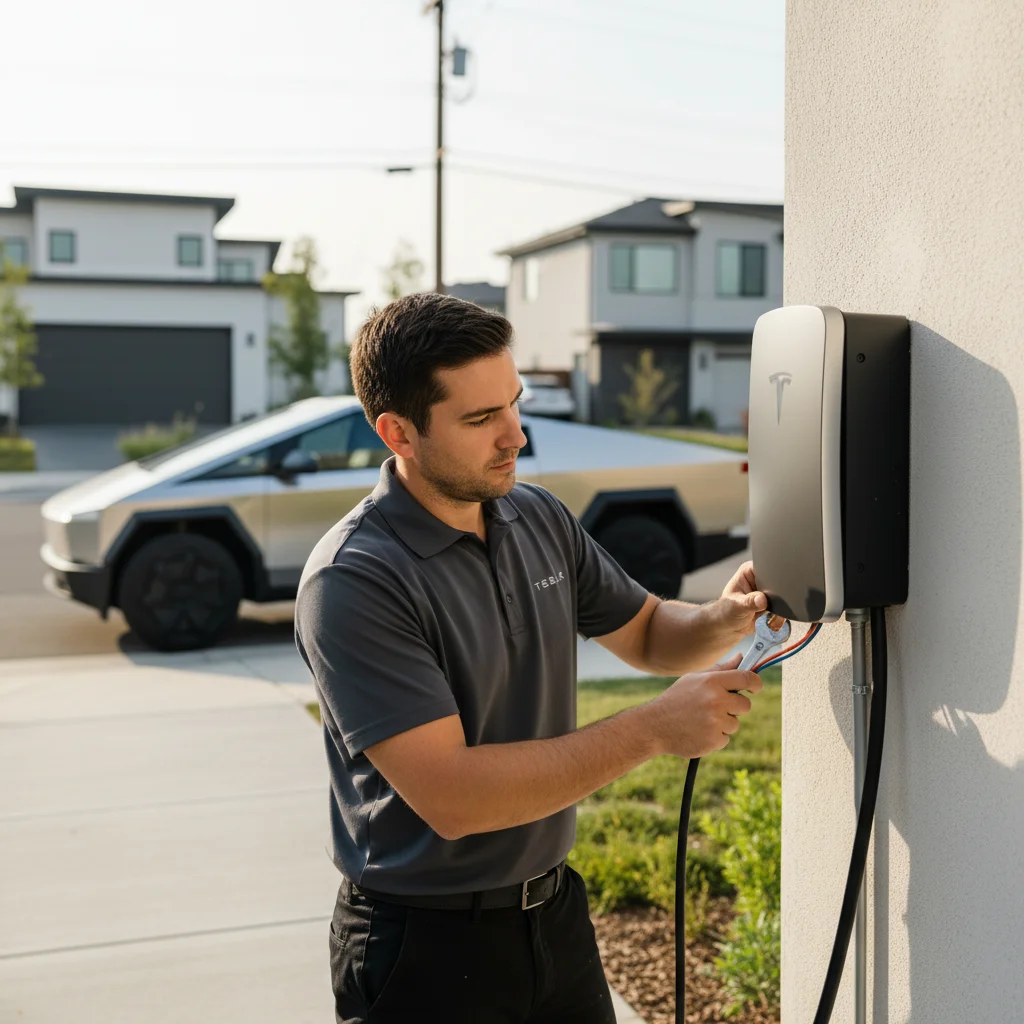
What changed in the 2026 roadside policy
The biggest shift is dispatch routing. Tesla now pushes nearly every roadside request through the in-app flow rather than a live phone agent. You tap Roadside Assistance in the Tesla app, answer a short triage, and the system assigns a response, which can be a Tesla Ranger, a contracted tow provider, or a loaner arrangement depending on your situation and warranty status.
That third-party piece matters. Tesla has widened its network of contracted towing and recovery vendors, which means the truck that arrives may not be a Tesla-branded vehicle and the driver may not have factory-level EV training. Tesla’s support page confirms the Ranger program still exists for in-warranty software and hardware issues, but for out-of-charge or non-powertrain incidents, a contracted third party is often the first dispatch.
The other notable change is the line between incidents covered under the New Vehicle Limited Warranty versus incidents tied to driver behavior, like running out of charge. That distinction always existed, but the 2026 language makes it more explicit, and it directly affects what hits your credit card.
Tesla also removed the legacy “free tow within 50 miles” language many older owners had bookmarked. Coverage distance is now tied to your warranty status and vehicle age, not a flat mileage figure. Our deeper breakdown of what Tesla roadside actually covers in 2026 walks the fee structure in detail, and Tesla roadside: phone or app, which to use is the practical comparison.
What is still covered and what now bills
The honest version, because Tesla’s policy uses conditional language.
Still covered at no charge for vehicles in New Vehicle Limited Warranty:
- Towing to a Tesla Service Center when the issue is a covered powertrain or software fault.
- Tesla Ranger visits for remote diagnostics or minor repairs where applicable.
- Winching when your vehicle is stuck because of a covered mechanical failure.
Now billed to your account or card on file:
- Out-of-charge tows. This has always been billable, but the 2026 policy is more explicit about it.
- Flat tire assistance beyond the loaner wheel kit, mounting, sourcing a replacement.
- Towing after your New Vehicle Limited Warranty expires, unless you carry Tesla’s Extended Service Agreement.
- Any incident where Tesla determines driver error or a non-covered condition caused the need for assistance.
Tesla’s Extended Service Agreement and certain third-party auto insurance policies can offset some of those billed items. Our Tesla roadside plan versus a local operator quote page lays out the math.
One thing that has not changed: the 12V battery situation. Tesla still treats a dead 12V as a roadside event, but coverage depends on whether the 12V failure is linked to a covered component. If it is age-related and out of warranty, you pay.
What dispatch looks like in the Bay Area
The Bay Area is geographically awkward for Tesla’s dispatch network. Dense urban corridors like downtown San Francisco, SoMa, and Bay Area retail corridors have contracted providers within reach. Then you have places like the Altamont Pass wind farm corridor on I-580, the Sunol Grade on I-680, and the run up to Half Moon Bay on SR-1 where the nearest contracted vendor can be far away before they even start driving toward you.
Tesla’s app shows an estimated arrival time at the moment of dispatch. Treat that number as optimistic, especially during peak hours, weekend beach traffic on 19th Avenue or SR-1, or anywhere with patchy cellular signal along the Coastside or the Caldecott approach on SR-24.
Anecdotally, Bay Area Tesla owners report wait times ranging from a shorter window in dense parts of San Francisco, Oakland, and Berkeley to past ninety minutes on the longer interstates. No published Tesla wait time for the Bay Area turned up in this research; confirm current terms in the Tesla app or on tesla.com before relying on them.
The app dispatch process also assumes you have a working cellular connection and enough 12V power to keep the vehicle’s systems alive. If your 12V is dead, the car may not respond to app commands at all, which creates a frustrating catch-22: you need the app to request help, but the dead battery that caused the problem also blocks the app from communicating with the car.
When Tesla roadside falls short and you need a faster option
Four situations put waiting on Tesla’s dispatch in a genuinely difficult spot.
You are out of charge on a high-speed road. A tow to a Supercharger costs money and time. A local mobile rescue unit can bring charge directly to your car. Our Tesla roadside rescue is built for exactly this: we connect you with an operator who drives to you, charges the vehicle enough to reach a Supercharger or home, and you move again without a tow.
Your 12V battery is dead. A dead 12V can break the app dispatch loop entirely. A mobile technician who can physically access the car and jump the 12V directly is faster and more reliable than waiting for a tow.
You are stranded somewhere rural or hard to access. Tesla’s contracted tow network is thinner on the Coastside, in Central Contra Costa east of Walnut Creek, and on long stretches of I-580 toward the Altamont. A local rescue operator covering the Bay Area can often reach those spots faster than a contracted national tow company dispatched from a distant yard.
You have been waiting more than an hour. Tesla’s app does not easily let you escalate or cancel and re-request without losing your place in queue. A parallel call to a local mobile rescue team can get you moving while you decide whether to cancel the Tesla dispatch.
How to document a billing dispute
If your incident results in a bill you want to dispute, or if you are filing through auto insurance, documentation matters.
In the Tesla app: open Roadside Assistance under your vehicle, screenshot the dispatch confirmation and the estimated arrival time, screenshot the final resolution screen, and if a third-party tow was used, get the driver’s name, company name, and truck number before they leave.
Outside the app: take photos of the vehicle’s position, any warning messages on the touchscreen, and the surrounding road conditions. Note the exact time you requested help and the time help arrived. That gap matters if response time becomes a dispute point.
For incidents involving a flat tire, our Tesla roadside tire repair: what they fix and what they skip walks through how Tesla handles that, including the loaner wheel program and what happens if your tire is not repairable roadside.
If you carry third-party roadside assistance through your auto insurer or a credit card benefit, those programs have their own claims processes. You generally need the same documentation: dispatch time, response time, service receipt, and any tow destination records.
When to call Charge Pro
If you are stranded in the Bay Area, out of charge, dead 12V, or stuck somewhere Tesla’s contracted network won’t reach quickly, our Tesla roadside rescue team is built for it. The operators we connect you with quote you before any cable goes on.
Call (415) 630-6268 when you want a match to a local operator.
Frequently asked questions
What changed in Tesla’s 2026 roadside assistance policy?
Tesla moved almost all dispatch through the app instead of a live phone agent, expanded its network of contracted third-party tow providers, and dropped the old flat “50-mile free tow” language in favor of coverage tied to warranty status and vehicle age.
How fast does Tesla roadside respond in the Bay Area?
It varies by geography. Urban corridors like downtown San Francisco, Oakland, and Berkeley are the easiest for contracted providers to reach. Outlying stretches like the Coastside, Sunol Grade, and Altamont Pass can run past ninety minutes.
What happens if my 12V battery dies and I cannot use the app?
A dead 12V can block the Tesla app from communicating with the car entirely, which stops you from requesting dispatch through the normal channel. A mobile technician who can physically access the vehicle and jump the 12V directly avoids that catch-22.
Do I need to file a claim if Tesla bills me for a roadside call?
Only if you believe the charge was wrong or you are seeking reimbursement through insurance. Screenshot the dispatch confirmation and resolution screen, note the time you requested help versus when it arrived, and get the tow provider’s name and truck number if one was used.