Tesla Insurance includes roadside help. It still isn’t a mobile 240-volt truck when your pack is empty. The app can dispatch a vendor. That vendor is usually a tow, not a Level 2 source.
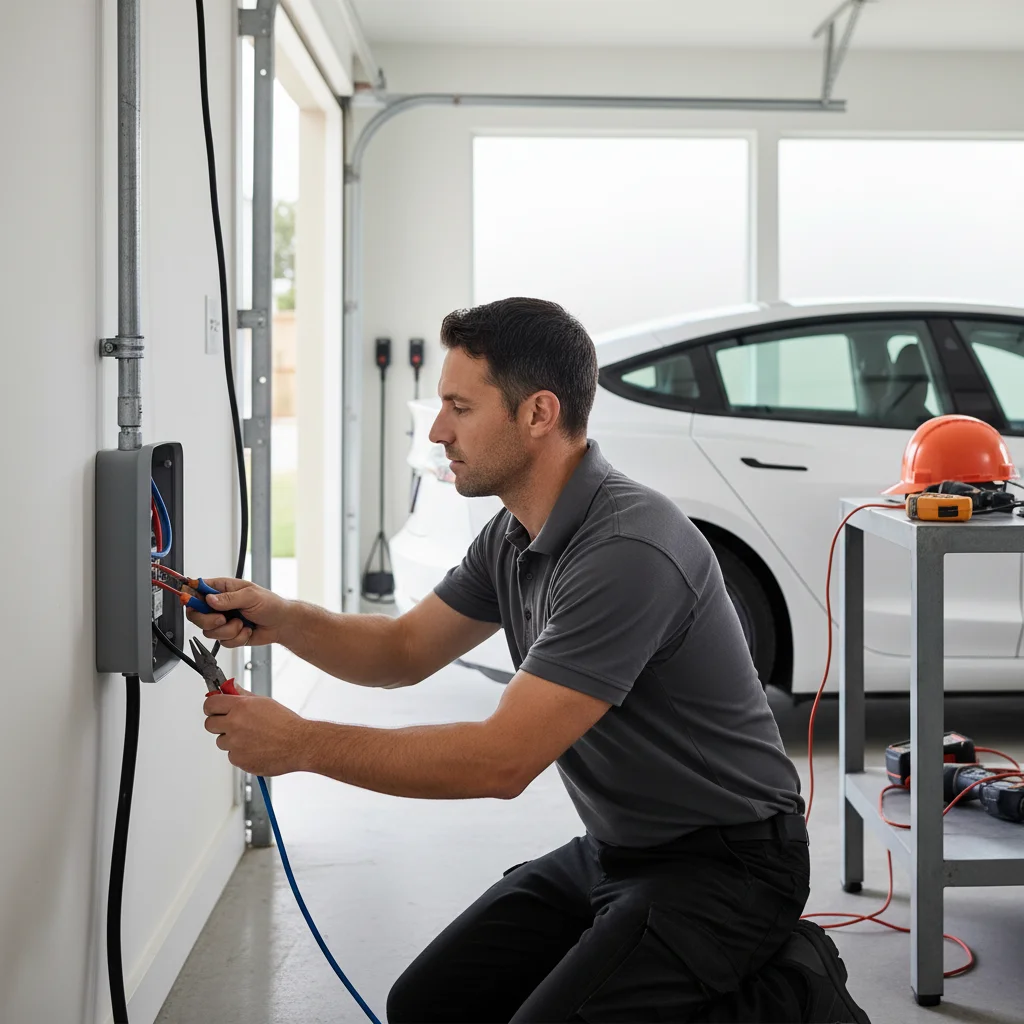
You’re on the Bay Bridge approach with a Model Y at zero. Or the car sat in a Daly City space after a week at SFO. It won’t wake. Tesla Insurance is supposed to cover this. Coverage on paper isn’t a 240-volt charge in the street.
What Tesla Insurance roadside actually is
Tesla Insurance includes roadside assistance in California. It sits inside the auto policy. You don’t buy it as a separate add-on. You request it in the Tesla app. That’s the same app you use to check charge and lock the doors.
The usual list is towing, a flat, a lockout, and fuel or charge delivery. On paper, an empty pack is in that list. In practice, Tesla sends a third-party vendor. That vendor’s truck is built to hook and haul. It’s often not built to add miles at the curb.
Tesla Insurance in California is Tesla’s own insurance product. Claims, dispatch, and the app live in one stack. Owners then find out the dispatched truck can’t add range. Then the policy and the stall no longer match.
This insurance roadside isn’t the manufacturer roadside that ships with a new Tesla. Bay Area owners mix those two a lot.
Warranty roadside, insurance roadside, and a paid plan
Tesla includes roadside with the New Vehicle Limited Warranty. That layer runs 4 years or 50,000 miles, whichever comes first. It’s manufacturer coverage. It isn’t your insurance policy.
Tesla Insurance roadside is a second layer. It runs through the auto policy, not the warranty booklet. A paid Tesla roadside plan can sit in a third slot later. None of these is a charging truck unless the vendor on scene carries one.
If the car is still in warranty, start with Tesla’s manufacturer roadside. You may not need the insurance layer yet. Commutes through San Jose, Fremont, and the Peninsula pile on miles. Warranty roadside ends sooner than a lot of owners expect. For Tesla’s own tiers, read what Tesla roadside actually covers in 2026.
Don’t assume the layers stack. When warranty roadside expires, you get whatever your Tesla Insurance policy actually sends.
What still generates a bill, even with the policy
Included isn’t the same as no invoice, ever. Read the roadside section of your declarations.
Towing mileage is the first trap. Many policies cap how far a covered tow can run. I-580 over the Altamont is a long tow if service is the destination. So is I-680 through Sunol, and SR-4 toward the Delta. Service in San Jose or Fremont may sit past the cap. If the tow exceeds the cap, the overage is on you. We don’t publish Tesla’s cap here. Confirm the number on your own declarations page.
Incident limits are the second trap. Some policies cap how many roadside events they cover in a year. A second empty-pack call in the same month happens. Check whether that second call is still covered.
Specialty handling is the third. A Tesla often needs a flatbed, not a standard hook. If the dispatched truck isn’t set up for the car, damage gets messy. Your claim, the vendor’s insurance, and the car’s ride height all collide. Ask what equipment is coming before the truck is already there.
Charge delivery on the policy is the fourth. The words can appear on the page. The truck that arrives may still be a tow. If you need miles at the bumper, ask what is on the vehicle. If they can’t name a 240-volt source, you’re not getting a mobile charge.
Why a Bay Area stall is a bad fit for a tow-only dispatch
The Freeway Service Patrol covers beats on Bay Area freeways. MTC, CHP, and Caltrans run it with private tow companies. Weekday hours are 6 to 10 a.m. and 3 to 7 p.m. You reach it by dialing 511 and saying Freeway Assist. FSP lists a free gallon of gas, jump-starts, and radiator refills. The MTC page doesn’t mention electric vehicles. An empty Tesla isn’t a gas can problem.
Outside those hours, the call often goes to the CHP Rotation Tow Program. You don’t pick the company. Caltrans District 4 covers the nine Bay Area counties. None of that is a 240-volt rescue.
California Vehicle Code 21718 bars stopping on a freeway except in tight cases. A disabled car that can’t move, with help already summoned, is one of them. Sitting in a live lane to watch an insurance tracker isn’t a plan. CVC 22651(f) lets a vehicle be removed after four hours on a full-access freeway. That applies if it can’t move under its own power. A long insurance wait can become a rotation tow you didn’t choose.
The seven state-owned bridges use all-electronic tolling. Cash ended in March 2020. Eastbound only on Antioch, Benicia-Martinez, and Carquinez. Westbound only on Dumbarton, Richmond-San Rafael, the Bay Bridge, and San Mateo-Hayward. The Golden Gate is a separate district, southbound into the city. No published disabled-vehicle-on-a-bridge policy turned up in the sources we checked. If you’re empty on a Bay Bridge approach, treat it as a disabled vehicle. Don’t assume the policy truck is a charger.
Express lanes run on I-80, I-580, I-680, I-880, US-101, and SR-237. Hours are generally 5 a.m. to 8 p.m. on weekdays. A stall in those lanes is a CHP problem first.
Street parking is the other common stall. San Francisco’s housing stock is 77.2% pre-1980. Daly City is 78.7%. San Bruno is 81.9%. Older buildings and dense street parking mean cars sit for days. A Tesla that sat near SFO often has a dead 12-volt, not an empty pack. Tesla Insurance roadside will still tend to send a tow. That’s the wrong tool. Start with whether the pack is empty or the 12V is dead. Then get a Tesla 12V jump if the little battery is the one that failed.
Inland heat is a third local wrinkle. San Francisco’s July normal high, 1961 to 1990, is 71.5F. Livermore’s is 89.7F. Antioch’s is 90.4F. San Jose sits near 82F. The same Model Y works harder in the Tri-Valley than on the coast. Tesla Insurance doesn’t skip those cities. An empty pack on I-680 or SR-4 is still a charge-or-tow question.
AAA is another layer people mix in. Club coverage and Tesla Insurance aren’t the same dispatch. What San Francisco drivers actually get from AAA is how that club call plays out.
What a 240-volt rescue does that the policy truck doesn’t
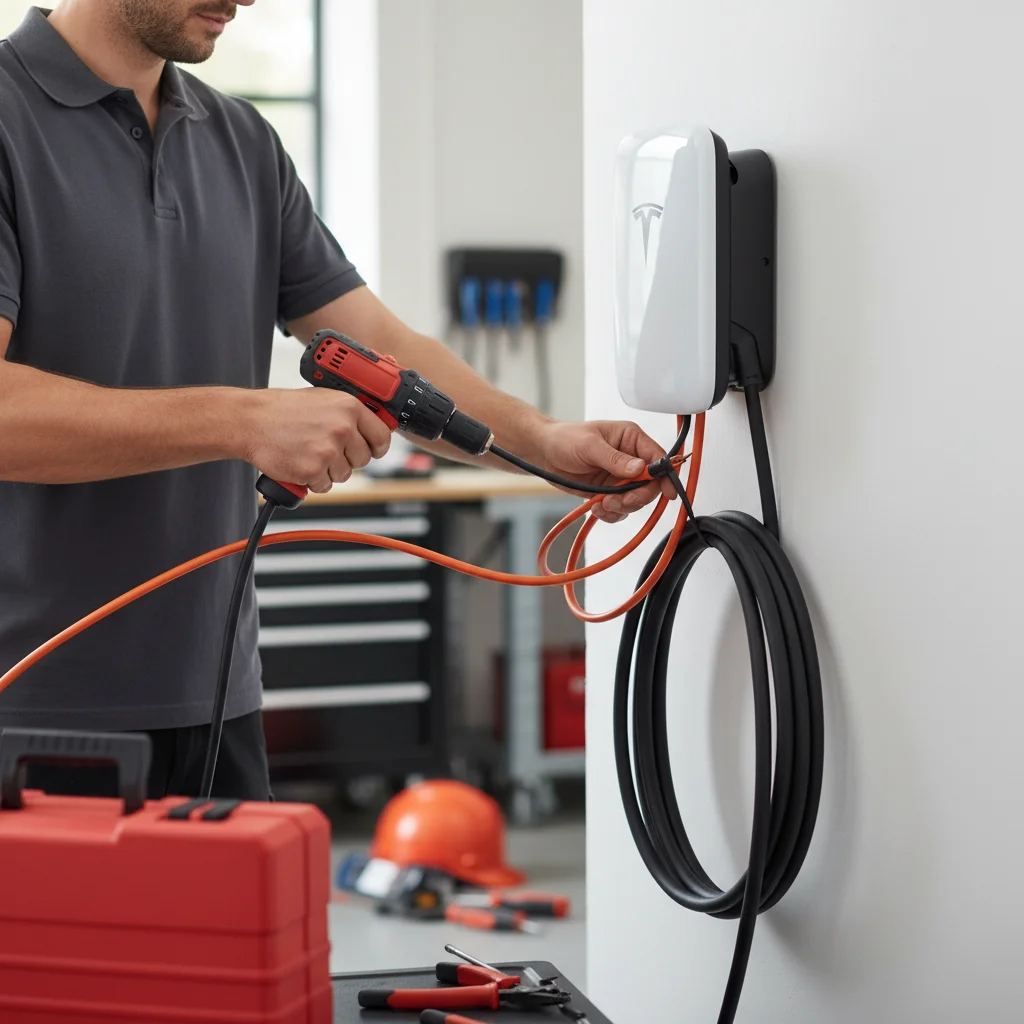
The operators we connect you with bring a 240-volt Level 2 source. Tesla owners get a native NACS plug. Other EVs get a CCS or J1772 adapter. Typical charging time adds 10 to 20 miles in 15 to 30 minutes. That’s charging time, not a promise of when someone arrives.
They can also jump or replace a dead 12-volt on site. They handle Tesla and every major EV brand. The operator quotes you before work starts. They bill you directly. Charge Pro SF is a referral line. We match you with a local independent operator. We don’t own the truck. We don’t set the price.
If you need miles to roll to a working stall, that’s Tesla roadside rescue. That’s not a claims call. Read what’s on a mobile EV charging truck for the quote and the bill.
Set the backup before the app is your only option
Tesla Insurance roadside is worth having.
Pull the declarations in the app. Note the towing mileage cap. Note the annual incident limit. Note whether charge delivery is its own service or only paired with a tow. Do that on a quiet night, not on I-880.
Save a second number. If dispatch is a tow and you need miles, you want a 240-volt operator. The operators we send cover the Bay Area.
Learn the 12-volt tell. A dark screen and a car that won’t unlock often mean the small battery. A tow from insurance won’t fix that at the curb.
Ask the Tesla Insurance dispatcher two things. What equipment is on the truck. Whether they can add 240-volt miles at the car. If the answers don’t match the stall, you need a different call.
Tesla Insurance does include roadside. It doesn’t turn the dispatched vendor into a mobile 240-volt truck.
Call (415) 630-6268 for an empty pack or a dead 12-volt. We’ll match you with an independent operator. They quote a charge or a jump before they start. We don’t handle claims or policy questions. We handle the match when the car won’t move.