If you’re out of charge on the westbound Bay Bridge approach, you can’t U-turn. A local operator can bring a 240-volt charge to the car. That’s the move that gets you rolling again.
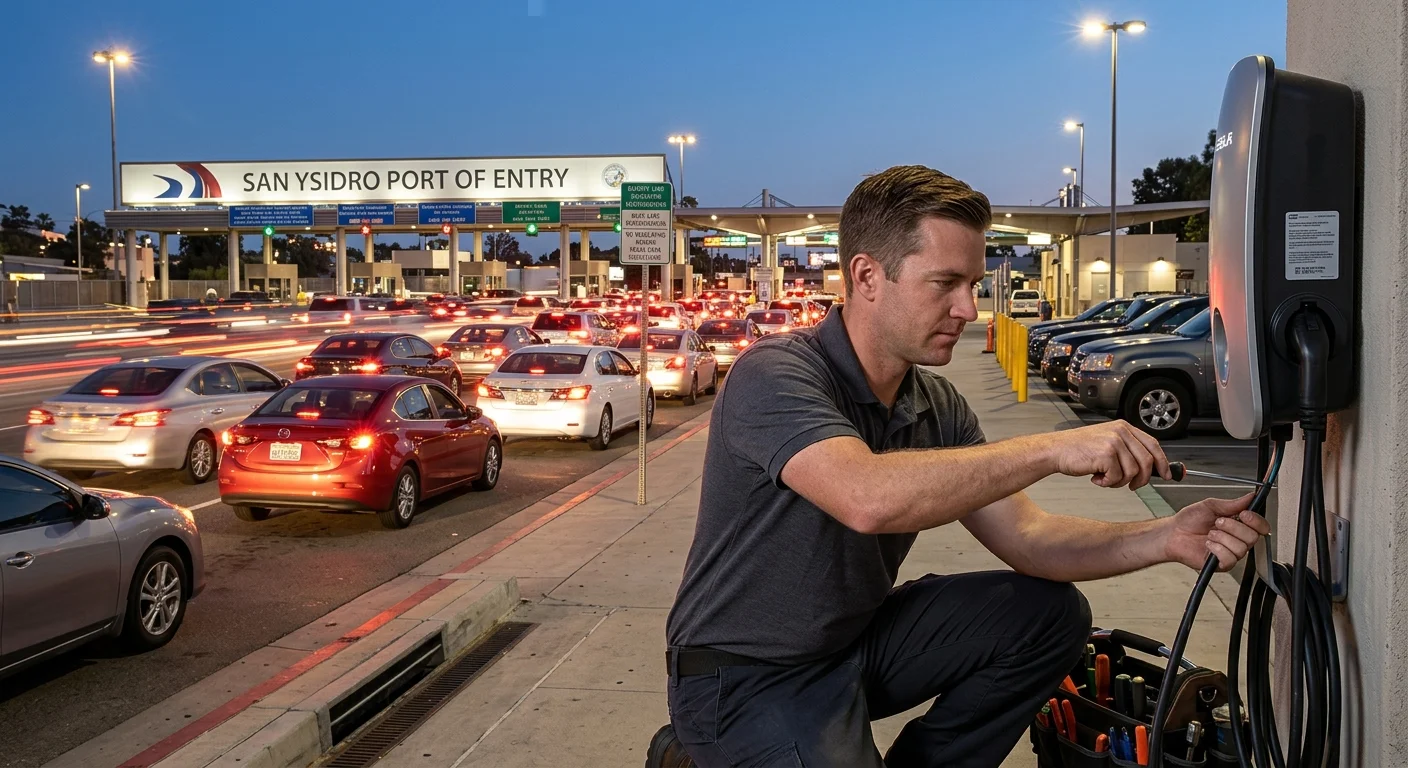
Westbound is a locked-in crawl
Westbound is the only tolled direction on the Bay Bridge. Caltrans owns the span, and BATA and MTC set the toll. Cash collection ended for good in March 2020. Every crossing is all-electronic now, with FasTrak, a license-plate account, or an invoice later.
You’re not hunting a booth you can abandon. You’re in a controlled approach from the East Bay. Traffic feeds in from I-80, I-580, and I-880. Oakland, Emeryville, and Berkeley sit on that funnel into San Francisco.
Once you’re in those westbound lanes, a U-turn isn’t an option. You can’t duck onto a side street from here. You wait, or you get the car moving again. This isn’t the Golden Gate, which tolls southbound only into the city.
No published disabled-vehicle rule for this bridge turned up from Caltrans or BATA. Don’t invent a special bridge exception from that silence. Follow CHP if an officer is already there. Caltrans District 4 covers the nine Bay Area counties.
Why this approach burns a pack
Stop-and-go keeps the car awake while the wheels barely turn. Climate control, the screen, and the 12-volt system all draw. Bay-side weather is mild next to the inland valleys. San Francisco’s July normal high is 71.5F on the 1961-1990 record. Oakland Airport’s July normal high sits at 70.4F. You still run the cabin, and the pack still drops.
You can leave Oakland with range that looks fine. Then the westbound line stalls hard on I-80. Miles that looked safe can go to zero in the crawl. Express lanes run on I-80, I-580, and I-880. FasTrak is required there on weekdays from 5 AM to 8 PM. MTC runs the regional network, and Alameda CTC runs the I-580 and I-880 lanes. Don’t cut across live lanes to hunt a shoulder. A source page never confirmed that those lanes sit in the median.
What the vehicle code actually allows
California Vehicle Code 21718 bans stopping on a freeway except in narrow cases. One case is a vehicle so disabled that stopping is unavoidable. Another vehicle also has to be summoned to help. An EV out of charge on the Bay Bridge fits that disabled-vehicle case. Put the hazards on and stay out of live lanes.
CVC 22651(f) allows removal after more than four hours. That’s on a full-access-control freeway when you can’t move the car yourself. The four-hour mark is the number the code gives. Don’t wait it out hoping the line will carry you.
Highway cameras and conditions run through QuickMap and 511 SF Bay. Those tools tell you about the road, not how to charge the car.
What Freeway Service Patrol can and cannot do
The Freeway Service Patrol is a partnership of MTC, CHP, and Caltrans. Private tow companies run the beats under contract. Hours run weekdays 6 to 10 AM and 3 to 7 PM, per 511.org. Dial 511 and say “Freeway Assist,” or use a call box.
MTC’s FSP page lists a free gallon of gas, jump-starts, and radiator refills. It handles more than 100,000 incidents a year. It doesn’t mention electric vehicles or an out-of-charge charge. A 12-volt jump may wake the accessories on the car. It won’t put miles in a traction pack.
Outside those weekday peaks, the CHP Rotation Tow Program assigns a vendor. You don’t choose the company on that rotation. A rotation tow can clear the lane, but it doesn’t refill the pack. If you’re weighing a hook versus a charge, read mobile EV charging versus a tow.
Recording a call without consent is a Penal Code 632 issue. Forwarding lines play a notice, and that’s why you hear it.
Empty pack versus a dead 12-volt
Not every dead EV is out of charge. A failed 12-volt can leave the car dark. Range can still sit on the traction pack. An empty pack leaves the displays on and the car stuck. If the screen still reads zero percent, you need energy in the pack. If nothing powers on, start with the 12-volt.
Operators in this network jump or replace a 12-volt on site. They also bring a 240-volt Level 2 source to the car. Tesla uses a native NACS plug for that hookup. Other EVs use a CCS or J1772 adapter. They typically add 10 to 20 miles of range. That takes 15 to 30 minutes of charging. That window is charging time, not an arrival time.
The freeway-wide steps are in our Bay Area freeway out-of-charge guide. I-80 notes are in stranded on I-80 in the East Bay.
Who actually comes to the bumper
Charge Pro SF is a referral line, not a shop. It matches stranded EV drivers with independent local operators. It doesn’t perform the work or own trucks. It employs no technicians, sets no prices, and promises no arrival time. The operators we connect you with are licensed and insured.
The operator quotes you before starting, then bills you directly. The job on this approach is out-of-charge recovery. You need enough range to leave the queue under your own power. That’s mobile EV charging at the bumper, not a shop visit.
Confirm the next charger in your map or charging app before you roll. This page doesn’t guess a site on the span. It doesn’t guess one at the Oakland or San Francisco touchdown either. If the research didn’t name a site, we won’t invent one.
PG&E still delivers the wires in Oakland and San Francisco. Ava Community Energy supplies generation in Oakland, Emeryville, and Berkeley. CleanPowerSF supplies generation on the San Francisco side. None of those programs can reach a car already stopped in the westbound queue. Don’t wait on a home rate or a rebate while the four-hour clock runs.
San Francisco’s housing stock is 77.2% pre-1980, per ACS 2019-2023. Oakland’s share is 77.9% on the same tables. Pre-1980 stock is a proxy for buildings without a home charger. If you left a street-parked car already low, this approach can finish the pack.
What to tell dispatch from the queue
Stay in the car if you can do it safely. Keep the hazards on, and don’t walk the deck. Say you’re westbound on the Bay Bridge approach. Name the last route you were on: I-80, I-580, or I-880. Say whether you’re still on the Oakland side or already on the span. Give the make, model, and plug type if you know it. Say whether the screens still work on the dash. That helps the operator sort a 12-volt job from an empty pack.
You don’t need a brand roadside plan to request a quote. If a national club or the automaker is already rolling, you can still ask. Compare both options before you accept the work. Tesla and every major EV brand are in play here. The operator brings the right plug to the car.
When this is the call to make
If the pack is empty, don’t sit through the four-hour window. If FSP can jump a 12-volt, take that help. If you need miles in the pack, you need Level 2 at the car.
Call Charge Pro SF at (415) 630-6268 when the pack is empty. They connect you with a local operator who quotes the job. You decide whether to accept that quote from them.