A roadside jump gets a Bay Area Tesla moving again in roughly 20 minutes. A 12V replacement is a different job, done later, in a shop or by a mobile tech with the right battery on hand. The two are not interchangeable. Knowing which one you actually need right now saves you time, money, and a second tow.
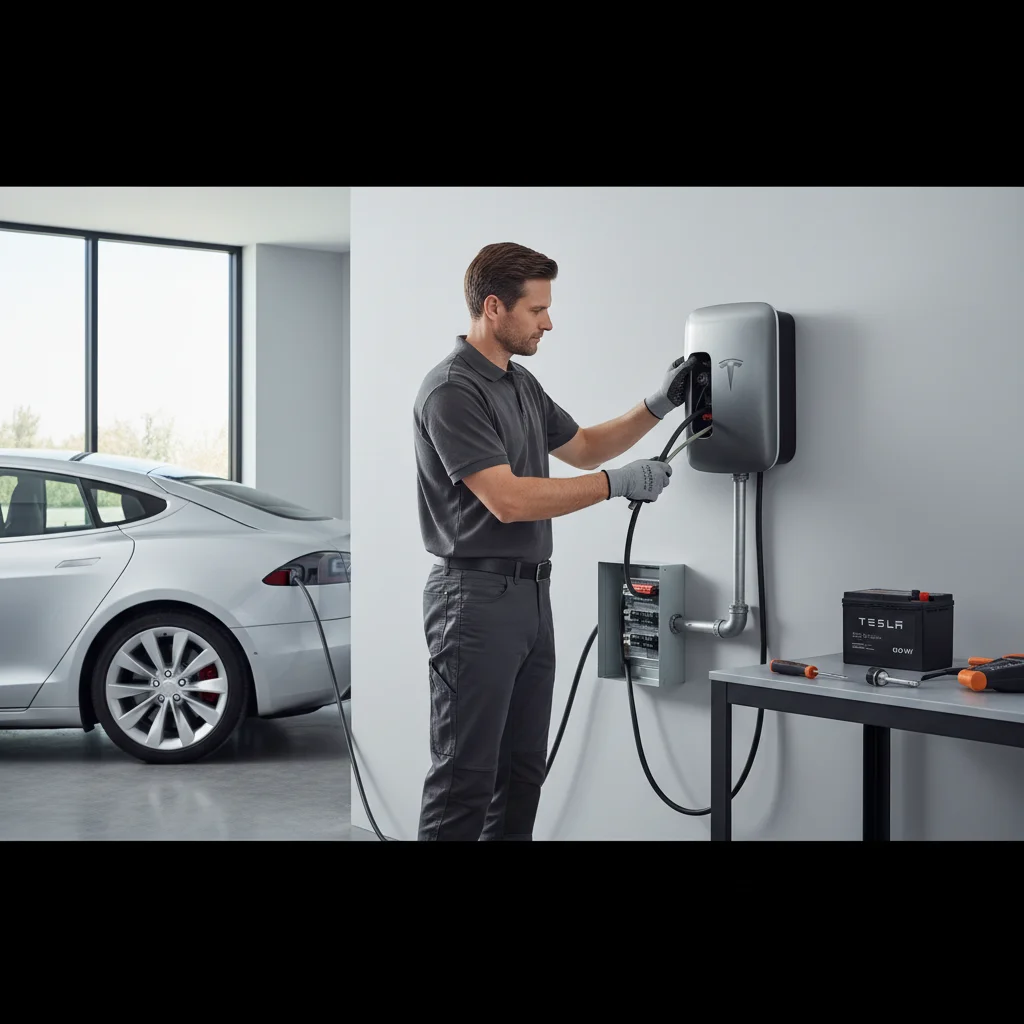
Two different jobs
A jump wakes the car. The 12V is depleted. A portable supply, or another 12V source applied to the right posts, brings the small battery back. Screens come up. Doors unlock. The car can move again.
A replacement swaps the small battery for a new one. The 12V is failing or dead beyond a simple charge. The work is opening the frunk (or wherever the battery lives), pulling the old unit, fitting a new spec-matched unit, and resetting the BMS so the DC-DC converter recognizes the new battery. A replacement done on the road is a real option when the operator carries the right spec for your model.
When a jump is the right call
A jump fits when:
- The car was fine yesterday and won’t wake today.
- You see no warning signs in the recent past. The app was happy. The screen worked. There was no slow-handle pattern.
- The traction pack shows a usable level once the 12V wakes up.
- You’re trying to leave a curb, a parking structure, or an event lot and you need the car mobile now.
A jump is the right call when the failure is a single event, not a long pattern. The 12V can be discharged without being internally failed. A marginal battery can recover after a wake-up and behave normally for months.
When a replacement is the right call
A replacement fits when:
- The 12V has already died once in the last few months.
- The car showed persistent 12V alerts before the no-start.
- Voltage won’t hold after a jump. A healthy 12V should sit at 12.6 to 12.8V at rest. If it drops below 12.0V within a few hours, the cells can’t hold charge anymore.
- The 12V is past 4 years old on a lead-acid build, or past the rated life on a lithium build.
- The car is parked long-term. SFO long-term parking in San Bruno, a hotel lot in Burlingame, or an airport shuttle stall in Millbrae. A two-week sit can fully discharge a marginal 12V. Replacing it on the road saves the next sit.
For the early warning signs that point to replacement, see Tesla 12V failure signs you can catch before you’re stuck.
What the operator does on a roadside visit
The sequence on a curb-side call is consistent. A Bay Area operator arrives with a portable 12V supply, replacement stock for the major Tesla models, and a 240V Level 2 source for the traction pack if it also needs charge.
Step 1: jump the 12V. The operator connects a 12V supply to the right posts and wakes the small battery. Screens come up. Doors unlock.
Step 2: read the pack. Once the car is awake, the operator reads the traction pack state. If the big battery is at a usable level, the car can drive away on its own power.
Step 3: replace if needed. If the 12V won’t hold charge, the operator swaps it on site. Confirm the spec with the operator before they start, since year and chemistry affect what fits.
Step 4: add range if needed. If the traction pack reads single digits, the operator can add a short mobile charge at the same visit. They typically add 10 to 20 miles of range in 15 to 30 minutes of charging time. That’s charging time, not an arrival window.
A jump that takes isn’t always a lasting fix. If the small battery is worn out, the car can die again in the next lot. Get it tested after you’re home. Don’t treat a curb-side jump as a new battery.
Lead-acid versus lithium 12V replacement
Year and chemistry change what the replacement is.
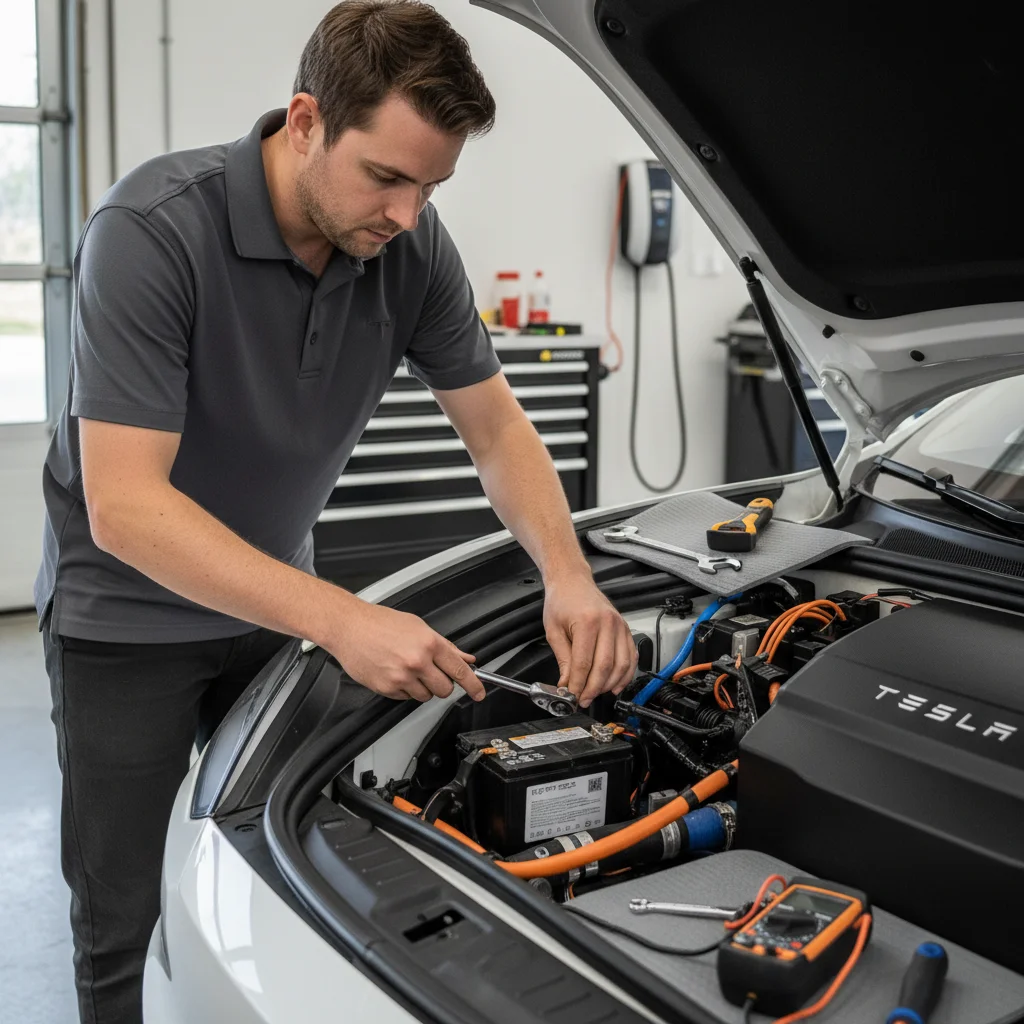
Older Model S and Model X (pre-2021) typically use a lead-acid 12V. Replacement parts run from aftermarket to OEM. Battery placement is more involved on these models. Confirm the spec and labor scope with the operator before they start.
Model 3 and Model Y (2021 and newer) use a Tesla-spec lithium 12V. The part is lighter and charges faster off the main pack, and it typically lasts longer than lead-acid. Aftermarket drop-in lithium replacements exist in compatible sizes.
Cost varies by model, year, and provider. Independent mobile mechanics and EV-specific shops in the Bay Area have gotten comfortable with Tesla 12V work. Tesla service itself can do the job, though scheduling varies. Public Tesla service wait times weren’t verified in this pass, so we aren’t quoting one. Confirm the quote with whoever does the work. We’re not publishing a number here because we couldn’t confirm a current range across the network for every model and provider.
For the broader picture on what that work looks like, the California repair marketplace has surfaced several Bay Area mobile mechanics with EV experience. Ask specifically whether they stock the lithium unit for your model year, not just a generic lead-acid. Some still show up with the wrong chemistry.
Why a roadside jump first
If the car is locked out and the frunk is stuck, replacement isn’t the starting point. A jump is. Once the small battery is awake, the frunk releases, the doors unlock, and the operator can see what they’re working with. A jump also tells you a lot about the 12V’s real state. A battery that holds charge after the wake-up may not need replacement today. A battery that drops voltage within minutes needs the swap.
For the case where the 12V has completely failed and you can’t get into the car at all, see Tesla dead and locked out: how to get back in and moving.
Bay Area context for the roadside visit
Street-parked Teslas dominate the Bay Area no-start picture. ACS 2019 to 2023 put San Francisco’s pre-1980 housing share at 77.2 percent. Berkeley sits at 80.8 percent. Oakland is 77.9 percent. Older housing means apartments without assigned charging, so the Tesla lives on the street. That sets up the 12V no-start pattern more than the empty-pack pattern.
Inland runs add heat wear. Concord, Walnut Creek, and the Tri-Valley run warmer than the coast. Lead-acid 12Vs age faster in that heat. A 2019 Model 3 in Danville or Antioch is more likely to need a replacement than the same car in Pacifica.
Long airport sits are a recurring pattern. South San Francisco, San Bruno, and Millbrae ring SFO. A Tesla left for two weeks on the airport shuttle lot can wake up to a dead 12V. Replacing the small battery on the road saves a tow and a shop appointment.
What to say when you call
Tell the operator the Tesla model and year. Tell them where you’re parked, including the side of the street and the nearest cross street. Mention whether the screens are dark, whether the handles present, and whether the app shows the car as online or offline. If you’re in a parking structure, name the level and the entrance.
If you’ve already seen a 12V alert before the no-start, mention it. That changes whether the operator plans a jump or a swap. If the traction pack reads single digits after the wake-up, the operator can add a short mobile charge at the same visit.
Charge Pro SF is a referral line. We don’t own trucks. The pros we connect you with are licensed and insured. We don’t set the price. The operator who takes the job quotes you before any cable goes on. They bill you directly.
Calling from a curb in the Bay Area
We serve every city in the Bay Area, including San Francisco, the Peninsula, the South Bay, the East Bay core, the Tri-Valley, Central and East Contra Costa, and the Coastside. If your Tesla is dark in Oakland, in San Jose, or anywhere between, call (415) 630-6268 for a match to a local operator.