A Chevy Silverado EV won’t start after a hot Delta day for a small reason. The Ultium pack can still show plenty of miles. The 12V battery that boots the computers is what failed. Doors stay locked and the screens stay black. The truck feels dead even with range left that morning.
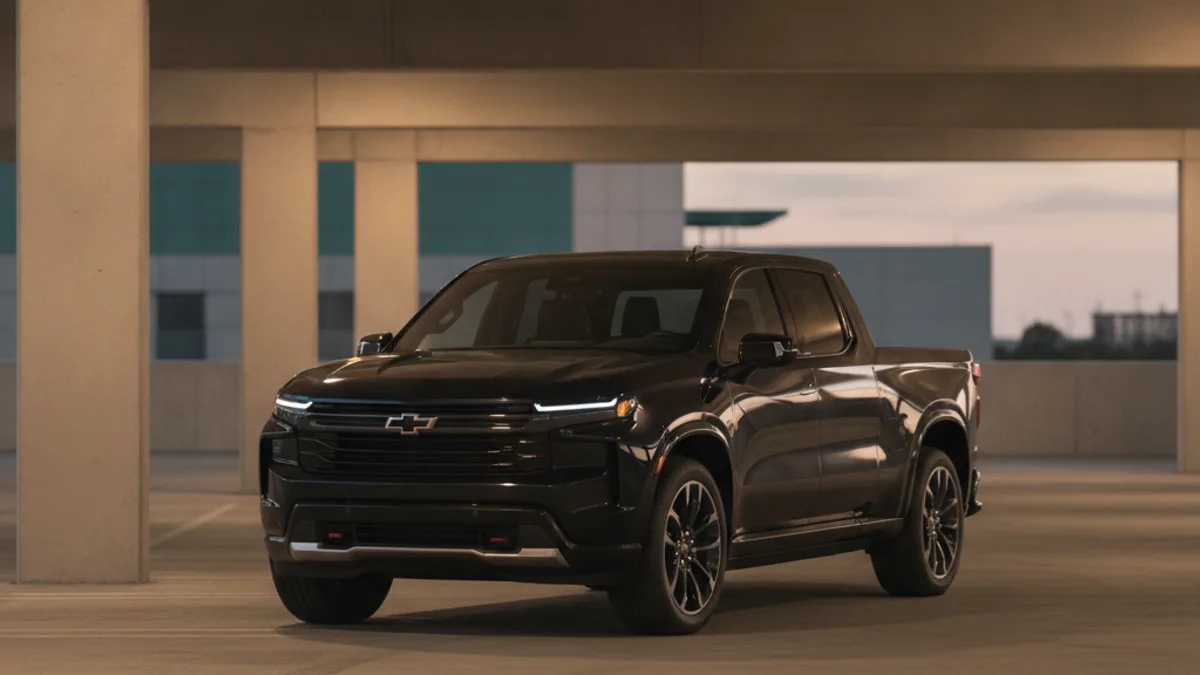
July normals make the inland gap obvious. San Francisco’s July average high is 71.5F, from 1961-1990 NWS cooperative-station normals via WRCC. Antioch’s July average high is 90.4F on that same vintage. Livermore’s July normal high is 89.7F, and Gilroy is about 88.3F. A full Ultium pack can’t close its own contactors if the 12V is flat.
Heat on SR-4, and a Chevy Silverado EV that still shows range
When a Chevy Silverado EV won’t start, treat the 12V as the first suspect. That small battery runs the low-voltage electronics that wake the truck. Those modules then bridge power to the Ultium pack. If voltage sags, the handshake never finishes. You get a dark cabin, not a low-range chime.
East County heat finishes a weak 12V faster than a cool bayshore night. A truck parked in Antioch still runs cooling to manage heat soak. Accessory loads keep drawing while you’re on a job. By evening the 12V can be too low to boot. See our Antioch heat battery-care notes for the same climate.
Slow drains look the same on any EV. The truck sat for weeks and the 12V bled down. The battery is worn out and can’t hold a charge. The DC-DC converter isn’t topping the small battery from the pack. That converter steps pack voltage down to about 12 to 14 volts. It does that while the truck is awake. When it stops keeping up, the cabin goes dark with miles still on the display.
Work trucks add extra draw on top of heat. Lights, tools, or an eTrunk outlet can sit on after you leave. Trailering keeps accessories busy the whole drive. A loaded trailer over I-580 toward Livermore is a long pull. A tired 12V may hold until you shut down. Then it doesn’t come back at the yard.
Pittsburg and Brentwood sit on that same SR-4 Delta spine. Summer there runs far hotter than the bayshore. San Jose’s July figure is about 82F. Oakland Airport’s July average high is 70.4F, well below the Delta. The Silverado EV can feel fine in a San Francisco garage. It can still go dark after one inland afternoon.
Gilroy sits on the south county edge with that 88.3F July normal. A Silverado EV left on a south valley slab gets the same heat soak. It’s a different freeway than SR-4, and the same 12V story.
What the cabin does when the 12V has already dropped
A no-start on this truck is a cluster, not one clean code. Handles don’t respond and the dash never wakes. You can’t shift into drive despite that last range reading. That mismatch is the tell on this platform.
The 12V feeds dozens of modules at once. Several of them throw warnings at once. It looks like five separate failures, not one. It’s often one weak battery behind the stack. Don’t keep cycling the truck to clear the stack. Restore 12V voltage first, then see what remains.
If a shop recently left the truck in a service mode, skip DIY terminal pulls. Disconnecting the 12V at the wrong moment can deepen the no-start. Get a diagnosis if you’re not sure what the last tech left running.
Symptom to likely cause
| Symptom | Likely cause |
|---|---|
| Cabin dark, doors won’t unlock | 12V fully discharged |
| eTrunk ignores the fob and the fascia button | 12V too low for the electric release |
| Unrelated warning lights stack at once | Voltage sag confusing several modules |
| Won’t shift, range still looked fine | 12V can’t finish the Ultium handshake |
| Another no-start days after a jump | 12V won’t hold a charge |
If you’ve jumped this truck more than once in a few weeks, stop. Don’t repeat the same restart on a dying 12V. A 12V that won’t hold needs a replacement, not another pack clamp. EV 12V replacement signs covers what to watch next. What happens when an EV 12V dies is the bigger picture. One small battery can park a large truck.
First minutes after the truck goes dark
Get the truck out of live traffic if it still rolls. A dark Silverado EV often won’t. Stay behind a barrier if you’re on a shoulder. CVC 21718 is the rule that lets you sit there once help is summoned.
If you’re on a freeway during FSP hours, start with 511. Ask for Freeway Assist. Tell them it’s an EV that won’t start, not a gas truck out of fuel. The published FSP menu is jump-starts, gas, and radiator refills. Confirm whether the beat truck will jump a 12V on a Silverado EV. Don’t assume they can charge the Ultium pack. The MTC page doesn’t say they can.
If you’re in a driveway, a jobsite lot, or airport parking, you can try the eTrunk cable yourself. That’s the mechanical path below. If you can’t find the loop, stop fishing and call for an operator. Forcing the fascia is how lids get broken.
A stall on SR-4 can be an empty pack or a dead 12V. If the truck went dark with miles showing, it’s the 12V path. If you watched the range fall to zero, that’s a charge. Don’t mix the two calls.
Jobsites, long sits, and a freeway shoulder
The Silverado EV is a work truck first. That shows up in how it gets left. Crews park it on a slab with the eTrunk loaded. Nobody’s watching voltage from the other end of the lot. Overnight lights and outlets nibble the 12V down. You return to a brick with no dash.
Some of those trucks commute across the county. They sleep in cooler Peninsula or San Francisco parking. Then they work all day in East Contra Costa. Brentwood’s housing is mostly post-1980, and San Francisco’s is mostly pre-1980. The truck doesn’t care about the census year. It cares that Delta afternoon heat isn’t a cool bayshore night.
Airports write the slow version of the same story. A week in SFO, OAK, or SJC parking is a long sit. Alarm and telematics modules keep drawing the whole time. Airport sites don’t publish a playbook for a truck that won’t wake after a trip. You learn it at the stall, not on the airport site.
If you’re already on a freeway shoulder, California rules apply. CVC 21718 bans stopping on a freeway except in limited cases. A disabled vehicle that can’t move, with help already summoned, is one of those cases. CVC 22651(f) allows removal after more than four hours on a full-access-control freeway. That applies when the vehicle can’t move under its own power. Stay with the truck if you can do it safely. Get a helper on the way before that four-hour clock matters.
The Freeway Service Patrol is a partnership of MTC, CHP, and Caltrans. Private tow companies run the beats during posted hours. 511.org lists Monday to Friday, 6 to 10 a.m. and 3 to 7 p.m. Dial 511 and say “Freeway Assist,” or use a call box. The MTC FSP page lists a free gallon of gas, jump-starts, and radiator refills. It doesn’t mention electric vehicles or out-of-charge help. Confirm with 511 what the beat truck can actually do for a Silverado EV. Outside those hours, the CHP Rotation Tow Program assigns the tow. You don’t pick the company on that rotation. Caltrans District 4 covers the nine Bay Area counties on QuickMap.
Don’t assume a dark Silverado EV is an empty pack. An empty pack and a dead 12V can look similar from the curb. The range you last saw is the clue. If it was healthy, start with the 12V. If the pack was already near zero, you need a charge, not only a jump.
The eTrunk catch when you need the 12V most
GM put this truck’s 12V under the hood, inside the eTrunk. It sits on the passenger side, under a plastic cover held by tabs. With power, that cover is simple to reach. Without power, the lid is the whole problem.
The eTrunk release is electric on this truck. The fob, the dash button, and the fascia button all need 12V. When that battery is dead, none of them work. The battery you need is behind a lid you can’t open electrically. Hummer EV owners hit a similar frunk lockout on related hardware. Our GMC Hummer EV 12V checks cover that cousin truck.
The mechanical release GM put under the dash
There’s a cabin workaround for a dead 12V. Sit in the driver’s seat and reach under the dash on the lower left. You’re looking for a gray cable with a loop. It sits where a gas truck’s hood lever would live. Pull that cable twice to unlatch the eTrunk. The eTrunk should unlatch with no electrical power.
The cable is tucked up, so find the loop by feel. Once the lid pops, lift the passenger-side plastic cover. Tabs can be stiff on a hot day. A flathead screwdriver helps on stiff tabs. Go slow so you don’t crack the cover.
Jumping the 12V once the terminals are in view
With the cover off, the terminals are right there. The negative side uses a 10mm bolt, and the positive sits next to it. Use a jump pack or a donor vehicle. Clamp the positive lead to the positive terminal first. Then clamp negative to the Silverado’s negative terminal, or to nearby unpainted metal. Wait about a minute before you try to wake the truck.
If nothing happens on the first try, leave the clamps on a few minutes longer. A deeply discharged 12V sometimes needs that extra trickle before the handshake completes. Use our 12V-only jump guide for clamp order.
Don’t keep tapping the start button while voltage is still on the floor. Give the modules time to come back. If the truck wakes, plan a replacement before the next hot stretch. A jump is a restart, not a repair.
Who to call when you don’t want to guess under the dash
Charge Pro SF is a referral line. We match stranded EV drivers with independent local mobile rescue operators. We don’t own the trucks and we don’t do the work. We don’t set the price they quote. The operator quotes you before any work starts, then bills you directly.
Those operators handle Tesla and every major EV brand, Chevy included. On a Silverado EV no-start they can jump the 12V on site. They can replace a dead 12V on site when that’s the job. They can also bring a 240V Level 2 source. That’s for an Ultium pack that’s actually empty. That charge typically adds 10 to 20 miles of range. Plan on 15 to 30 minutes of charging time. Call that a charging window, never an arrival time.
If the eTrunk won’t pop, don’t force fascia pieces. Tell the operator the truck is dark and the frunk is locked. They know the manual cable on this truck. Non-Tesla EV rescue is the path for Ultium trucks. It covers the rest of the non-Tesla lot too.
Call (415) 630-6268 when you want us to connect you. Stay out of live lanes if you can. If you’re on a freeway, that call summons the help CVC 21718 expects.
Frequently asked questions
Why won’t my Chevy Silverado EV start if the range still looks fine?
The range number comes from the high-voltage Ultium pack. The 12V system is what actually boots the truck. If that small battery is dead or too weak, the startup sequence never finishes. Miles left in the pack don’t matter until the 12V handshake completes. A 12V jump is what usually brings the cabin back.
How do I open the eTrunk if the 12V is already dead?
Look under the dash on the driver’s side, down near the lower left. There’s a gray release cable with a loop at the end. Pull it twice and the eTrunk unlatches mechanically. No electrical power is required for that cable. Once it’s open, the 12V sits on the passenger side under a tabbed plastic cover.
Can East County heat drain a Silverado EV 12V faster than a cool coastal day?
Inland heat makes the truck run cooling even while it’s parked. Antioch’s July normal high is 90.4F on those WRCC figures. San Francisco’s is 71.5F on the same 1961-1990 normals. A 12V that was already marginal can fail after that extra soak. Trailering and eTrunk accessory loads add more draw on top. Confirm the 12V health after a hot day, not after the next no-start.