A Chevy Equinox EV won’t start after a coastside night for one reason. The 12V died, not the traction pack. Range from last night can still sit in the Ultium battery. The cabin can still stay fully dark. The fob stays mute at the handle. That small battery has to boot every computer first.
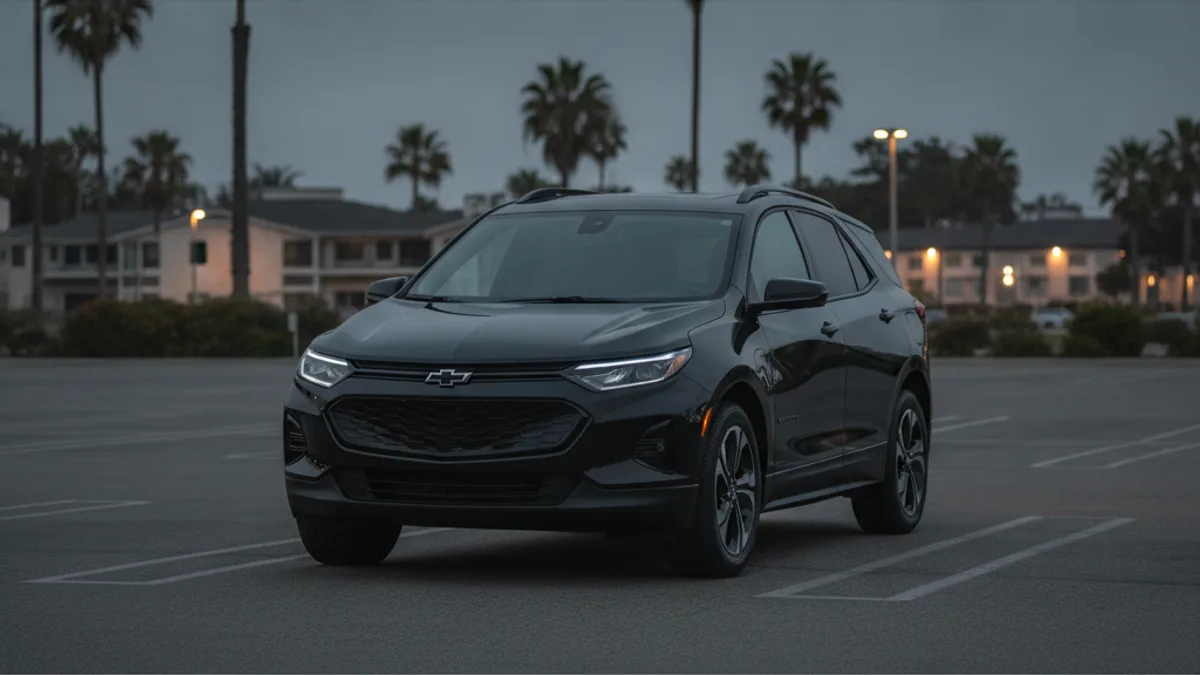
A cool coast night still flattens the 12V
Pacifica, Half Moon Bay, and El Granada sit on the San Mateo coast. Summer stays mild next to the water. San Francisco’s 1961-1990 July normal high is 71.5F. September’s normal high is 73.1F. Oakland Airport’s July figure is 70.4F. That isn’t Livermore heat. A parked Equinox EV still loses the 12V overnight. Modules stay awake while the car looks asleep. Short hops on SR-1 rarely finish a full 12V recharge. You walk out in the morning to a brick.
Pacifica’s housing is old by Bay Area standards. ACS 2019-2023 puts 81.1 percent of it in 1979-or-earlier buildings. ACS counted 37,527 people there. The 2024 estimate is 37,056. Daly City, just off the coast, is 78.7 percent pre-1980. San Francisco is 77.2 percent. Census treats that pre-1980 share as older housing. That often means apartments and street parking. Many Equinox EVs still spend the night unplugged.
Half Moon Bay is newer. Only 46.9 percent of its housing is pre-1980. El Granada, an unincorporated CDP, is 49.2 percent. Those towns still see the same overnight 12V failure. The houses are just less likely to be 1960s apartments. ACS population for Half Moon Bay is 11,454. El Granada is 5,231. None of those counts change the battery. They show how many coastside Chevys sit still at night.
Travelers from Daly City, San Bruno, and Pacifica also leave cars at SFO. A week in airport parking writes the same 12V story. flysfo.com has an EV-charging page. This research pass couldn’t read it, so stall counts aren’t confirmed. Confirm current parking details there before you pick a level. The airport doesn’t publish a wake-up guide for a dead 12V.
Peninsula Clean Energy supplies generation across San Mateo County. PG&E still owns the wires in Pacifica and Half Moon Bay. That split belongs on a home bill. It doesn’t wake a car that won’t boot. Don’t wait on a rate plan while the dash is dark.
Inland heat is a different 12V problem
Drive east and the climate flips. San Jose’s July normal high is about 82F. Livermore’s is 89.7F. Antioch’s is 90.4F. Gilroy’s is 88.3F. Concord and Brentwood July normals weren’t resolved in this research pass. Confirm those at the NWS if you need them. The inland heat gap over the coast is real and large. A weak AGM battery ages faster in that parked heat.
Coastside cars die after a still, cool night. Inland cars cook through a parked afternoon. Both leave you with a mute fob. Neither means the Ultium pack failed.
The Equinox EV shares Ultium with the Chevy Blazer EV. The 12V wake path is the same family. If a Blazer no-start already makes sense, this Chevy follows it.
Dark cabin versus an empty pack
Sort these before you call anyone.
A car that’s only low on range usually still wakes. You get a chime. You get a low-battery warning. You can often shift. You just shouldn’t go far. That’s a pack-energy problem. Operators we connect you with bring a 240V Level 2 source to a Chevy. They use CCS or a J1772 adapter. They typically add 10 to 20 miles of range. That’s in 15 to 30 minutes of charging. That’s charging time, never an arrival time.
A dead 12V is silence. No chime. No screens. No fob handshake. The car won’t go to Neutral. People assume the pack died because the whole vehicle feels dead. The Ultium pack can still be healthy. It’s waiting on the 12V. That’s the pattern in what happens when an EV 12V dies.
If the Equinox EV powers on but a stall won’t feed it, stop. Use the Chevy Equinox EV won’t charge steps instead. A charge-port fight and a dark cabin are different jobs.
What to check before you open the car
Start cheap. Don’t wave in a hook from the curb yet.
Look through the windshield. Any glow means the 12V still has some life. No glow means lockout territory. Try the fob from a few feet. Then try it at the liftgate. Walk until you have phone signal if you’re in a garage. Open the Chevy app if it will connect. You’re hunting a low-voltage alert you missed. You’re not hunting a range number.
If the app and the car are both blank, treat it as a 12V. Don’t keep tapping Start. There’s no engine to catch. Don’t run jumper cables from another EV hoping to fill the pack. Cables move 12 volts. They don’t charge an Ultium battery.
Gated lots make this worse. A ticket arm needs the car to roll. A kiosk at the ramp doesn’t help a dark cabin. Tell an attendant the car is disabled. Say you’ve already summoned help.
Get in through the liftgate
This Chevy doesn’t hide the backup key in the front door. The fob still has a mechanical blade. Press the release and pull it free. Walk to the rear. Use the blade in the liftgate lock. Most EVs put that override at a driver’s door. This one doesn’t. That trips people in a dark driveway.
Once the liftgate opens, climb in from the back. Find the interior hood release. Pop the front hood. You’re only opening panels. You’re not rolling the car. On a narrow coastside street, a rolling Equinox EV is a bad night.
If the blade won’t turn, stop. If you can’t reach the hood release, stop. Forcing a lock can wreck the latch. You’ll still be stuck.
Jump at the hood, not the pack
The 12V is a maintenance-free AGM battery under the front hood. After the liftgate entry, you should see the jump points. A metal cage or bracket sits over the battery. Owners commonly describe four 10mm nuts holding that cage. The cage can block a clean grab on the negative post. You don’t need to unbolt it for a normal jump.
Clamp the positive jumper lead to the positive terminal. Clamp the negative lead to bare, unpainted chassis metal. Don’t clamp the negative lead to the battery’s own negative post. That chassis ground is the intended path.
Once the car is up, the DC-DC converter takes over. It recharges the 12V from the Ultium pack while you drive. Don’t shut it down in the same stall and hope. Drive it. Get the 12V tested once you can move.
If the car feels glitchy rather than fully dead, try a reboot first. Disconnect the 12V negative terminal for about 10 minutes. Let every module power down. Reconnect, then see if the car wakes. That’s cleared a no-power complaint for some owners with no jump at all. For clamp order, follow how to jump start an electric car. A dark shoulder is a poor place to guess at studs.
When the car dies again after a jump
A failed or interrupted software update can leave the car unresponsive. Some Equinox EV owners have needed a new 12V plus a dealer reprogram. A parking-lot jump won’t finish that job.
A 12V that dies again in a few days needs more than a jump. That pattern points at the DC-DC converter or an ongoing drain. Get it tested at a Chevrolet dealer. Repeated jumps on the same driveway are a stall, not a fix.
| What you see | Treat it as | First move |
|---|---|---|
| Fob mute, no chime, fully dark cabin | Dead 12V | Liftgate blade, then jump at the hood |
| Warning showed, then it wouldn’t start | 12V that gave notice | Jump if you’re stuck, then get it tested |
| Glitchy after an update | Software hang | 10-minute negative disconnect, then jump |
| Starts, then dies within days | Drain or DC-DC fault | Dealer diagnosis, not another jump |
| Dash wakes, range near zero | Empty pack | Mobile Level 2 charge, not a 12V jump |
| Blade won’t turn, or jump fails | Past DIY | Call for an on-site operator |
If you’re already on SR-1 or a freeway
A silent Equinox EV on SR-1 is a disabled vehicle. That includes the Pacifica to Half Moon Bay stretch. CVC 21718 generally bans stopping on a freeway. There’s an exception when the car can’t move and help has been summoned. Put the hazards on. Stay out of the travel lanes. For the coast run itself, read stalled on SR-1 from Pacifica to Half Moon Bay.
CVC 22651(f) is the removal clock. A vehicle standing more than four hours on a full-access-control freeway can be towed. That applies if you can’t move it under its own power. Don’t sit on the shoulder hoping it wakes.
The Freeway Service Patrol covers Bay Area freeway beats. MTC, CHP, and Caltrans partner on it. Private tow companies run the trucks. Hours are Monday to Friday, 6 to 10 AM and 3 to 7 PM. Dial 511 and say “Freeway Assist,” or use a call box. FSP publishes a free gallon of gas, jump-starts, and radiator refills. The MTC page, read 2026-09-18, doesn’t mention electric vehicles. It also doesn’t mention an out-of-charge fill. Ask the driver what they can actually do on an Equinox EV. Outside those hours, the CHP Rotation Tow Program assigns the truck. You don’t pick the company. Caltrans District 4 covers the nine Bay Area counties. 511 SF Bay is the traveler line.
Express lanes run on I-80, I-580, I-680, I-880, US-101, and SR-237. FasTrak is required. Hours are generally 5 AM to 8 PM weekdays. A published disabled-vehicle policy for those lanes wasn’t found. Don’t assume a usable shoulder. If the car can still roll, open a charging app. Pick a site you can already see on the map. This page doesn’t estimate how far the next post is.
Private lots and the tow clock
Apartment lots add a tow risk that freeways don’t. CVC 22658 governs private-property tows. The property needs a posted sign at least 17 by 22 inches. Lettering has to be at least one inch high. The sign has to warn that removal is at the owner’s expense. It has to list the enforcement number and each tow company’s name. The operator must notify law enforcement within one hour. Overcharging past the approved rate creates four-times liability. California doesn’t cap ordinary consensual tow rates statewide. Confirm the current figure with the lot before you pay.
San Francisco’s city contractor is TEGSCO, LLC, doing business as AutoReturn. San Jose and Oakland have private-property tow frameworks. The specific municipal text wasn’t verified in this pass. Check the city pages before you assume a process. This is why a dead Equinox EV in a Pacifica driveway is a time problem. It isn’t only a battery problem.
When to get a local operator on site
Call for help if any of this is true. The key blade won’t open the liftgate. You can’t reach the hood release. You have no jump pack and no safe chassis ground. The car died again after a clean jump. You’re on SR-1 and the car won’t roll. You’re worried a lot has already called a hook.
Charge Pro SF is a referral line. It matches stranded EV drivers with independent local mobile rescue operators. It doesn’t own trucks, employ technicians, or hold a trade license. It doesn’t set prices or promise an arrival time. The operator who takes the job quotes you before starting. They bill you directly.
What those operators do is specific. They can jump or replace a dead 12V on site. They can bring a 240V Level 2 source to the car. A Chevy Equinox EV needs CCS or a J1772 adapter. They handle Tesla and every major EV brand. The pros we connect you with are licensed and insured. For a non-Tesla that’s stuck, start with non-Tesla EV rescue.
We serve the Bay Area. That includes the coastside, the Peninsula, the South Bay, and the East Bay. If the Equinox EV is dark after a coastside night, tell them the street. Say whether the cabin is fully dark. Say whether the car will roll.
Call (415) 630-6268 and the referral will pass you to an operator.
Frequently asked questions
Why won’t my Chevy Equinox EV start after a coastside night?
A weak or dead 12V is the usual cause, not the Ultium pack. A still night in Pacifica or Half Moon Bay still drains it. The 12V has to boot the computers before the high-voltage system can work. A healthy pack still leaves a dark car if that battery is gone.
How do I get into a locked Equinox EV with a dead 12V?
Pull the mechanical key blade from the fob. Use it in the liftgate lock at the rear, not the front door. Climb in from the back and pull the interior hood release. That’s how you reach the 12V under the front hood.
Can I jump a Chevy Equinox EV on the street?
Yes, using the positive terminal and a bare-metal chassis ground. Don’t use the battery’s own negative post. A cage over the battery can hide that negative post. Leave the cage on for a standard jump. If a jump fails, or the 12V dies again, stop. Get a dealer diagnosis or a mobile operator on site.