Your EV is dying on SR-1 between Pacifica and Half Moon Bay. Treat it as a highway stall. Put the hazards on. Ease as far right as you can. Stay with the car. Call for a mobile charge that meets you there. Don’t hunt for a plug while the pack falls. Charge Pro SF is a referral line for the Bay Area. Independent operators bring 240-volt Level 2 power. They cover Tesla and every other major EV brand.
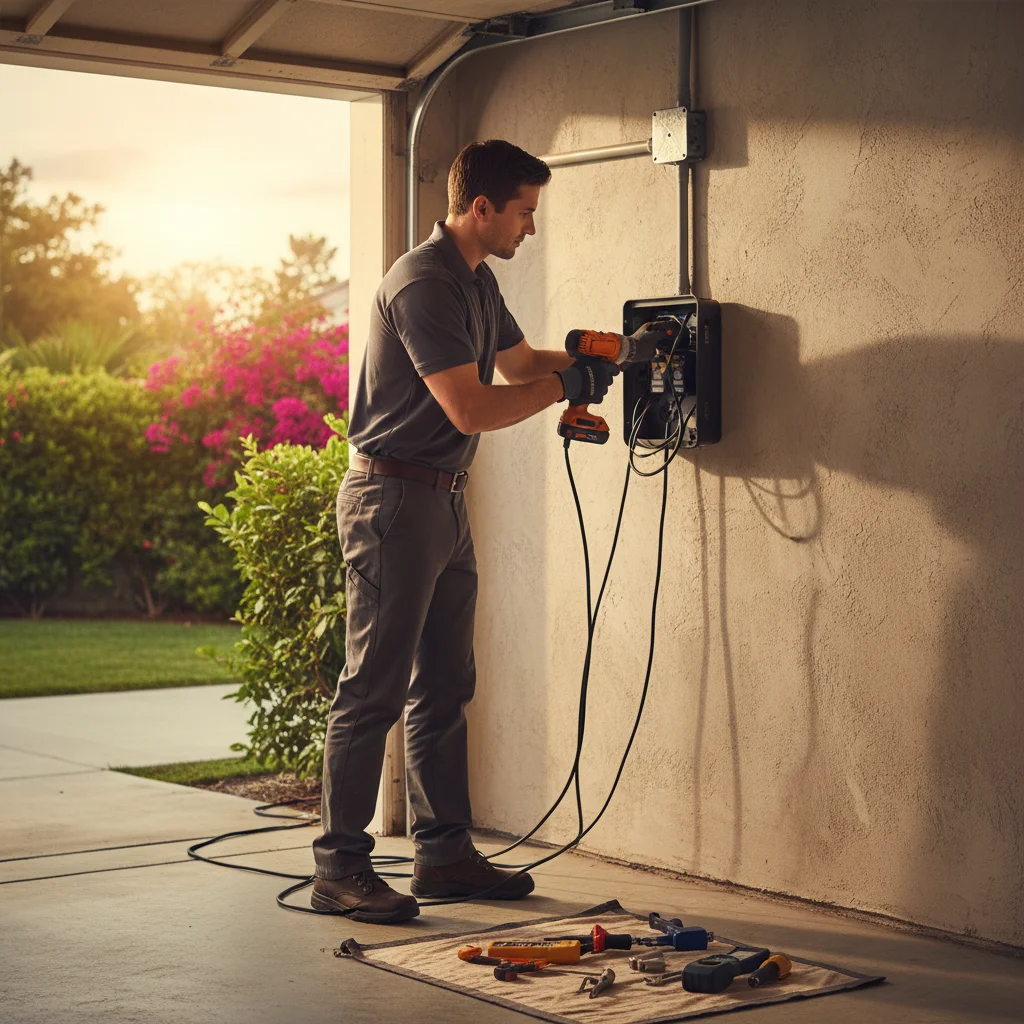
Three Coastside towns on one state route
Pacifica, El Granada, and Half Moon Bay sit on San Mateo County’s Coastside. They share Highway 1. They don’t share a dense inland grid. Pacifica had 37,527 people in the ACS 2019-2023 count. The 2024 Census estimate is 37,056. Half Moon Bay had 11,454 in ACS and 11,324 in 2024. El Granada is an unincorporated CDP with 5,231 people. It has no 2024 PEP estimate. Pacifica covers about 12.6 square miles. Half Moon Bay is about 6.2. El Granada is about 4.9. They’re small places with one state route through them.
ZIP 94044 overlaps Pacifica. Half Moon Bay shows 94019. El Granada shows 94018 and 94019. Those ZIP areas can spill past a place line. Don’t treat a ZIP as a city limit.
This isn’t a downtown loop. It’s SR-1 between those towns. A low pack here doesn’t give you a spare circuit. Finish the miles you still have. Or stop and get range brought to the car. EV roadside help in Pacifica covers the north end. EV roadside help in Half Moon Bay covers the south. This page is the run between them.
About 81.1% of Pacifica housing was built before 1980. Half Moon Bay is younger at 46.9% pre-1980. El Granada is 49.2%. Census treats that older stock as a proxy for tight electrical panels. It isn’t a survey of every driveway. Confirm your own plug at home. A Coastside Saturday often starts on a partial pack from a Peninsula weekday. That’s how a short Highway 1 run goes thin.
Peninsula drivers come from Daly City, San Bruno, and San Mateo all the time. Those cities have street grids and US-101. The Coastside does not. Once you commit to SR-1, you’re on the state route. PG&E still delivers the wires in Pacifica, El Granada, and Half Moon Bay. Peninsula Clean Energy supplies generation for all of San Mateo County, including those three. Your CCA doesn’t meet you on the shoulder. Don’t look at a utility bill for a rescue.
Some stalls start earlier than the coast. A car that sat through a trip can wake with a dead 12-volt. Airport parking pages don’t publish that failure. Then the driver points the car at Highway 1 anyway. Screens look fine for a few miles. Then they don’t. Sort pack versus 12V before you assume you only need a plug.
Cool marine air still burns range
San Francisco International Airport’s July average high is 71.5F. That’s the 1961-1990 NWS normal via WRCC. Livermore’s July high is 89.7F. Antioch is 90.4F. The coast stays cool while the interior bakes. Cool isn’t free in an EV. Headlights, wipers, defrost, and cabin heat all draw power. Foggy SR-1 is when those loads actually run. A pack that felt fine in Pacifica can sag by El Granada. That can happen without an inland grade.
Don’t add side trips once the estimate looks thin. Highway 1 between these towns isn’t El Camino Real. You can’t cut a few blocks and rewrite the day. If the number is already low, stop. Don’t use the car as a waiting room. Climate control while you sit is still drain. Lights in fog are still drain.
What the Vehicle Code actually says
California Vehicle Code 21718 bars stopping on a freeway except in limited cases. One case is a vehicle so disabled that stopping is unavoidable. Another vehicle also has to be summoned to assist. If you’re on a full-access-control freeway segment, that exception is what applies. It isn’t a rest-stop permit. Summon help. Don’t wait with no plan.
CVC 22651(f) lets a vehicle be removed after more than four hours. That clock applies on a full-access-control freeway. It also requires that the car can’t move under its own power. This research pass didn’t map every SR-1 segment on the Coastside. Confirm with CHP or Caltrans District 4. Ask whether your pin is that kind of freeway. Four hours is the verified outer limit on those stretches. It isn’t a goal. Start recovery long before anyone talks removal.
California doesn’t cap ordinary consensual tow rates statewide. The operator sets the quote, subject to local rules. CHP sets rates only for its own rotation vendors. If the call goes to the CHP Rotation Tow Program, you don’t pick the company. That’s on chp.ca.gov. CVC 22658 is a different rule for private-property tows and posted signs. A highway shoulder stall is usually not that case.
Caltrans District 4 covers the nine Bay Area counties. QuickMap is their highway-conditions feed. 511 SF Bay is the regional traveler line. Use them for closures and cameras. They won’t charge the pack.
Freeway Service Patrol won’t refill an empty pack
The Bay Area Freeway Service Patrol is a partnership of MTC, CHP, and Caltrans. Private tow companies run the beats under bid. Hours published on 511.org are Monday to Friday, 6 to 10 AM and 3 to 7 PM. Dial 511 and say “Freeway Assist.” You can also use a call box. MTC says FSP clears crashes and debris. It also provides a free gallon of gas, jump-starts, and radiator refills. MTC cites over 100,000 incidents a year. Beat and truck counts aren’t published.
A weekend stall on Highway 1 sits outside those weekday windows. So does a mid-day fog crawl. Outside FSP hours, the call often goes to CHP rotation tow.
The MTC FSP page, read 2026-09-18, lists gas, jumps, and radiator work. It doesn’t mention electric vehicles. It doesn’t mention out-of-charge help. A 12-volt jump might overlap with jump-starts. An empty traction pack does not. The FSP page doesn’t list a Level 2 EV source. Don’t wait on 511 for a charge that program never described.
Empty pack or a silent 12-volt
Not every dead EV on Highway 1 is out of range. Teslas and most other EVs still use a 12-volt battery. That battery wakes the computers, the contactors, and the charge port. Dark screens and stubborn doors often mean 12V. Range can still sit in the pack. A car that’s awake at zero percent needs energy in the traction battery. Mixing those up wastes the next hour.
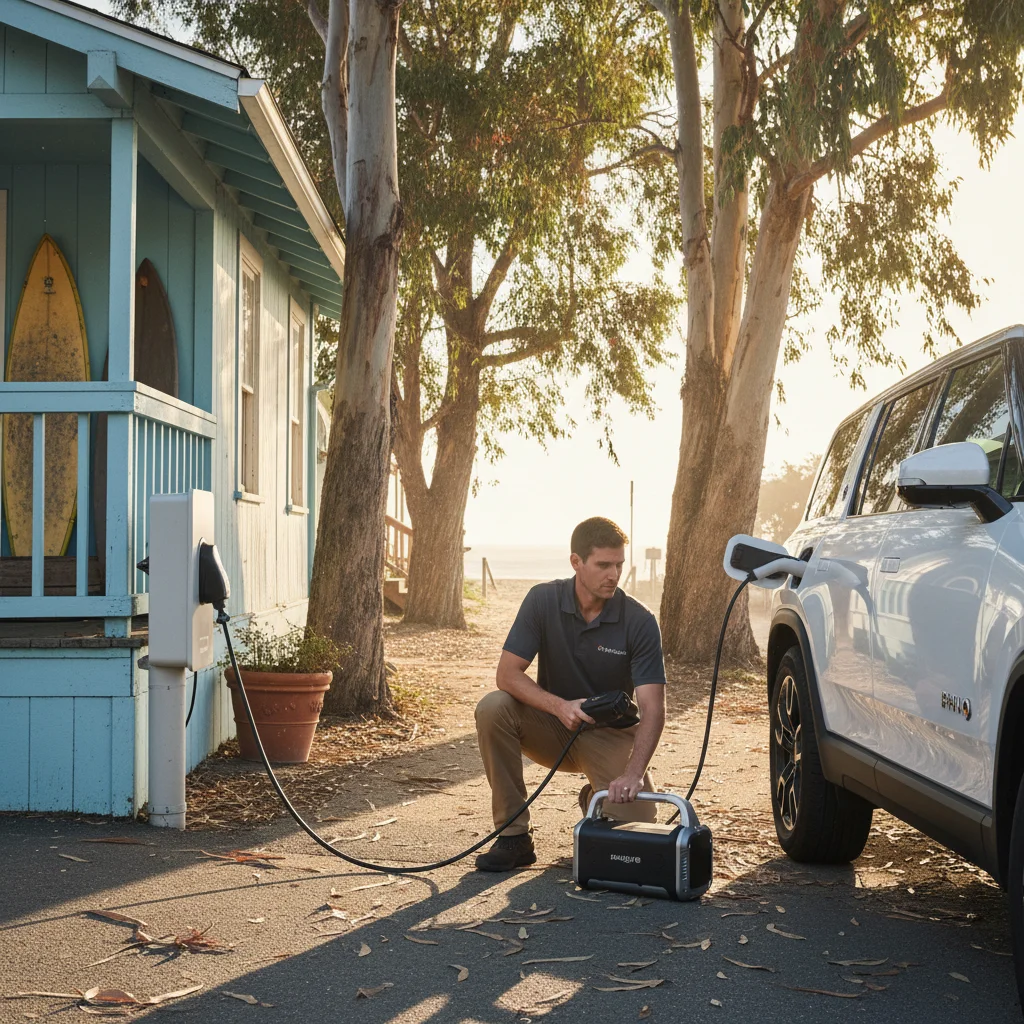
Operators in this network jump or replace a dead 12V on site. They handle Tesla and every major EV brand. For an empty pack they bring a 240-volt Level 2 source. Teslas take a native NACS plug. Other brands use a CCS or J1772 adapter. Charging time is typically 15 to 30 minutes. That window is plug time. It isn’t an arrival time. It typically adds about 10 to 20 miles of range. That’s enough to leave the shoulder and drive to a stop you choose. It isn’t a fill to 100%.
Named public charging sites for this corridor weren’t in the verified set. This page won’t invent one. It also won’t guess a distance. If you already know a working post and you can reach it with margin, go. If you can’t, stay put. Bring the charger to the car.
For the plug-in itself, see mobile EV charging. Out-of-charge recovery is the empty-pack path. EV roadside assistance is the wider rescue page.
A mobile charge versus a tow from SR-1
A tow fits a crash, a puncture, or a car that won’t take a charge. For a car that’s simply empty, a tow is a relocation. You still need electrons at the other end. EVs generally need a flatbed so the drive units don’t spin. Not every rotation truck is set up for that. Confirm the method before anyone hooks the car. For that fork, read mobile EV charging or a tow.
A mobile Level 2 rescue stays with the stalled car. The operator quotes you before work starts. They bill you directly. Charge Pro SF doesn’t set that price. It doesn’t own the rig. It doesn’t promise a clock. If the quote doesn’t work, you can decline. Penal Code 632 is why a forwarding line plays a recording notice. California requires all-party consent for a confidential recording.
On a foggy Coastside shoulder, leaving in your own car is the clean ending. You pick the next stop. El Granada sits between the two cities on this run. EV roadside help in El Granada is the midpoint town page if that’s where you actually stopped.
What to do in the first minutes
Do this in order.
- Hit hazards as soon as the car starts to sag.
- Coast right. Use a legal shoulder or a turnout if you can reach one.
- Stay out of the travel lane. Don’t walk the white edge line in fog.
- Call for help that can add range or jump the 12V where you sit.
- If CHP or an FSP truck arrives, say help is already summoned. Have the callback number ready.
- Don’t start a second hop on leftover miles you don’t have.
Stay with the vehicle unless you’re in immediate danger. You’re easier to see in the car with belts on and lights flashing.
Who actually shows up
Charge Pro SF matches stranded EV drivers with independent local mobile rescue operators. It doesn’t perform the work. It owns no trucks. It employs no technicians. It holds no license. The operator you get quotes before starting. They bill you directly. The pros we connect you with are licensed and insured. The brand isn’t the licensee.
Service covers the Bay Area, including every Coastside city in San Mateo County. Starting in San Francisco or Daly City doesn’t change the stall. You’re still on SR-1. A referral charge still has to reach that pin.
When you’re ready to request a match, call (415) 630-6268. That’s the referral number. It isn’t a promise of arrival, hours, or a rate. The operator on the other end quotes the job. You decide whether to proceed.