Towing a Tesla Model S starts with identifying the exact car and its condition. Before an operator heads your way, share the model year, available power, location, access limits, and intended destination. On a Bay Area freeway shoulder or in a private garage, those details shape whether the car needs a jump, a mobile charge, or transport.
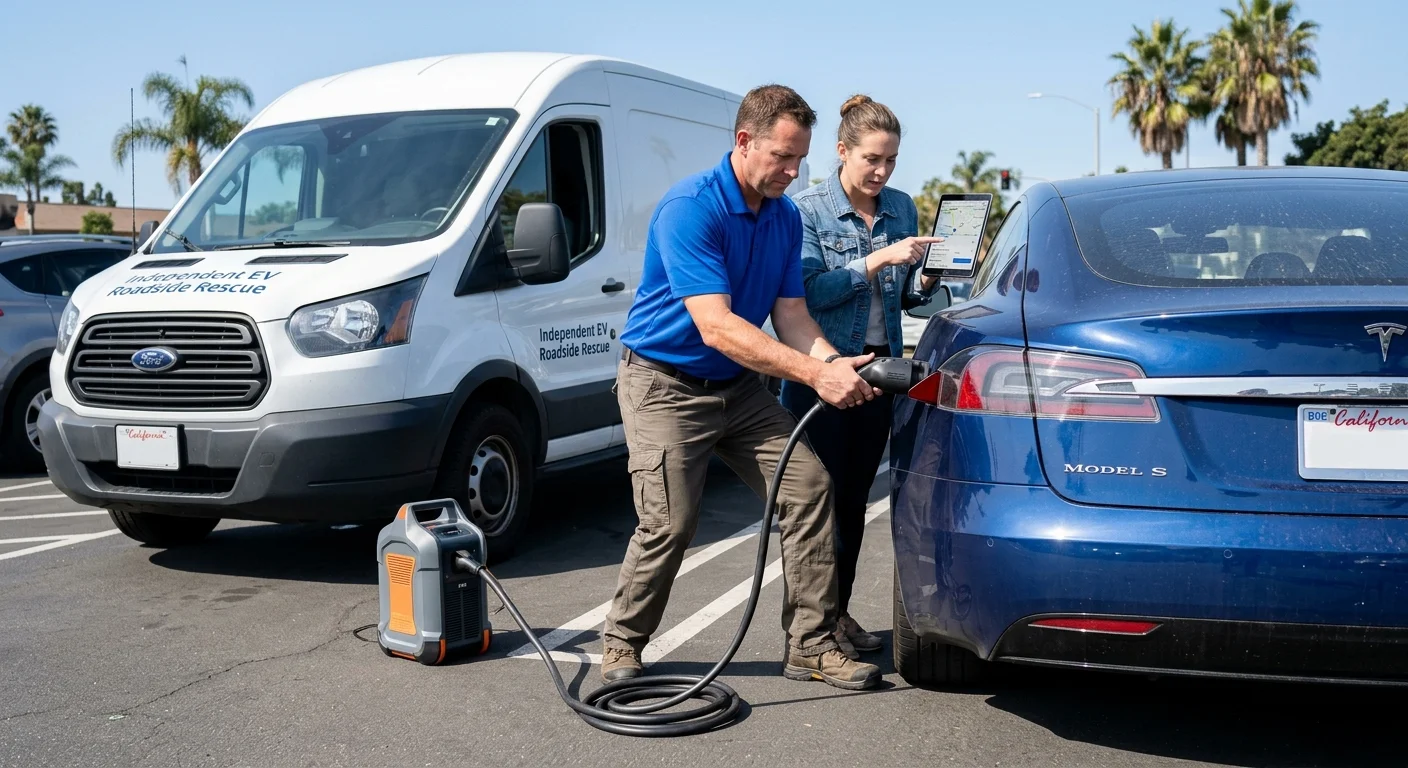
Confirm the Model S and model year
Start by confirming that the vehicle is a Tesla Model S. Then find the model year from paperwork or another record you trust. Do not guess from the paint, wheels, screen, or body shape.
Give the operator the full model description shown in your records. Share any trim or configuration wording you can confirm. If you can access the vehicle identification number, have it available. Do not post it publicly or send it somewhere you do not trust.
The model year matters because the operator should consult instructions for your exact vehicle. Advice written for another Tesla, or another Model S year, should not replace that check. Approved claims did not confirm loading points, jump points, access procedures, or steps for placing the car into a transport setting for every Model S year. Those details must come from current Tesla documentation.
Tell the operator whether the Model S appears modified. Describe anything visible that may affect access, such as unusually low clearance or nonstandard wheels. Do not diagnose the effect yourself. The operator can decide what information needs further review.
Also mention why you believe the car needs help. A blank screen, an empty battery display before shutdown, collision damage, a tire problem, or an unexplained failure are different handoff descriptions. State only what you observed.
If the car stopped without a clear cause, our Model S won’t start checks can help you organize the symptoms. It is not a substitute for the current vehicle instructions or an operator’s assessment.
Identify whether low-voltage power is available
Next, describe what still responds. Do not open panels, remove trim, or improvise a power connection for this checklist. The goal is to give the operator a clean report, not to perform roadside electrical work.
Check only the controls you would normally use. Tell the operator whether the doors respond, the center display lights, or the vehicle shows any message. Note whether exterior lights respond when you try their normal controls. If nothing responds, say that plainly.
Use simple descriptions:
- “The center screen is on and shows a message.”
- “The doors respond, but the vehicle will not move.”
- “The app connects, but the car does not respond.”
- “There is no visible response from the car.”
- “I cannot access the cabin.”
Copy any displayed message exactly. A photo can help preserve the wording, provided you can take it without entering traffic or another unsafe area. Do not translate the message into your own diagnosis. “No visible power” is more useful than claiming a specific battery has failed.
Also report whether the charging port responds through the controls you normally use. Do not force it. Tell the operator if a charging cable is attached, and identify who owns that cable. If the vehicle is connected to private or public charging equipment, describe the location and any message you can see.
These observations help the operator review whether charging, access assistance, or transport deserves consideration. They do not prove which part failed. For broader symptom sorting, read our guide to Model S 12V checks.
Check Tesla’s current transport instructions
Before towing a Tesla Model S, the operator should check Tesla’s current instructions for that exact vehicle. Approved sources did not contain verified Model S transport-mode, loading, jump-point, or manual-access procedures. We will not recreate those steps from memory.
Use Tesla’s current owner information tied to the car. Search by the confirmed model and model year. If the vehicle’s screen or app remains accessible, look for the official owner information available there. You can also ask the operator which official instructions they are reviewing.
Avoid using an old screenshot, forum reply, or video as the final authority. It may describe another Tesla or a different vehicle configuration. Send the operator the official page you found, along with the model year and any messages displayed by the car.
Our published article on how a Tesla with no power gets handled gives a broader planning overview. It does not replace the current Model S instructions. Treat it as preparation for the conversation, not as a loading procedure.
Do not tell the operator that the car is already in a particular towing setting unless the vehicle confirms it. Instead, report what you can see. For example, say that the screen is available but no setting has been selected.
If you cannot locate instructions for the correct year, say so. Ask the operator to confirm the source they intend to follow before loading begins. That direct check is better than filling the gap with an unverified procedure.
Share road, garage, and destination details
A precise location helps the operator understand the handoff. Send a dropped map pin when possible, then add a plain description. Include the street, travel direction, nearby exit, parking level, or recognizable entrance.
Bay Area locations need different descriptions. A Model S near US-101 in San Carlos needs a travel direction and the nearest exit. A car in a Downtown San Francisco garage needs the garage name, level, entrance street, and posted clearance. In Concord or Walnut Creek, include the correct lot or access road. Near I-580 in the Tri-Valley, I-680 at Sunol, or the Bay Bridge approach on I-80, identify the route and direction without crossing traffic to read a sign.
Mention anything between the operator and the car:
- A gate, locked entrance, or parking attendant
- A narrow driveway or sharp turn
- A steep ramp or low ceiling
- A reserved space or shared charging stall
- A wheel positioned against a curb
- Visible collision or tire damage
- A cable still attached to the vehicle
Describe these conditions without prescribing equipment. Charge Pro SF does not claim that every independent operator carries the same tools or vehicle. The operator should decide whether the location and vehicle condition fit their capabilities.
Choose the destination before transport begins. Give its exact address and name. Then confirm access, acceptance, and current hours directly with that destination. We do not publish unverified facility hours or promise that a particular location will accept the vehicle.
Our Tesla roadside rescue referral service connects Bay Area drivers with licensed, insured independent operators. The customer contracts with and pays the matched operator directly.
Decide whether charging or transport fits
A powerless Model S does not automatically tell you which service to request. Give the operator the facts, then ask whether mobile charging or transport fits those facts. Do not select a method by guessing at the failed component.
Charging may deserve review when the main concern is a depleted driving battery. Tell the operator what the vehicle displayed before it stopped, whether the charge port responds, and whether the car is positioned where charging can be considered. The operator must decide whether charging is appropriate at that location.
Transport may deserve review when the vehicle will not accept charging, access remains unavailable, damage is visible, or the destination needs the car moved. These observations are still not a diagnosis. They are details for the operator and destination to assess.
If you are unsure, ask these direct questions:
- Are you evaluating mobile charging, transport, or both?
- Have you confirmed my Model S year?
- Which current Tesla instructions will guide the transport?
- Does the vehicle’s location create an access concern?
- What information do you need about available power?
- Should I confirm anything with the destination first?
For a depleted battery situation, our out-of-charge recovery service explains how we connect drivers with independent local operators. Charge Pro SF performs no charging or towing itself. It does not own roadside equipment, set operator prices, or provide a service warranty.
Ask the matched operator directly about pricing, payment, scope, and any warranty before agreeing to service. Those terms belong to the independent operator. Current Model S-specific towing prices could not be confirmed through approved sources, so this page does not publish an estimate.
When to call us
Call when your Tesla Model S has no power and you need help deciding whether mobile charging or transport fits. Share the model year, power status, exact location, access details, and destination.
Call (415) 630-6268 and we will connect you with a local EV rescue operator.