Campus rush on SR-237 is a hard place to learn the pack is already low. You leave a lot in Mountain View or Sunnyvale and merge into a crawl. The useful ramps fill with the same commute. If the car is about to quit, get all the way onto the right shoulder. Turn on the hazards and stay there. Then have an operator bring charge so you can drive off the freeway yourself.
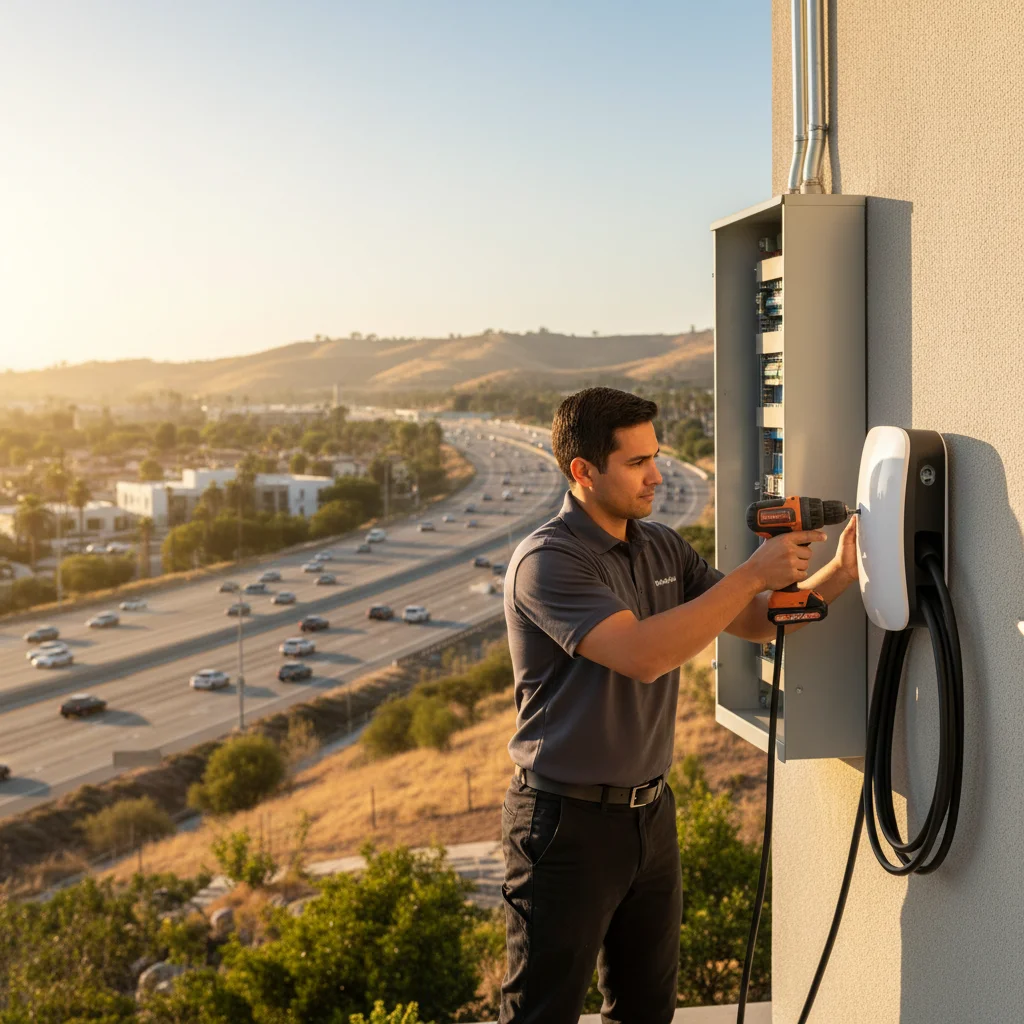
Campus traffic is what empties the car
SR-237 is the east-west commute spine across Silicon Valley. MTC lists express lanes on this route. FasTrak is required. A Flex tag is how carpools get the discount. Published hours are generally 5 AM to 8 PM on weekdays. That’s the operating note. It isn’t a map of the shoulder. It isn’t a promise you can dart across lanes if you stall.
The stall pattern here is simple. The car sat in a campus garage or a surface lot all day. Climate control ran on the way in. Accessories ran at lunch. Then you join a stop-and-go merge toward US-101 or toward I-880. The number on the dash falls faster than it did at noon.
Few exits, in this case, means few clean chances to get off once the ramps fill. You aren’t on an open rural highway. You’re on a corridor where every off-ramp is another queue. Hunting for a charger from a live lane is how people end up in a merge. If the pack is already in the single digits, pick a safe stop while you still steer.
Charge Pro SF doesn’t drive the truck. We match you with an independent local operator. That operator quotes you before any cable goes on. They bill you directly.
Mountain View and Sunnyvale, where the day starts
Mountain View is a Santa Clara County city in the South Bay. The ACS 2019-2023 count is 82,363 people. About 62 percent of the housing was built in 1979 or earlier. PG&E is the wires utility. Silicon Valley Clean Energy supplies generation.
That older housing stock is why so many campus-day cars sit on the street or in open lots. They aren’t on a home 240-volt circuit. The car sits cold or hot for hours. Then it has to join 237 traffic with whatever is left in the pack.
Sunnyvale is the bigger neighbor. ACS population is 153,455. About 58.6 percent of housing is pre-1980. The same PG&E and Silicon Valley Clean Energy pairing applies.
If you still have range to leave 237 on the west end, leave on purpose. Our Mountain View EV roadside help page is for the campus-lot version of this stall. The Sunnyvale roadside page is for the car that sat all day and then wouldn’t wake.
Don’t spend the last miles circling a garage you can’t enter. A gate, a full lot, or a shuttle lane will eat those miles. A controlled stop on the shoulder beats an uncontrolled stop in a ramp.
Santa Clara and San Jose in the middle
Santa Clara is one of three Bay Area cities with a municipal electric utility. Silicon Valley Power runs the wires and the generation. It isn’t a PG&E city with a separate supplier. ACS population is 129,239. About 59.9 percent of housing is pre-1980.
San Jose is the giant on the south side of this corridor. ACS population is 990,054. About 60.8 percent of housing is pre-1980. PG&E delivers the power. San Jose Clean Energy supplies generation.
July in San Jose averages about 82F in the 1961-1990 NWS normals published via WRCC. Climate control on a 237 crawl in that heat isn’t a rounding error. It’s why a pack that looked fine in a garage can look tight on the freeway.
Stadium nights make the same ramps worse. Levi’s Stadium sits in Santa Clara. Event traffic and campus traffic share the approaches. If you already parked and the car won’t wake, use the Santa Clara roadside page. If you’re still on 237, stay with the shoulder steps below.
Milpitas, I-880, and the east end
Milpitas is the east end of this story. It’s where 237 meets the I-880 curve. ACS population is 78,216. Only about 39 percent of housing is pre-1980. That’s newer than the Mountain View and Sunnyvale stock. PG&E plus Silicon Valley Clean Energy applies here too.
Eastbound campus traffic often wants I-880, then Fremont, or a BART lot. Warm Springs / South Fremont BART lists Level 2 charging with 42 plugs on bart.gov. You may plan around that site when you still have range and you can actually reach it. Don’t aim at it from a dying dash on 237. A named charger you can’t arrive at isn’t a plan.
Fremont sits past that 880 curve, with 228,518 people in the ACS count. Ava Community Energy supplies generation there, with PG&E on the wires. That’s a destination, not a reason to roll off 237 onto a new freeway with no range left.
If you got off the freeway before the car quit, EV roadside help in Milpitas covers that 237 and 880 tangle. If you’re still on the freeway, don’t roll onto 880 just to feel like you made progress. A stop on 237 with hazards on is cleaner than a stop in a new merge.
Call while you can still roll
If you can call hands-free, call before the car dies. Give direction of travel and the last ramp you remember. Add make, color, and the number on the dash. That’s the whole brief. The operator quotes before they start.
California Vehicle Code 21718 says you can’t stop on a freeway except in limited cases. One of those cases is a vehicle so disabled that stopping is unavoidable. Another vehicle must already have been summoned to assist. Summon help, then stop. Don’t stop in a travel lane because you hope the next exit will work.
The choice is simple. Take a ramp you know you can use. Or take the right shoulder while you still steer. Don’t split the difference at the ramp split.
If you’re reading this at a desk, and the pack is already low, start here. What to do before you’re stranded is the version for drivers who aren’t stuck yet. If you’re already on 237, keep going on this page.
Once you’re on the shoulder
Pull as far right as the pavement gives you. Hazards on first, before the seat belt. If the car is still creeping, use that last bit of motion to clear the travel lane. Don’t stop on an on-ramp if you can still reach a straight, visible stretch.
Get out on the passenger side when you get out at all. The driver’s door opens into traffic. Stand behind the right rear corner. Don’t stand in front of the hood. Don’t stand between the car and the lanes.
Don’t walk the shoulder looking for a better spot. 237 mixes campus cars with commercial traffic in the same peak. Stay with the vehicle.
You can wait in the car. That’s often the better call if you’re close to a live lane. Sit on the right or in the back. Keep the hazards on. If CHP asks you to step out, follow that instruction. Stay on the right side of the car.
511, FSP, and the CHP rotation
Dial 511 and say “Freeway Assist” during Freeway Service Patrol hours. Those hours are Monday through Friday, 6 to 10 AM and 3 to 7 PM, from 511.org. FSP is MTC, CHP, and Caltrans together. Private tow companies run the beats under bid.
What FSP publishes is crash and debris clearance, a free gallon of gas, jump-starts, and radiator refills. The MTC FSP page, read 2026-09-18, doesn’t mention electric vehicles. It doesn’t mention an out-of-charge fill. A jump may wake a 12V. It won’t put miles into a traction pack. Treat FSP as the safety truck, not as your charge.
Outside those hours, the path is the CHP Rotation Tow Program. You don’t pick the company. Caltrans District 4 covers highway conditions for the nine Bay Area counties. 511 SF Bay is the regional traveler line.
Give them eastbound or westbound. Give the last interchange you’re sure of. Give a short vehicle description. They can put a non-emergency check on you. If CHP arrives before the charging operator, stay with their instructions.
The four-hour removal rule
CVC 22651(f) allows a vehicle to be removed after four hours on a full-access-control freeway. That applies when it’s stopped or left standing and can’t move under its own power. That clock is real. A car that can sit until a lot opens isn’t a freeway plan.
A mobile out-of-charge recovery is how most drivers leave without a hook. A tow is what you want when the car won’t accept charge. It’s also the tool when the 12V won’t hold, or when an officer needs the lane cleared now. For the same decision on any Bay Area freeway, not just this one, see your EV died on a Bay Area freeway.
California doesn’t cap ordinary consensual tow rates statewide. CHP sets rates for its own rotation vendors. Everyone else sets their own, subject to local ordinance. Ask for the quote before anything is hooked.
Pack empty, or 12V dead
Campus-day stalls split into two jobs. Know which one you have before anyone clips a cable.
The 12V job looks like this. No dash. Doors that won’t present a handle. A charge port that won’t open. An app that can’t see the car. The traction pack may still have energy. The computer is asleep. Operators jump or replace that 12V on site. They cover Tesla and every major EV brand.
The pack job looks like this. The car is awake. The display is telling the truth. You’re at or near zero. You need 240 volts into the pack. A jump won’t invent range.
Don’t use a gas-car jump pack on terminals you can’t identify. Wait for the operator.
Tesla’s own published roadside path still often ends in a tow when the pack is empty. A Level 2 rescue on the shoulder is the other fork. Operators typically add 10 to 20 miles of range in 15 to 30 minutes of charging. Teslas take a native NACS plug. Other EVs use a CCS or J1772 adapter. Charging time isn’t an arrival time. Nobody here promises when the truck shows.
What the operator does on 237, and what we don’t
We connect you. We don’t hold a contractor license for the work. We own no trucks, no yard, and no parts stock. We employ no technicians. We set no prices. We publish no hours.
The operator who takes the job brings the 240V source to the car. They quote first. They bill you. Typical delivery is enough range to exit 237 and reach a charger you already intended to use. It can also cover a short run home if that’s closer.
Say the make and model on the call so the adapter matches.
If you stalled in an express lane, stay in the car with the hazards on. Tell 511 you’re in the express lane. Don’t walk across live traffic.
Frequently asked questions
What should I do first if my EV stops on SR-237?
Get fully onto the right shoulder. Turn on the hazards. Stay with the car. Exit from the passenger side if you get out. Call 511 for Freeway Assist during weekday peak hours, then call for a mobile charge. Don’t walk the shoulder. Don’t chase a ramp you can’t reach.
Can the Freeway Service Patrol put charge in my EV on 237?
Not based on what they publish. FSP hours are Monday through Friday, 6 to 10 AM and 3 to 7 PM. The MTC page lists gas, jump-starts, and radiator refills. It doesn’t list out-of-charge EV help. A jump may fix a 12V. An empty pack still needs a 240-volt operator.
Do the operators handle Tesla and other brands on this corridor?
Yes. The rigs carry a native NACS plug and CCS or J1772 adapters. Tesla, Rivian, Hyundai, Kia, Ford, GM, and Volkswagen are in scope. Confirm the make on the call so the right hardware is on the truck.
If you’re already on the shoulder on SR-237, call Charge Pro SF at (415) 630-6268. We’ll match you with a local operator who quotes before they start and bills you directly.