A stalled EV on a Bay Area freeway doesn’t care what hour it is. Who can legally stop for you depends on the clock. On weekday commute windows, the Freeway Service Patrol may roll up first. Outside those hours, CHP’s Rotation Tow Program usually picks the truck. This field guide is roadside assistance for EV drivers who need that split. Read it before the four-hour removal clock starts.
FSP hours decide who shows up first
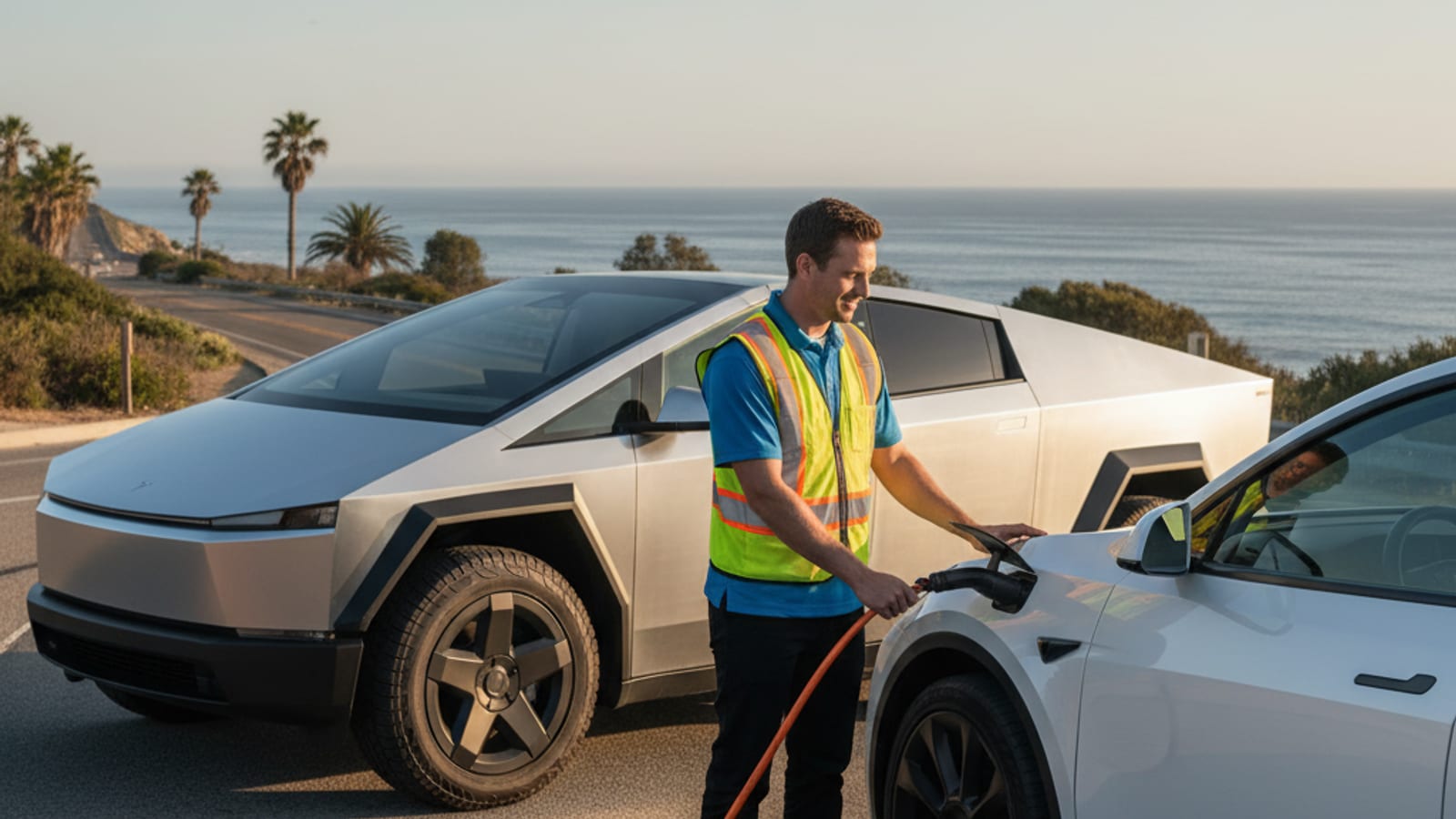
The Freeway Service Patrol is a partnership of MTC, CHP, and Caltrans. Private tow companies run the beats during posted hours. They’re chosen by competitive bid for each freeway beat. Each beat stays dedicated while FSP is on duty.
Posted hours are weekdays, 6 to 10 AM and 3 to 7 PM. You can confirm current hours on 511.org. Dial 511 and say “Freeway Assist” to reach a beat. A roadside call box reaches the same program. Caltrans District 4 covers the nine Bay Area counties. 511 SF Bay is the regional traveler line, and QuickMap shows cameras.
When you call 511 during those windows, give the highway and direction. Give the last exit you passed. Say the car is an EV. Say whether you need a jump or you’re out of charge. MTC says FSP clears crashes and debris. It also lists a free gallon of gas, jump-starts, and radiator refills. The same page reports over 100,000 incidents a year. Beat counts and truck counts aren’t published. Don’t invent a wait from that number.
The MTC FSP page, read on September 18, 2026, doesn’t mention electric vehicles. It doesn’t mention an empty pack or a mobile charge. On I-80 in Richmond, a patrol truck may still jump a 12V. The same is true on I-880 through Hayward. It may not be set up to feed the high-voltage pack. Confirm with 511 what that beat can actually do. Then call EV roadside assistance if you need a charge. Gas in a can won’t move an empty EV.
Weekend, midday, and late night fall outside FSP hours. Overnight on the Bay Bridge approach is outside them too. That’s when the CHP rotation list takes over.
When FSP is off the clock, CHP rotation picks the tow
CHP’s Rotation Tow Program distributes tows among approved vendors. The driver doesn’t pick the company. That’s published on chp.ca.gov. The truck that arrives may know how to load an EV. It may not. Ask before a wheel is lifted. Drive wheels on the pavement can damage motors. Tesla and other makers tell owners to use a flatbed. Follow the manual if the screens still work.
A rotation tow’s job is to clear the freeway. It isn’t a mobile charging session. If the pack is empty, you can still request a mobile charge instead of a tow. Do that while you’re legally stopped. The operator quotes you before any work starts. They bill you directly. Charge Pro SF is a referral line. We don’t own the truck, and we don’t employ the technician. We connect you with independent local operators who do.
California Vehicle Code 21718 generally bans stopping on a freeway. There’s a disabled-vehicle exception in that section. You can stop if the car is so disabled that stopping is unavoidable. Another vehicle must have been summoned to help. Stay in the car with hazards on and the belt buckled, unless a responder tells you to get out.
There’s also a clock you should know. CVC 22651(f) allows removal after four hours on a full-access-control freeway. That applies when you can’t move the car under its own power. Waiting until the next FSP window can turn into an involuntary tow. Read the current code on leginfo if your case is odd. This page isn’t legal advice.
Private lots use a different statute. CVC 22658 requires a posted sign at least 17 by 22 inches. Lettering must be at least one inch. The sign must say removal is at the owner’s expense. It must list the enforcement phone number. It must name each tow company and its number. The operator must notify law enforcement within one hour. California doesn’t cap ordinary private or consensual tow rates statewide. CHP sets rates only for its own rotation vendors. Other operators set their own rates, subject to local ordinance. Ask for the quote in writing before you approve a hook.
San Francisco’s towing contractor is TEGSCO, LLC, also called AutoReturn. City fee schedules change. Confirm the current list on sfmta.com before you pay. San Jose Municipal Code Chapter 6.66 and Title 23 address private-property tows. Oakland publishes towed-vehicle pages. The specific municipal text wasn’t verified on this pass. Check the city if you’re in a garage downtown.
Penal Code 632 bans recording a confidential call without all parties’ consent. That’s why a forwarding line plays a recording notice. You’ll hear it when you call.
An EV stall isn’t a gas stall
A gas car on the shoulder often needs fuel, a 12V jump, or a tow. An EV can need those last two. It can also need electricity into the charge port. A mobile EV charging stop can add enough range to reach a public post. That’s often the better first move than a hook.
Operators we connect you with bring a 240V Level 2 source to the car. They carry a native NACS plug. They also carry CCS or J1772 adapters for non-Tesla EVs. A typical rescue charge adds 10 to 20 miles of range. That takes 15 to 30 minutes of charging. That’s charging time, not an arrival time. We don’t publish arrival or response times. We don’t set prices. The operator on scene quotes before they start.
They can also jump or replace a dead 12V battery on site. They handle Tesla and every major EV brand.
The failures that actually stop cars here
EVs have fewer grease points than a gas car. They still leave people on the shoulder. The pattern in the Bay Area isn’t one pattern. A street-parked Tesla in San Francisco is one kind of job. An empty pack on I-580 toward Livermore is another.
A 12V that looks like an empty pack
Most EVs use a small 12V battery to wake computers, locks, and contactors. If that battery is dead, the car looks finished. Screens stay dark. Doors may not unlatch from the app. The high-voltage pack can still hold miles. You’d never know from the curb.
This shows up after a long sit. Think SFO hotel lots after a long trip. A week at a campus garage in Palo Alto looks the same. So does street parking in Daly City. ACS 2019-2023 figures show 77.2% of San Francisco housing was built before 1980. Daly City is 78.7%, San Bruno is 81.9%, and Berkeley is 80.8%. Oakland is 77.9%, and Pacifica is 81.1%. Older stock often means curb parking and no assigned plug. The 12V works harder in that setup. A Tesla 12V jump is often the first useful call, not a flatbed.
Software glitches can mimic the same dark screen. A restart sometimes clears it. Sometimes it doesn’t. Don’t keep cycling the 12V if it dies again after a jump. That’s a replacement conversation with the operator.
An empty pack on a freeway or a lot
Out of charge is the EV-specific stall. It happens on US-101, I-880, SR-237, and I-680. It also happens in a lot after an event. You thought you had enough for the ride home.
Inland heat makes the same pack feel smaller. NWS 1961-1990 normals, via WRCC, put San Francisco’s July average max at 71.5F. Oakland Airport is 70.4F. San Jose is about 82F. Livermore’s July max is 89.7F. Antioch is 90.4F. Gilroy is 88.3F. The inland heat gap over the coast is large. Heat can cut range. A count of 100-degree days wasn’t verified here, so we won’t publish one. Concord and Brentwood normals didn’t resolve on this pass either.
On a freeway shoulder, start with this out-of-charge freeway guide. Stay in the car. Then decide charge versus tow.
A stuck cable, a port that won’t wake, a flat
A charge port that won’t release can pin you to a post. Water in the port is a separate check before you plug in again. A flat is still a flat. EVs are heavy, and many don’t carry a full spare. FSP lists tire-adjacent work only as far as its published jump and debris duties. Confirm on 511. Charge Pro SF’s operators focus on charge and 12V work. If you need a tire shop, say so up front so nobody dispatches the wrong rig.
Coast, peninsula, South Bay, East Bay, Delta
Swap the city name and this guide should break. That’s the point.
San Francisco’s ACS 2019-2023 population is about 836,000. The 2024 estimate is about 828,000. It’s dense, hilly, and full of pre-1980 buildings. CleanPowerSF supplies generation. PG&E still owns the wires. Street parking and garage gates shape how long a car sits. The Golden Gate southbound toll into the city is all-electronic. If you stop on a span, no published disabled-vehicle-on-a-bridge policy turned up. Stay put and call.
The Peninsula from Daly City through Menlo Park runs on PG&E wires. Peninsula Clean Energy supplies generation. Redwood City’s ACS population is about 82,000. San Mateo is about 104,000. East Palo Alto’s ACS population is about 29,000. Housing there is 70.8% pre-1980. US-101 and the San Mateo-Hayward Bridge westbound toll are the usual spines. Pacifica, El Granada, and Half Moon Bay sit on the Coastside. Coastside hills and marine air change how you plan a charge. El Granada is an unincorporated CDP. It has no Census PEP 2024 estimate. Foster City, Burlingame, Millbrae, and San Bruno sit near SFO. Pre-1980 housing there runs from 66.1% in Foster City to 81.9% in San Bruno. Cars sit in hotel and airport lots. The 12V fails more often than the pack in that pattern.
South Bay and Silicon Valley center on San Jose. ACS population is about 990,000. The 2024 estimate is about 997,000. San Jose Clean Energy is the CCA. Santa Clara is different. It’s Silicon Valley Power, a municipal utility with no CCA. Palo Alto is City of Palo Alto Utilities. Don’t mix those bills. We won’t advise you on rates. Named schedules exist at PG&E, including Home Charging EV2-A, Electric Vehicle EV-B, and Electric Home E-ELEC. Confirm current details with the utility. Sunnyvale, Mountain View, Cupertino, and Santa Clara feed campus lots that sit all day. Gilroy and Morgan Hill are the south county edge. They’re hotter in July, with much newer housing. Gilroy’s pre-1980 share is 36.0%. Morgan Hill is 35.7%. Cupertino, Los Gatos, Campbell, and Milpitas sit in Silicon Valley Clean Energy territory. Los Gatos housing is 73.2% pre-1980. Milpitas is newer, at 39.0%. We don’t have a verified grade figure for those hills, so we won’t invent one.
East Bay core cities include Oakland, about 438,000 ACS, and Fremont, about 229,000. Ava Community Energy is the CCA in most Alameda County cities. The City of Alameda is the exception. Alameda Municipal Power runs there. Richmond and El Cerrito sit on I-80 with MCE for generation. Hayward, San Leandro, Newark, and Union City live along I-880. Castro Valley is unincorporated. It also has no PEP 2024 estimate. Berkeley’s ACS population is about 120,000, with 80.8% pre-1980 housing.
The Tri-Valley and East Contra Costa run hotter, and in spots newer. Dublin’s pre-1980 share is 21.0%. San Ramon is 23.8%. Brentwood is 10.9%. Livermore sits on I-580. Pleasanton and Dublin sit near I-580 and I-680. Martinez sits near the Carquinez Bridge. Pittsburg and Antioch sit farther inland. Richmond faces the Richmond-San Rafael Bridge westbound toll. None of those crossings published a disabled-EV policy we could verify. Treat a stop on a bridge as a 511 and CHP problem first. Then request EV help. Antioch and Brentwood have PG&E wires and no CCA on MCE’s member list. Confidence on that last point is medium. Confirm with the city if it matters for a home charger. It doesn’t change who you call when the car is already dead.
For city-by-city charging context, use the Bay Area EV charging hub.
Bridges, express lanes, and lots that go quiet
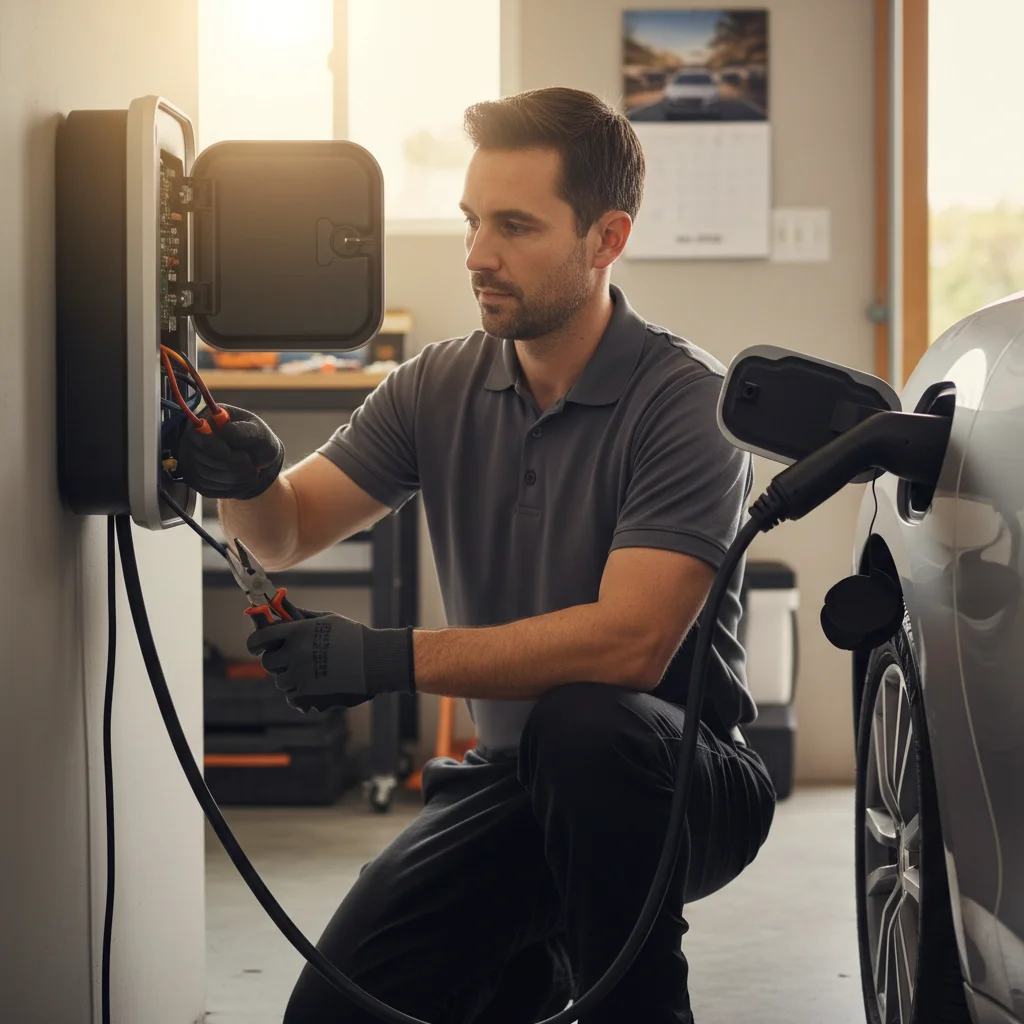
The seven state-owned bridges are the Antioch, Benicia-Martinez, Carquinez, Dumbarton, Richmond-San Rafael, Bay, and San Mateo-Hayward. Caltrans owns them. BATA and MTC set tolls. Cash ended in March 2020. Every crossing uses Open Road Tolling. FasTrak, a license-plate account, or an invoice are the three paths. Tolled direction is eastbound only on Antioch, Benicia-Martinez, and Carquinez. It’s westbound only on Dumbarton, Richmond-San Rafael, the Bay Bridge, and San Mateo-Hayward.
Express lanes run on I-80, I-580, I-680 (Sunol and Contra Costa), I-880, US-101, and SR-237. FasTrak is required. A Flex tag is how carpool discounts work. Hours are generally 5 AM to 8 PM weekdays. MTC runs the regional network. Alameda CTC runs I-580, I-880, and the I-680 Sunol lanes. We didn’t find a primary page that confirms median versus left-shoulder position. We won’t tell you to pull left. If you’re disabled in an express lane, keep hazards on. Stay in the vehicle and call 511.
SFO has an EV charging parking page at flysfo.com/parking/electric-vehicle-charging. It couldn’t be read by automated fetch on September 18, 2026. Confirm stalls in a browser. OAK lists Economy Parking, ValuPark, the Hourly lot, and the Park & Call cell-phone zone. SJC lists Economy Lot 1, Hourly Lots 2 and 3 at the terminal garages, Daily Lot 4, Hourly and Daily Lot 5, and a Cell Phone Waiting Area. Neither airport parking page we checked displayed EV charging. That’s a note about the page, not a claim about the lots. Confirm with the airport. Neither site publishes guidance for a car that won’t wake after a long trip. That’s a 12V problem the garage signs skip.
BART does list park-and-ride Level 2 charging. Warm Springs / South Fremont has 42 plugs. Lafayette has 4. Caltrain publishes no park-and-ride EV charging. A USDOT grant is funding more BART Level 2 by 2027. Don’t treat that as already built.
Manufacturer plans, clubs, and a local operator quote
Tesla, Rivian, and other makers often include some roadside help with the car. Scope and duration change. Tesla publishes current policy on tesla.com/support. Read it for your model and year. Club plans vary too. Some send a tow. Some send a jump. Many still don’t send a 240V rescue charge. Compare that split in Tesla, AAA, or local rescue.
If FSP is in hours, try 511 first when you’re on a participating freeway beat. If you need the pack fed, or a 12V replaced on the curb, call for a local operator. The person who shows up quotes the job. You approve it or you don’t. Charge Pro SF doesn’t hold a contractor license. We don’t keep a yard. We match stranded drivers with independent mobile rescue operators across the Bay Area.
If you’re already on the shoulder
Pull as far right as you can if the car still rolls. Put hazards on and keep the seatbelt buckled. On a high-speed freeway, stay inside. NHTSA’s general roadside safety pages are a fair primer at nhtsa.gov. Don’t walk along I-680 or I-80 unless a responder says to.
Then name the failure. Dark screens and dead locks usually mean 12V. A car that powers up but reports zero miles is the pack. A cable you can’t remove is the port. Say the make, model, and the last exit you passed. Say whether you’re on an express lane, a bridge approach, or a city street. That changes who can legally stop.
Conserve what little 12V you have. Skip climate and the big screen if the car still wakes. Keep hazards if you can.
When you’re ready for a mobile charge or a 12V rescue, call (415) 630-6268. That’s Charge Pro SF. It’s a referral line. The operator, not the brand, sets the quote. Confirm FSP status with 511 if you’re on a freeway during weekday commute hours.
Frequently asked questions
What does FSP do if my EV is empty on the freeway?
FSP runs Monday to Friday, 6 to 10 AM and 3 to 7 PM. Dial 511 and say “Freeway Assist.” MTC lists gas, jump-starts, radiator refills, crash clearing, and debris. The page doesn’t list EV charging or out-of-charge help. A 12V jump might still be on the table. An empty pack usually needs a mobile Level 2 charge or a flatbed. Confirm with 511, then call a local EV operator if you need electricity, not gas.
If CHP sends a rotation tow, can they charge my car?
CHP rotation assigns an approved tow vendor. You don’t choose the company. That truck’s job is to move a disabled vehicle. It isn’t guaranteed to carry a 240V source or EV adapters. Ask what they can do before they hook up. If the car only needs range, a mobile charge is the cleaner first try. If it can’t take a charge, a flatbed is the safe tow method for most EVs.
Does my EV’s manufacturer roadside plan replace a local operator?
Not always. Maker plans often cover tows, lockouts, and some jumps. Coverage windows expire. Out-of-charge rescue is inconsistent across brands. Tesla’s published support pages are the authority for Tesla. Other brands publish their own terms. A local operator still quotes on site for a 240V charge or a 12V replacement when the plan doesn’t send that truck.