EV roadside assistance in Livermore is help at the car before you start the Altamont climb. Livermore is the last in-scope Bay Area city on eastbound I-580. If the pack already looks thin, don’t point the car at the wind farm grade. Stay where you are. The independent operators we connect you with bring a 240V Level 2 source to the port. They typically add 10 to 20 miles of range in 15 to 30 minutes of charging. That’s charging time. It isn’t an arrival time.
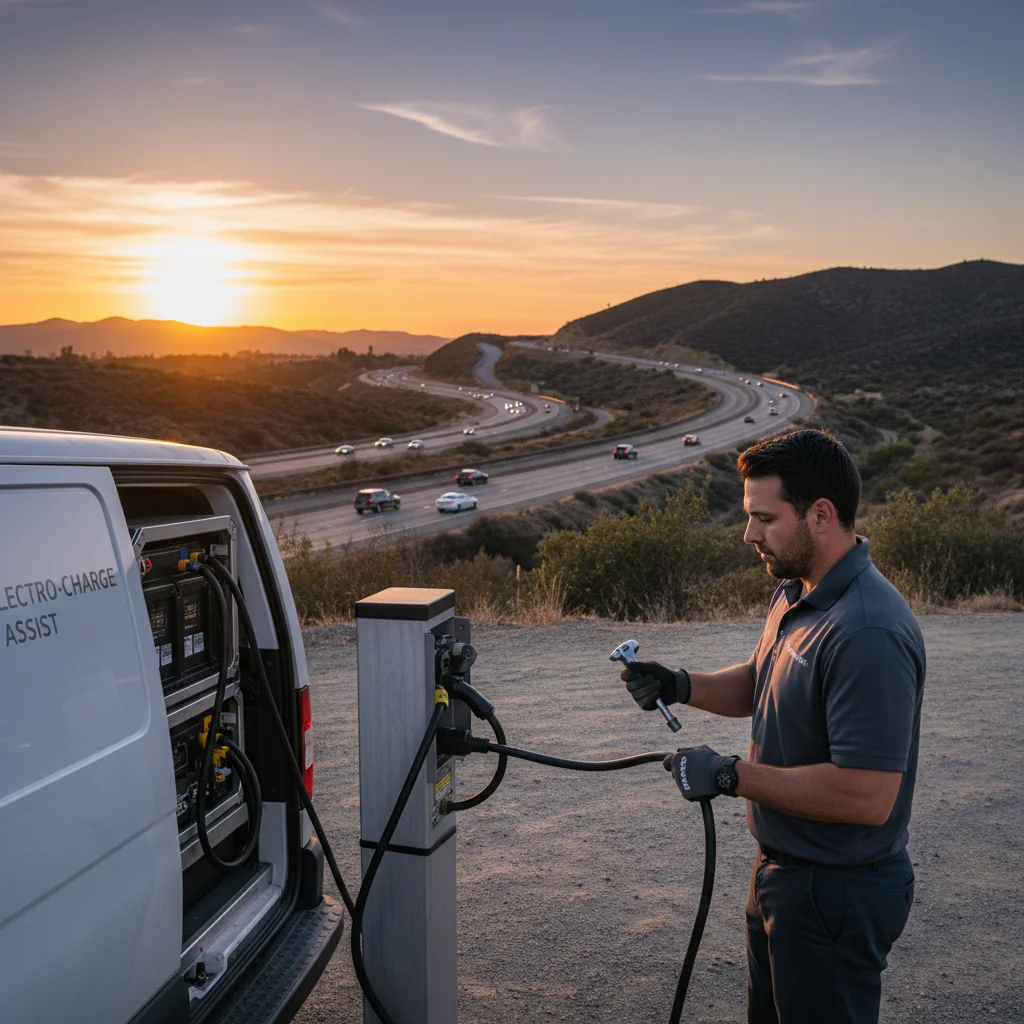
Livermore is the last Tri-Valley city before the pass
Livermore is an incorporated city in Alameda County. The land area is 26.57 square miles. ACS 2019-2023 population is 85,870. The separate 2024 Census estimate is 84,867. Those two series won’t match. ZIP areas that overlap the place include 94550, 94551, and 94566. A ZIP on that list can run past the city limits. Treat it as a caller clue, not a hard boundary.
Pleasanton and Dublin sit west on I-580. San Ramon sits on the I-680 ridge. Tracy is over the Altamont, outside this metro. Sunol sits southwest of town. Brentwood is down Vasco Road toward the Delta. Livermore is the eastern city in the cluster we serve.
Downtown, Springtown, Sunset, Vineyard, and Portola aren’t the same stop. The South Livermore wine district is another. So is the Las Positas area. Lawrence Livermore National Laboratory is a long-sit workplace. It isn’t a rescue plan. Name the neighborhood when you call.
PG&E delivers the wires in Livermore. Ava Community Energy supplies the generation. That’s the same pairing as Pleasanton, Dublin, Fremont, and Hayward. It explains a later home bill. It doesn’t refill a pack that’s already empty.
Confirm any public post in your charging app before you spend the last miles on it. Supercharger names and stall status change. A saved pin isn’t a live check.
Eastbound I-580, Vasco Road, and the in-town grid
I-580 is the spine through town. Eastbound, the Altamont Pass climb stacks grade, wind, and highway speed. Livermore is the last in-scope stop before that push. If you’re already short on First Street, the pass doesn’t fix it.
Westbound is the other way around. Livermore is the first in-scope city after that open stretch. Pleasanton and Dublin come next. Say your direction when you call. It changes where an operator has to find you.
Vasco Road runs south toward the Delta and Brentwood. That’s a different dispatch from a stall downtown. Tesla Road is a Livermore street name, not a station listing. Portola Avenue and First Street are names that actually help. Drop a cross street with them.
If you’re already on the I-580 shoulder past town, use the corridor page. Out of charge on I-580 over the Altamont covers that stop. This page is the in-town version. Downtown lots, wine-district parking, and lab shifts sit here. So does the last chance to add range before you climb.
Alameda CTC runs the I-580 express lanes. FasTrak is required. Hours are generally 5 AM to 8 PM on weekdays. A primary page didn’t confirm whether those lanes sit in the median. Don’t assume a left-shoulder pull is the safe move.
Summer heat here is not a coastal commute
Livermore is the hottest of the Tri-Valley. The 1961-1990 normals put the July average high at 89.7F. San Francisco’s July average high is 71.5F on that same vintage. Oakland Airport sits at 70.4F. The inland gap over the coast is real, and it’s large.
Cabin cooling is a load on a thin pack. Highway speed on I-580 does the rest. We couldn’t confirm a published count of days at or above 100F. Don’t plan an eastbound push from a coastal estimate.
About 53.1 percent of Livermore housing was built before 1980. That’s Census table B25034. It’s a proxy for older stock, not a panel diagnosis. A lot of those places never received a dedicated EV circuit. A driveway in Springtown or Sunset can look like home and still leave you empty. A wall box that tripped is the same outcome. The car needs energy brought to it.
A dark screen and a zero pack are different jobs
They look identical from the curb. They aren’t the same job.
Teslas still have a 12-volt battery. So does every other major EV. That small battery wakes the computers, the contactors, and the charge port. The traction pack can hold energy while the 12V is dead. The car just sits.
If the display works and range is the problem, the pack needs a charge. If the car is dark, start with the 12V. Do the same if it won’t shift. Do the same if the port won’t open. Copy the warning text as written.
A long sit at Lawrence Livermore National Laboratory is a 12V setup. So is a tasting-room afternoon in the South Livermore wine district. Overnight street parking downtown can do it too. None of those are a case we tracked. They’re the pattern the car actually follows.
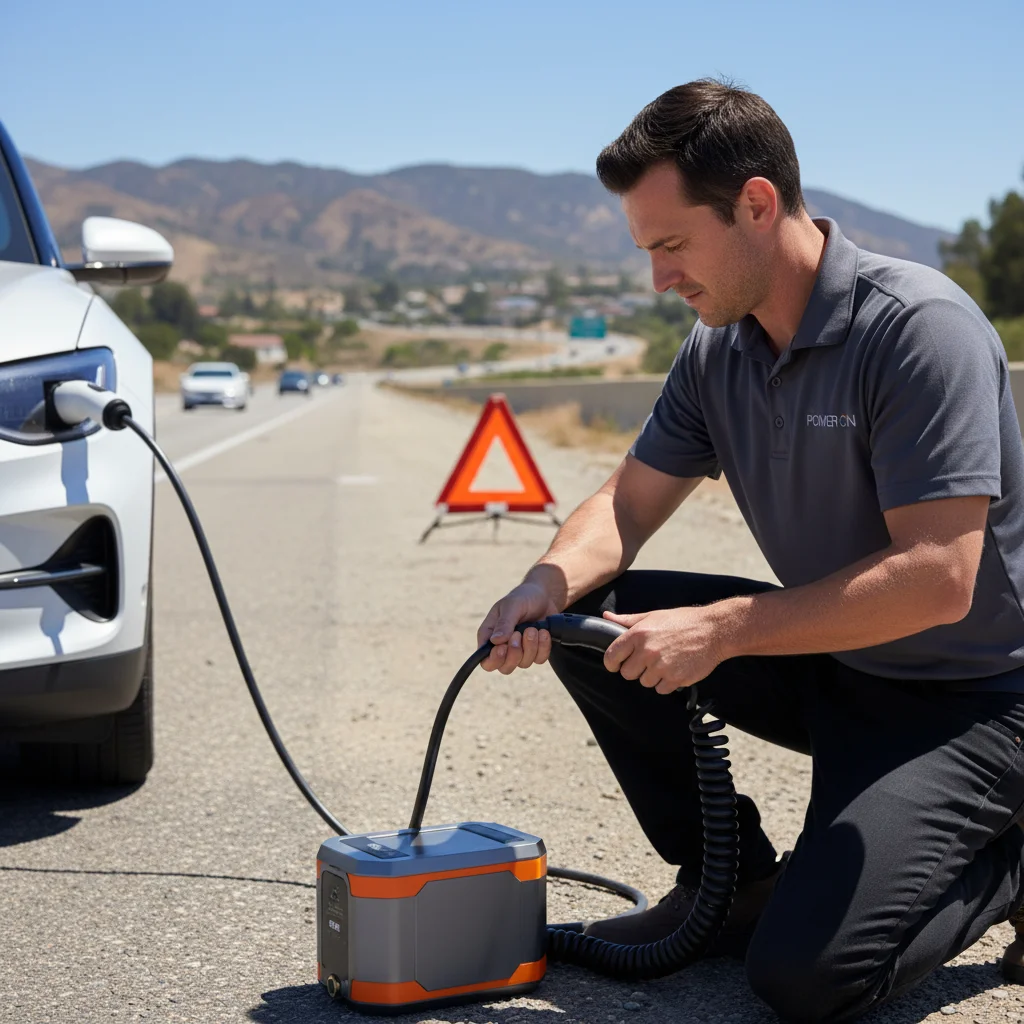
Independent operators in this network jump or replace a 12V on site. They also bring a 240V Level 2 source to the car. Native NACS for Teslas. CCS or J1772 adapters for non-Tesla EVs. They handle Tesla and every major EV brand.
Charging time typically adds about 10 to 20 miles of range in 15 to 30 minutes. That’s session time on the cable. It isn’t when a truck shows up.
What a Livermore rescue is for
The point of mobile EV charging here isn’t a full pack. It’s enough range to stay in Livermore until you’ve confirmed a real stop. Those 10 to 20 miles are a recovery buffer. They’re not permission to keep driving east into the wind.
EV roadside assistance is the wider help path for a car that won’t move. The operator quotes you before starting. The operator bills you directly.
Charge Pro SF is a referral line. We match stranded EV drivers with independent local mobile rescue operators. We don’t perform the work. We own no trucks. We set no prices. We publish no arrival time. The brand holds no license. The pros we connect you with are licensed and insured.
Don’t guess the miles you’ll add. The operator sees the car, the state of charge, and the access. Confirm the proposed service and the price with that operator before work starts.
If you’ve already stopped on I-580
California Vehicle Code 21718 generally bars stopping on a freeway. A disabled vehicle that can’t keep moving is an exception, once you’ve summoned help. CVC 22651(f) allows removal after more than four hours. That applies on a full-access-control freeway when the car can’t move under its own power. That’s a removal rule. It isn’t a reason to sit and hope.
If the car is in a traffic lane or a dangerous spot, call 911. CHP says that outright. In metropolitan areas, other roadside requests can go through 511. Say “Freeway Assist” for the Freeway Service Patrol during its posted hours.
The Freeway Service Patrol is a partnership of MTC, CHP, and Caltrans. Private tow companies run weekday beats from 6 to 10 AM and 3 to 7 PM, per 511.org. The MTC FSP page, read 2026-09-18, lists a free gallon of gas, jump-starts, and radiator refills. It doesn’t mention electric vehicles or out-of-charge help. A jump can wake a 12V. It doesn’t refill an empty traction pack.
Outside those hours, calls go to the CHP Rotation Tow Program. Approved vendors rotate, so you don’t pick the company.
A mobile charge versus a tow from Livermore
California doesn’t cap ordinary private or consensual tow rates statewide. The company coming sets the price. Confirm it before a hook goes on. We couldn’t verify a published Livermore or Alameda County roadside-tow figure that belongs here. Ask the operator who’s actually quoting you.
If the car is driveable, start with charge or 12V power. A mobile session at the bumper is the usual first ask. If something is wrong with the drivetrain, the wheels, or the port hardware, that’s a tow conversation. The operator tells you which job they’re quoting.
Read when you need a mobile charge, not a tow before you guess. If you actually stopped in Pleasanton, that’s the next city west. See EV roadside help in Pleasanton.
Tell them a pin a stranger can drive to
“Livermore” is too large for a dispatch. Drop a pin. Name downtown, Springtown, Sunset, the wine district, the lab, Las Positas, or the I-580 direction. On Vasco Road, say Vasco and which way you’re pointed. On Tesla Road or Portola Avenue, add a cross street.
Then give the car: year, make, model, and color. Then the failure: percent remaining, or a screen that’s dark. Say whether the port opens. Say whether FSP or CHP is already with you.
Stay off the travel side of the car if you have to step out. Don’t walk looking for a post you haven’t confirmed in the app.
Calls on this line play a recording notice. California Penal Code 632 requires all-party consent before a confidential call is recorded.
If the pack is empty on the edge of town, that’s this call. If the 12V died after a long sit, that’s this call too. Call (415) 630-6268. We’ll connect you with an independent local operator. They quote before they start. They bill you. We don’t.