You plugged into a curb post before bed. You woke up at the same percent. In older San Francisco apartment blocks, street parking is the overnight plan. Daly City’s pre-1980 streets work the same way. There’s no garage wall unit to fall back on. The cable can look seated while the session never ran.
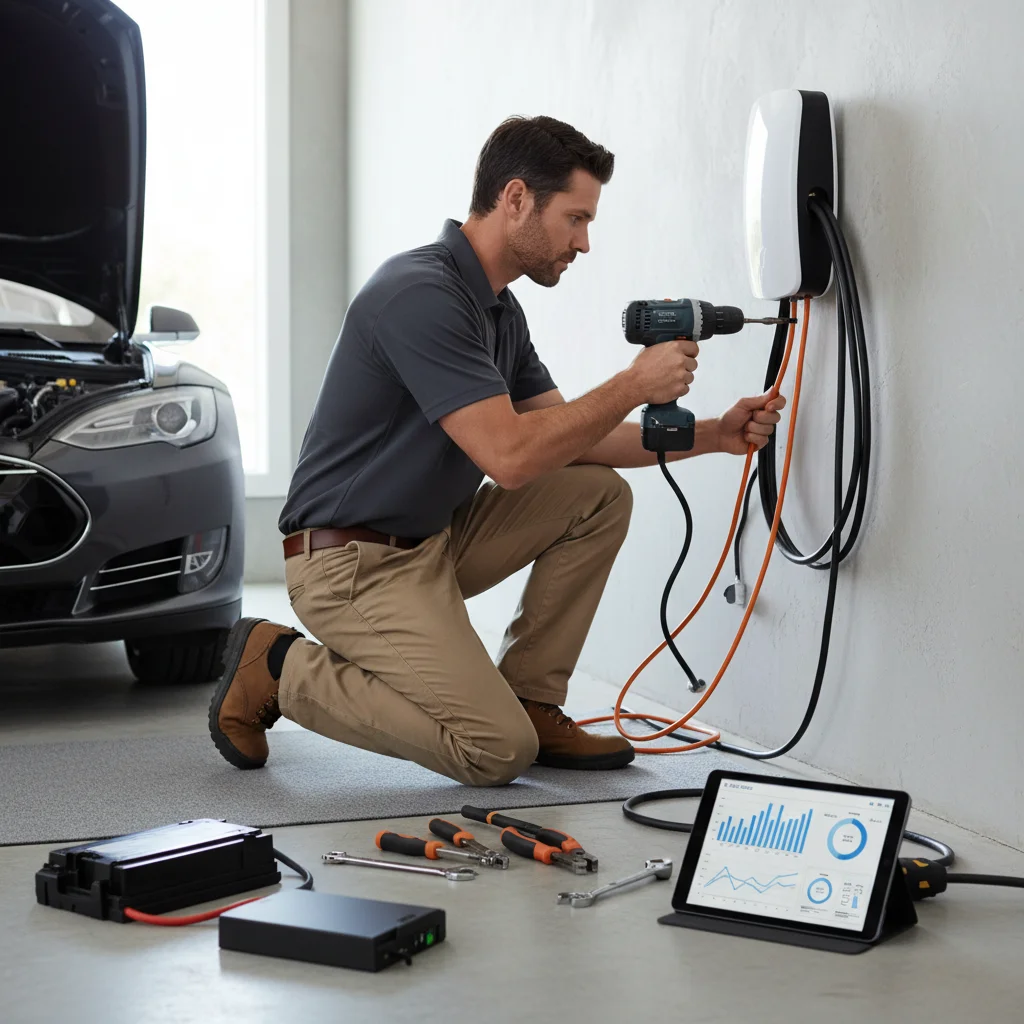
Older blocks, street parking, and one overnight shot
Census ACS 2019-2023 puts 77.2% of San Francisco housing in buildings from 1979 or earlier. Daly City sits at 78.7%, and Oakland is 77.9%. Berkeley is 80.8%, San Bruno is 81.9%, and Pacifica is 81.1%. That older stock is a stand-in for tight panels and plug-less apartments. It isn’t a map of public posts.
Dublin’s pre-1980 share is 21.0%, San Ramon is 23.8%, and Brentwood is 10.9%. A driveway Level 2 is more common in those inland cities. If a session fails there, some drivers still have a second plug. On a San Francisco curb, that second plug often isn’t there. A Daly City street overnight is the same bind.
Richmond is 67.2% pre-1980, Hayward is 64.1%, and East Palo Alto is 70.8%. The same street-parked pattern shows up across those cores. Gilroy is 36.0% pre-1980, Morgan Hill is 35.7%, and Milpitas is 39.0%. Newer south county housing is a different overnight story.
Peninsula Clean Energy’s EV Ready Program covers multifamily charging in San Mateo County. San Jose Clean Energy has a Multifamily EV Charger Assistance Program. CleanPowerSF publishes EV Charge SF, and MCE runs Charge Up Contra Costa. Those programs are about adding stalls later. They don’t help at 7 a.m. when last night’s session never started.
511 Freeway Service Patrol won’t cover a curb either. It runs freeway beats weekdays, 6 to 10 a.m. and 3 to 7 p.m. Dial 511 and say Freeway Assist only on a freeway beat in those hours. MTC’s FSP page lists gas, jump-starts, and radiator refills. It doesn’t mention electric vehicles or an out-of-charge fill. An overnight miss on a city street isn’t an FSP job.
Check the charge window before you blame the post
EVs let you set a departure time or an off-peak window. PG&E publishes Home Charging EV2-A, Electric Vehicle EV-B, and Electric Home E-ELEC. PG&E’s EV schedules are built around windows. The car may be set to wait. That includes CleanPowerSF in San Francisco. It includes Peninsula Clean Energy across Daly City, San Mateo, and Redwood City. It includes Ava Community Energy in Oakland, Berkeley, and Hayward. It includes MCE in Richmond, Concord, and Walnut Creek. Antioch and Brentwood didn’t appear on MCE’s member list. No other CCA in the county was confirmed for them.
The setting is easy to leave on. A later plug-in can miss the window. An app default can shift it. A changed commute can push it past the hour you leave. Open the app and the center screen. Look for scheduled charging, charge on departure, or off-peak charging.
The habit isn’t the same in every city. Santa Clara is on Silicon Valley Power, which doesn’t have a dedicated EV rate. City of Palo Alto Utilities didn’t have a dedicated residential EV rate on pages checked 2026-09-18. Alameda Municipal Power does offer an optional Electric Vehicle Time of Use rate. In Santa Clara or Palo Alto, a leftover utility window is less likely. Still check the car, because the schedule lives in the vehicle. Confirm current rate names with your utility before you change a setting.
Wake the car if it sat waiting for hours
A car plugged in at 7 p.m. for a late window can drop into sleep. Some cars don’t wake cleanly enough to start on time. This shows up on street posts and shared lot stalls, not only a home EVSE.
Try a simple wake: open and close a door. Unlock with the fob, or start climate from the app. If charging begins a few minutes later, the car was asleep.
Shared stalls fail in ways a driveway unit doesn’t
A green kiosk light can still mean the car never took power. Reseat the handle until it clicks, then watch the car’s screen. A connected-but-not-charging state has its own checks in Public charger says connected but not charging.
If charging started and then quit, check your charge limit first. A cap at 80 or 90 percent is a setting, not a broken post. Hitting that cap overnight looks like a failed session.
A home wall unit can trip a breaker. If you do have a garage EVSE, reset a tripped breaker once. If it trips again, stop and call a licensed electrician. Repeated flips hide a real circuit fault. On a shared apartment panel, don’t keep resetting a building breaker yourself.
A weak 12V can drop a session that looked fine
The traction pack isn’t the only battery that matters. The 12-volt battery runs the computer that starts and holds a charge session. If that small battery is weak, the car can accept the plug, then quit. Street-parked cars that sit all night see this. Warning signs sit in What happens when an EV 12-volt battery dies.
The operators we connect you with can jump a dead 12V on site. They can also bring a 240-volt Level 2 source to the car. They typically add 10 to 20 miles in 15 to 30 minutes of charging. That’s charging time, not an arrival time. Tesla uses a native NACS plug. Other EVs use a CCS or J1772 adapter.
If morning has already arrived and you have to go
Skip a long diagnosis if you’re already late. A missed overnight session on street parking leaves you with whatever range you still have. Stretch it only if you know it gets you to a working post. If you don’t, don’t guess your way onto US-101 or I-80. For the low-pack walkthrough, read EV running low: what to do before you’re stuck.
Mobile EV charging is a referral to independent local operators. They quote you before they start, and they bill you directly. Charge Pro SF doesn’t own the truck and doesn’t set the price.
If the car is in a private apartment lot, a posted tow sign matters. California Vehicle Code 22658 requires a sign at least 17 by 22 inches. Lettering must be at least one inch. The sign must name the tow company and the enforcement number. The operator has to notify law enforcement within one hour. San Francisco’s towing contractor is TEGSCO, LLC, doing business as AutoReturn. Confirm current rules with SFMTA before you wait in the stall. Don’t sit in a stall you can’t leave if the building tows overstays.
Street parking in Daly City is often the whole overnight plan. The same pattern shows up across San Francisco apartment blocks. For a driveway comparison, see Home 240-volt charging versus a roadside 240-volt rescue.
Frequently asked questions
Why did the car show charging when the percent never moved?
Usually the window hadn’t opened yet, or the charge limit was already met. Check the app schedule and the cap before you assume the post failed.
Does sitting plugged in overnight hurt the pack if it never charged?
No, a plugged-in car that isn’t drawing power isn’t stressing the pack. The software is waiting on a schedule, a wake, or a limit you hit.
What if I have to leave and the pack is still low?
Call before you roll out on a guess. Operators we send bring a Level 2 charge and quote first. Call (415) 630-6268 when you need that match.