Charging stopped at a random percentage for a local reason. The pack got too hot, or the stall dropped power. A saved charge limit repeats the same number every time. Random stops leave you short for the next Bay Area stretch.
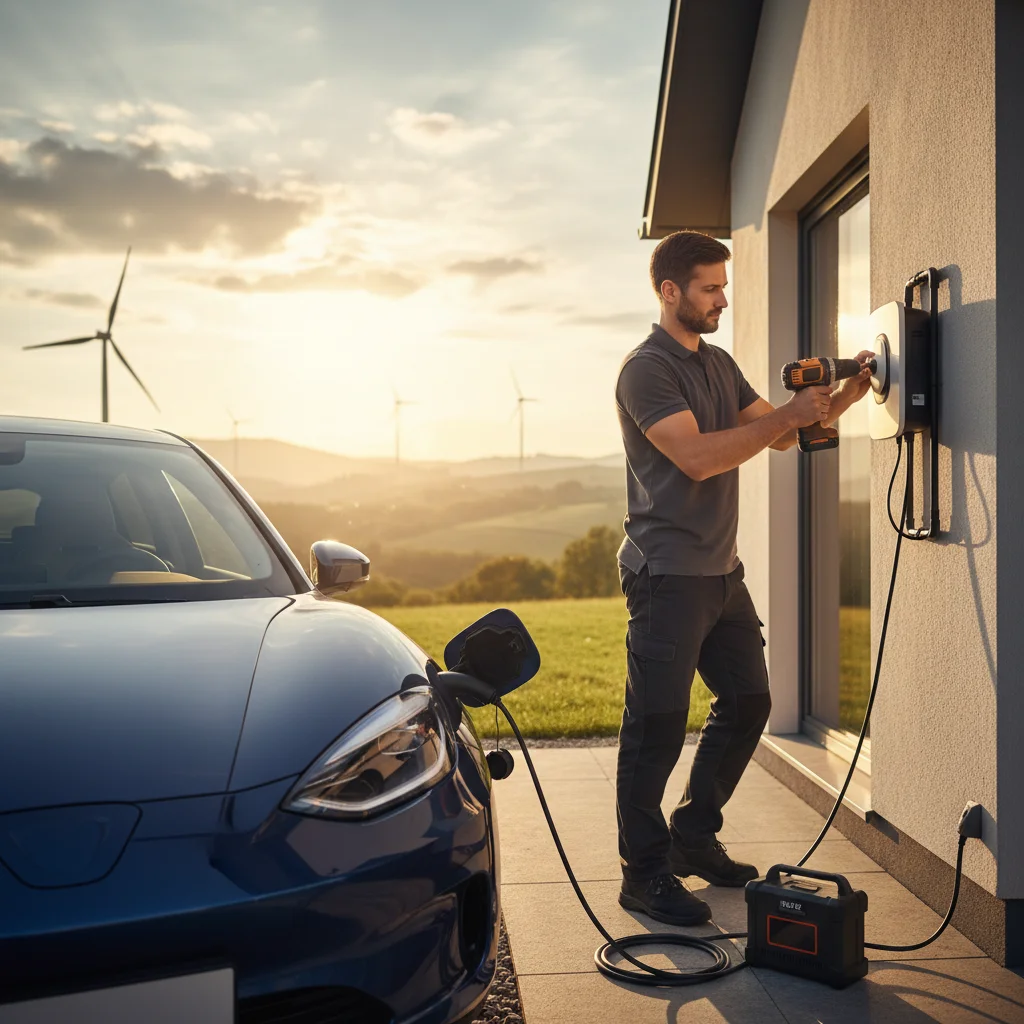
Heat cuts the session at whatever percent you’re at
The traction pack has a battery management system. That computer watches cell heat while you charge. Charging adds more heat on top of the drive you just finished. When the pack crosses the system’s safe band, current slows first. If heat keeps climbing, the session can pause. You see a percent on the screen. The car saw a temperature. That’s why 44% on Tuesday and 62% on Thursday can both be normal.
A cool pack from overnight shade takes more energy first. The same car after a hot inland drive hits the pause sooner. The threshold isn’t a percent you can set, so the stop looks random from the seat.
Inland heat and the coast aren’t the same charge
The Bay Area isn’t one climate for charging. WRCC 1961-1990 normals put San Francisco’s July average max at 71.5F. September’s average max there is 73.1F. Oakland Airport’s July average max is 70.4F. San Jose sits near 82F. Livermore’s July average max is 89.7F, with Antioch at 90.4F and Gilroy at 88.3F. That inland gap over the coast is real, and it’s large.
A car sat in sun in Livermore after an I-580 run. It starts the next charge already warm. Plug into DC right then, and the BMS may pause early. The same car after a gray morning in San Francisco often starts cooler. It may take a higher percent before heat becomes the limiter. A count of days at or above 100F wasn’t confirmed in the station files used here. Don’t treat a round heat count from a forum as a local fact.
Where the car sits before the plug matters too. ACS 2019-2023 housing data shows 77.2% of San Francisco stock was built before 1980. Daly City is 78.7%, Berkeley is 80.8%, and Oakland is 77.9%. Older blocks mean more street parking and less garage shade. Dublin’s pre-1980 share is 21.0%, with San Ramon at 23.8% and Brentwood at 10.9%. A Tri-Valley garage doesn’t change the BMS rule. It just starts the pack cooler more often.
The same percent every time is a charge limit
Open the app or the center screen before you chase a fault. Most EVs let you cap daily charging in the 70 to 90% band. That protects long-term pack health. Raise it when you need a longer trip. If charging always dies on that same number, you already set the stop. Random stops don’t line up with that slider.
DC stalls can look like a car problem
DC fast charging dumps energy faster, so the pack warms faster. The cabinet can share load with the stall next to you. The post can derate for its own thermal limit. That can look like a random car fault when it isn’t.
Run a slower Level 2 session on the same car. If Level 2 finishes cleanly, look at the DC stall next. DC that keeps quitting at new percents is often the cabinet, not the car. Related stall behavior is in public charger connected but not charging. Coast versus inland charge time is a different question. How long a Tesla charge takes here covers that split.
A garage Level 2 session is the cleaner test. A public DC session after a hot drive is the messy one. Don’t treat one aborted Supercharger tap as proof the car is broken.
Cool down off the travel lane, then retry
If the pack floor felt warm, wait. Fifteen to twenty minutes of rest after a drive often sheds enough heat to resume. Shade helps, and a garage helps more. Early morning and evening sessions hit a cooler pack.
Don’t sit in a travel lane to let the pack cool. California Vehicle Code 21718 bars stopping on a freeway in most cases. The disabled-vehicle exception applies when you can’t keep moving. You also need another vehicle already summoned to assist. If you can’t move under your own power, the clock matters. CVC 22651(f) allows removal after four hours on a full-access-control freeway.
The Freeway Service Patrol is a partnership of MTC, CHP, and Caltrans. It runs weekdays from 6 to 10 AM and 3 to 7 PM. You reach it on 511 by saying “Freeway Assist.” The MTC FSP page lists gas, jump-starts, and radiator refills. It doesn’t mention electric vehicles or out-of-charge help. Confirm the current list on mtc.ca.gov. Outside those hours, the CHP Rotation Tow Program assigns the truck. You don’t pick the company.
A truncated charge on I-880, I-580, or I-680 can leave you short of the next exit. Stay out of live lanes, and use the car’s map for a stall you can actually reach. Don’t guess miles to a post you haven’t confirmed.
Cool weather random stops point elsewhere
The session still dies on cool mornings in shade, so heat isn’t the story. A weak 12-volt battery can drop the charging computer mid-session. A failing onboard charger or a BMS fault can abort too. Those look random from the seat, but they aren’t a temperature pause. What happens when an EV 12-volt battery dies walks through that 12V path.
If the car won’t restart the session at all, treat it as a fault. Don’t hop stall to stall on the same DC site and hope.
The leftover range is the real problem
You planned on a fuller charge before a South Bay commute or a Coastside run. The session died early, and remaining miles may not cover the next climb. They may not cover a Bay Bridge approach either. If the car still rolls, use what you have. Pick a working stall on the way. EV running low before you’re stranded is for that window.
If the car won’t take a useful charge, and you can’t move, that’s the rescue case. A mobile 240-volt rescue is the other path. Charge Pro SF is a referral line. It matches you with an independent local operator. The brand doesn’t own trucks, and it doesn’t do the work. The operator brings a 240V Level 2 source to the car. Native NACS on Tesla, with CCS or J1772 adapters for other EVs. Operators typically add 10 to 20 miles of range. That takes 15 to 30 minutes of charging. That’s charging time, not an arrival time. The operator quotes you before starting and bills you directly. The shape of that visit is on mobile EV charging.
Call Charge Pro SF at (415) 630-6268 if the pack is too low to move. Get the operator’s quote before they start.
Frequently asked questions
Why does EV charging stop at a random percentage?
The battery management system pauses or slows the session because the pack got too warm. Driving heat and air temperature both count. The cutoff isn’t tied to a fixed percent, so the number wanders. A charge limit would repeat the same number every time.
Does a heat pause mean the pack is damaged?
No, the system is stopping the session to protect the cells. Letting the pack cool, then finishing later, is the safer path. Forcing a full charge into a hot pack is what the BMS is trying to avoid.
What if you’re still too low to get home?
A paused session can leave a thin buffer for hills, bridges, and traffic. If you can still roll, charge at the next stall that actually works. If you can’t move, ask an independent mobile operator for a 240-volt top-up on site. Charge Pro SF connects you with those operators.