A Los Gatos driveway charger can fill the pack while you sleep. It can’t fix a car that’s already too low for SR-17. That Santa Cruz Mountains climb is the local problem. Warm streets in town don’t match the forested summit approach. The grade still spends real range. A low reading in Almond Grove is one thing. The same reading on the pass is another.
What this South Bay town actually asks of an EV
Los Gatos is an incorporated city in Santa Clara County. Census ACS 2019-2023 puts the population at 32,773. The 2024 estimate is 32,952. Land area is 11.554 square miles. Callers often use ZIPs like 95030 and 95032. Those ZIP areas can spill past city limits. Housing built before 1980 is 73.2 percent of the stock. That’s the panel story for home charging.
Downtown sits on Santa Cruz Avenue. Los Gatos Boulevard and University Avenue carry the in-town miles. SR-9 heads into the hills. SR-17 is the South Bay pass over the Santa Cruz Mountains. Vasona Lake and the Los Gatos Creek Trail sit in the flats. Belgatos and the hillside streets climb from there. Blossom Hill is part of that same uphill pattern. Monte Sereno is next door. Campbell and San Jose sit on the valley side. Santa Cruz is over the summit.
Netflix headquarters is a local landmark. A campus day can leave the pack lower than the last miles home. That’s a range problem, not a station list. Confirm public posts in your own app before you count on a stop. This page won’t guess a plaza or a stall. If a name isn’t in the research, it doesn’t go here.
PG&E still delivers the wires. Silicon Valley Clean Energy is the community choice aggregator. Those names matter if you’re looking at home rates. They don’t move a stranded car. Don’t ask a referral line to read your bill.
The SR-17 climb isn’t a driveway problem
The local record on this town is blunt about the pass. The SR-17 climb costs real range. Town weather is warm and sunny. Toward the summit it turns cooler and forested. You’ll feel that shift in the cabin. You’ll see it on the predicted range. A buffer that’s fine for Vasona may not be fine for the summit. The summit approach is its own test.
This is the EV charging guide Los Gatos owners actually need. Home Level 2 answers the overnight question. The mountain answers a different one. If the car’s already low, you don’t get those overnight hours on the shoulder.
Don’t treat the pass like Los Gatos Boulevard. In-town streets aren’t the Santa Cruz Mountains. Regenerative braking helps on the way back down. It doesn’t refund a climb you haven’t made yet. Plan the uphill as spent energy. Plan the return as a separate check.
If you’re already below a comfortable buffer, stay in town. Charge at home if you can still reach the driveway. Or stay put and ask for a mobile charge. Don’t roll onto SR-17 with a dying display. That’s how a town trip becomes a shoulder wait.
SR-9 can spend range too. It’s the other hill road out of town. Cooler forested air doesn’t cancel a grade. Watch the arrival estimate before you commit. If the number looks thin, don’t start.
Driveway charging in older Los Gatos houses
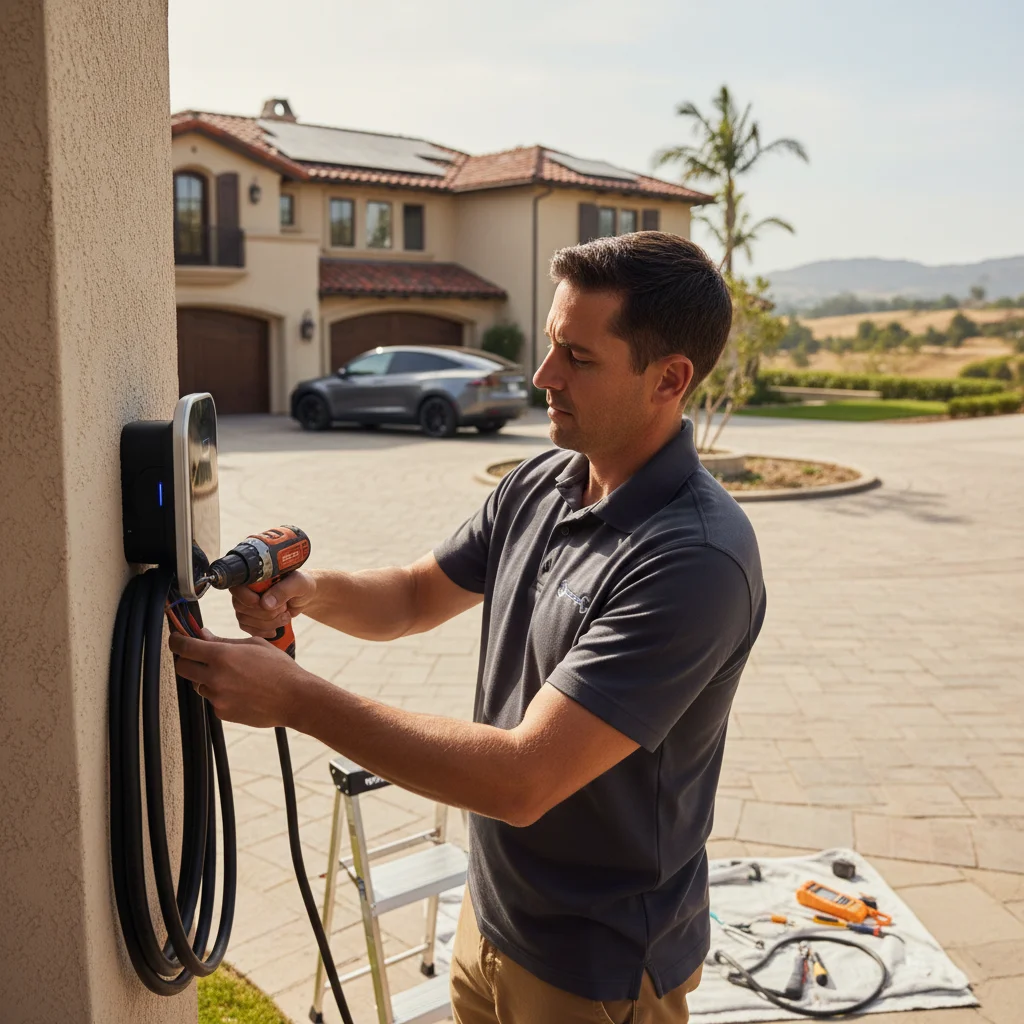
Most daily miles here should start from a wall unit. That’s true in Downtown and Almond Grove. It’s true in Blossom Hill and Belgatos. It’s true by Vasona as well. A 120-volt outlet is Level 1. It’s a trickle from a common wall plug. A 240-volt circuit is Level 2, and that’s the overnight tool.
Many houses predate EV circuits. Census figures put pre-1980 housing at 73.2 percent. That doesn’t prove your panel is short. It does mean you should have a licensed electrician look. Get that check before you add a 240-volt outlet. Charge Pro SF doesn’t install wall chargers. It’s a referral line for stranded drivers. Hire your own electrician for the house.
PG&E publishes residential EV rate names you can look up. Home Charging EV2-A is one. Electric Vehicle EV-B is another. Electric Home E-ELEC is a third. This page won’t quote a rate. Confirm the current schedule with PG&E before you set a timer. The utility is the authority, not a blog. Silicon Valley Clean Energy lists an Electric Vehicle Rebate. Confirm eligibility on svcleanenergy.org. Don’t treat a program name as approved money.
Place the wall unit where you actually park. A garage, a carport, or a covered pad can all work. Ask the electrician about circuit length and panel load. Permits and panel work are set by the city and the contractor you hire. No fee for that work is confirmed here. Ask the electrician and the building counter.
A full pack in the morning is the point of home charging. It isn’t a spare tank for a climb you start empty. If you unplug at a low percentage, the wall unit already did its job. The pass still needs more energy than that.
What 240 volts at home can and can’t do
Home 240-volt charging is for a car that still rolls into the garage. Roadside 240-volt charging is for a car that can’t. Those are different jobs, and mixing them up wastes a night. There’s a separate walkthrough of home versus roadside 240-volt charging. The wall unit wins on a normal night in Los Gatos. It loses when the car’s already sitting on SR-17.
Level 1 overnight may cover a short Santa Cruz Avenue loop. It won’t rebuild a pack you spent on the mountain. Level 2 is the daily setup for a larger battery. Even then, you still leave with whatever you woke up to. Start the climb from a high state of charge. Don’t start it from a leftover commute.
Public DC fast charging is a separate tool. Superchargers and CCS stalls exist across the South Bay. This research pass didn’t confirm named sites inside Los Gatos. So this page won’t invent a lot or a shopping center. Open your car’s map or a charging app and read what’s live. If a stall is down or full, you need a new plan. Don’t merge onto SR-17 hoping the next post appears.
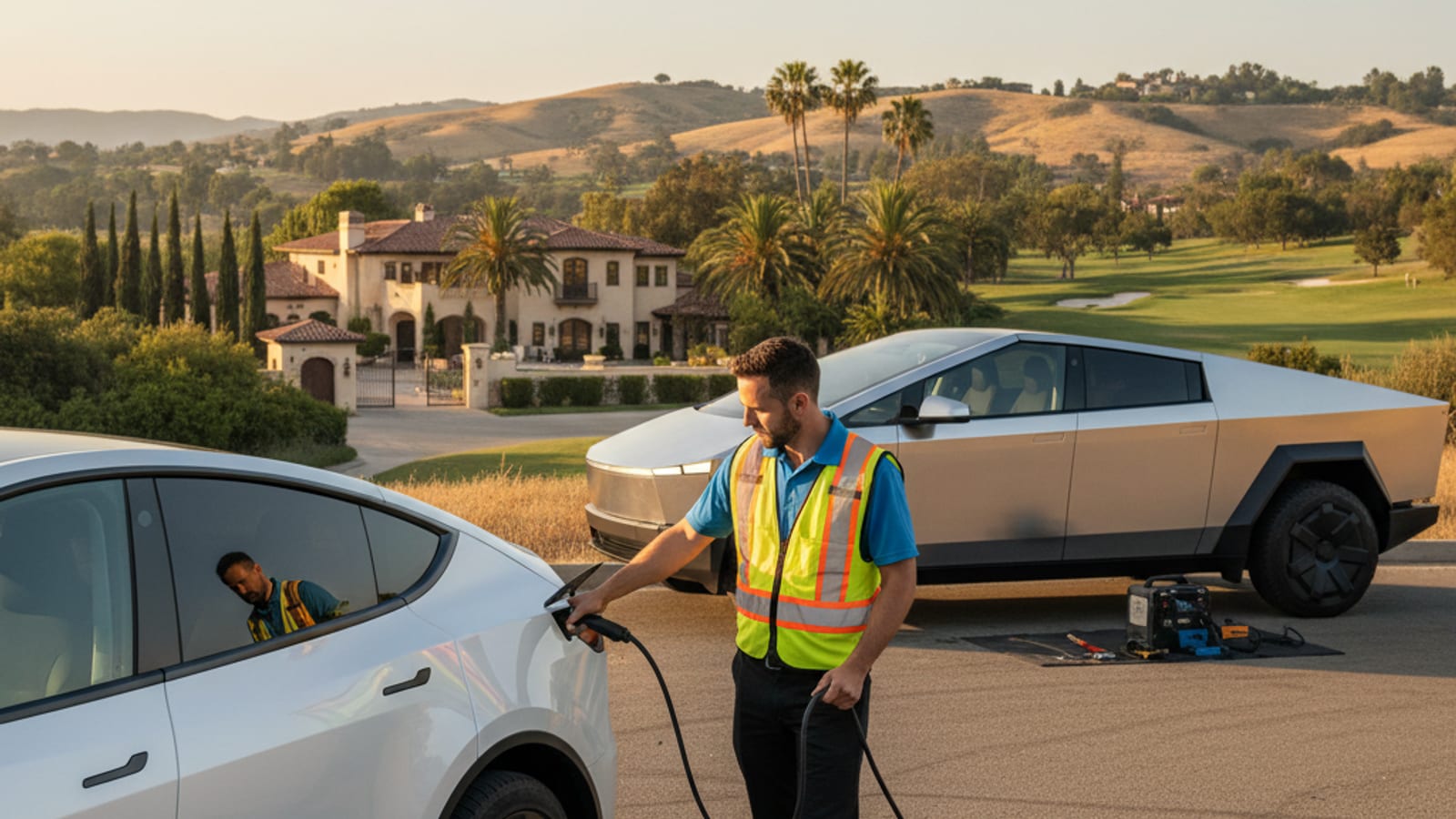
For the stranded case, operators we connect you with come to the car. They bring a 240-volt Level 2 source. Teslas take a native NACS plug. Other EVs take a CCS or J1772 adapter. They typically add 10 to 20 miles of range. That’s in 15 to 30 minutes of charging time. That’s charging time, never an arrival time. Nobody here promises when a rig shows up.
Ten to twenty miles is often enough to reach a driveway in town. It can also be enough to reach a fast stall you’ve already confirmed. It isn’t a full recharge. It isn’t a substitute for overnight Level 2. Read mobile EV charging before you mix those up.
Errands in town versus a summit run
A grocery loop on Los Gatos Boulevard is one kind of day. A creek-trail drop at Vasona is another. University Avenue into downtown is short. Those trips can live on a modest buffer if you started near full. Cabin climate still spends some energy. So does sitting in slow downtown traffic.
The SR-17 climb is the other kind of day. So is SR-9 into the hills. Cooler air near the summit can ease the pack a little. The grade still dominates the energy budget. Streets above town add their own climb before you even merge. Blossom Hill and Belgatos aren’t flat valley blocks. Almond Grove sits closer to the older core. Downtown is the Santa Cruz Avenue pattern. Know which neighborhood you’re in before you trust a thin number.
A Netflix campus day can stack climate control, traffic, and a late unplug. You might make it home on a leftover commute. You can still be too low to cross the mountains at dawn. Charge overnight before that run. If you can’t, don’t start the pass on a guess.
Campbell sits on the valley side. San Jose is the big neighbor. Those trips are flatter than the summit. They still add miles you have to replace. Saratoga sits west of town. Monte Sereno shares the hillside pattern. None of that replaces a confirmed charge plan. Heading over the summit toward Santa Cruz is a climb first. Treat that uphill as the hard half of the trip.
If you’re already empty, stop treating this like a network puzzle. You need the car to move. That’s out-of-charge recovery, not a new wall install.
When the pack is already too low to leave
Pull off safely if the car is fading. Turn the hazards on. Stay out of live lanes. California Vehicle Code 21718 generally bans stopping on a freeway. A disabled vehicle that can’t keep going is an exception. That exception applies once you’ve summoned help. Caltrans District 4 covers Santa Clara County. 511 SF Bay is the regional traveler line.
The Freeway Service Patrol runs Monday through Friday. Hours are 6 to 10 AM and 3 to 7 PM. Dial 511 and say “Freeway Assist.” You can also use a call box. MTC describes a free gallon of gas, jump-starts, and radiator refills. The same page doesn’t mention empty EV packs. Ask what they can actually do when you call. Don’t assume a charge truck. Outside those hours, CHP’s Rotation Tow Program assigns a tow. You don’t pick the company.
A vehicle left more than four hours on a freeway can be removed. That’s CVC 22651(f), when the driver can’t move it under its own power. That clock is why you call sooner, not later. Confirm current CHP and Caltrans guidance when you’re on the shoulder.
Towing an empty EV is a different job from charging it. A hook gets the car off the lane. It doesn’t put miles in the pack. The operators in this network come to the car with 240 volts instead. The operator quotes you before starting. The operator bills you directly. Charge Pro SF doesn’t set the price. It doesn’t own the truck. It doesn’t employ the technician.
For local roadside steps, see EV roadside assistance in Los Gatos. The city hub is Los Gatos EV charging.
Empty pack or a dead 12V
Not every dead EV on Santa Cruz Avenue is out of traction power. The 12-volt battery still wakes the computers. It still runs locks, lights, and contactors. If that battery is flat, the car may not unlock or start. The big pack can still hold range. A jump or a 12-volt swap on site is the usual first check.
Tesla drivers hit this after a long park. Other brands hit it too. Cabin features and long sits can wear a 12-volt down. The operators we connect you with handle Tesla and every major EV brand. For a Tesla 12V, see Tesla 12V battery jump. If the car isn’t a Tesla, see non-Tesla EV rescue.
Don’t jump a gas car from an EV. Don’t guess at the 12-volt location. Open the hood or frunk only if you know the layout. If the dash is dark and the doors are dead, start with the 12-volt. If the car is awake and range reads near zero, it’s an empty pack.
A 12-volt jump won’t climb SR-17 for you. An empty pack won’t wake a dead 12-volt. Get the diagnosis right before anyone rolls a truck. Say what the dash is doing when you call. Say whether the charge port will open.
Weather, hills, and how you drive
Los Gatos weather in town is warm and sunny. The summit side is cooler and forested. San Jose July normals sit around 82F, from the 1961-1990 NWS set. That’s valley context, not a Los Gatos station reading. Inland South Bay heat still means more cabin cooling. Cooling spends energy from the pack. So does a steep grade. This page won’t invent a percent loss. Watch your own predicted range instead.
Speed on SR-17 spends more than a slow crawl on University Avenue. Hard launches spend more than a smooth merge. None of that needs a made-up statistic. If the arrival number is ugly, stay and charge. Don’t argue with the hill.
Tire pressure still matters for range. Soft tires waste range on every corridor. Software updates can change how the car manages the pack. Follow the maker’s daily charge window. Many brands prefer stopping short of 100 percent for daily use. Save a full charge for a known long run, like the mountain. Don’t leave the pack at zero for a long sit. Don’t treat 100 percent as an everyday habit unless your maker says otherwise.
Precondition while plugged in if you can. That uses wall power for cabin and battery temp. It’s more useful on a cool summit morning than on a warm downtown afternoon. It doesn’t create range that isn’t in the pack.
What Charge Pro SF actually is
Charge Pro SF is a referral line that matches stranded EV drivers with independent local operators. It performs no work and owns no trucks or equipment. It employs no technicians and holds no licence. It publishes no business hours and promises no arrival time. The operator quotes before starting and bills you directly.
What those operators do is specific. They bring 240-volt Level 2 to the car. They use a native NACS plug, or a CCS or J1772 adapter. They typically add 10 to 20 miles in 15 to 30 minutes of charging. They can jump or replace a dead 12-volt battery on site. They handle Tesla and every major EV brand.
That’s enough to get off a shoulder. It can be enough to reach a driveway or a stall you’ve confirmed. It isn’t a full overnight charge. It isn’t a new wall unit in Almond Grove. The pros we connect you with are licensed and insured. The brand itself isn’t the contractor.
Before you park it and hope
If you still have a little motion left, use it on a safe surface. A driveway near Vasona beats a narrow SR-17 shoulder. A lot off Los Gatos Boulevard beats the summit approach. Once you’re stopped, the car won’t gain range by waiting.
Check the charge port door. Check that the car is actually awake. Check whether this is a 12-volt fail. Then decide your next power source. Wall power you can still reach is first. A public stall you’ve confirmed is second. A mobile operator is the option when you can’t move.
Don’t sit past the four-hour freeway rule if you’re on a controlled-access highway. Don’t record a call without consent. California Penal Code 632 requires all-party consent for a confidential recording.
Keep water out of the port before you plug anything. If you’re on private property, look for the tow-posting sign before you walk away.
Frequently asked questions
Can a Los Gatos driveway charger get you over SR-17?
Yes, if you leave with enough range already in the pack. Overnight Level 2 is how most owners here start a mountain day. It does nothing for a car that’s already too low to roll. Charge at home before the climb. If you can’t, ask for a mobile 240-volt session. Don’t gamble on the grade.
What should you do if you stall on SR-17?
Get out of the travel lanes if you can. Turn the hazards on. Call for help so the disabled-vehicle exception applies. Try 511 Freeway Assist during published FSP hours. Ask whether they can help an empty EV. The published FSP list doesn’t mention out-of-charge recovery. For a charge at the car, operators in this network bring Level 2. Confirm freeway conditions on Caltrans District 4 tools.
Do the operators only help Teslas?
No, they don’t. They handle Tesla and every major EV brand. Teslas take a native NACS plug. Other cars use a CCS or J1772 adapter. A dead 12-volt and an empty pack are different jobs. Say which one you have when you call.
For a Los Gatos match, call Charge Pro SF at (415) 630-6268. You’ll get connected with a local operator who quotes before any charging starts.