When your EV charger keeps tripping the breaker, start with the house. In much of the Bay Area, a pre-1980 panel drops Level 2 long before the car is at fault. A single trip can be a fluke. A trip on every session, or a few minutes in, is the circuit talking.
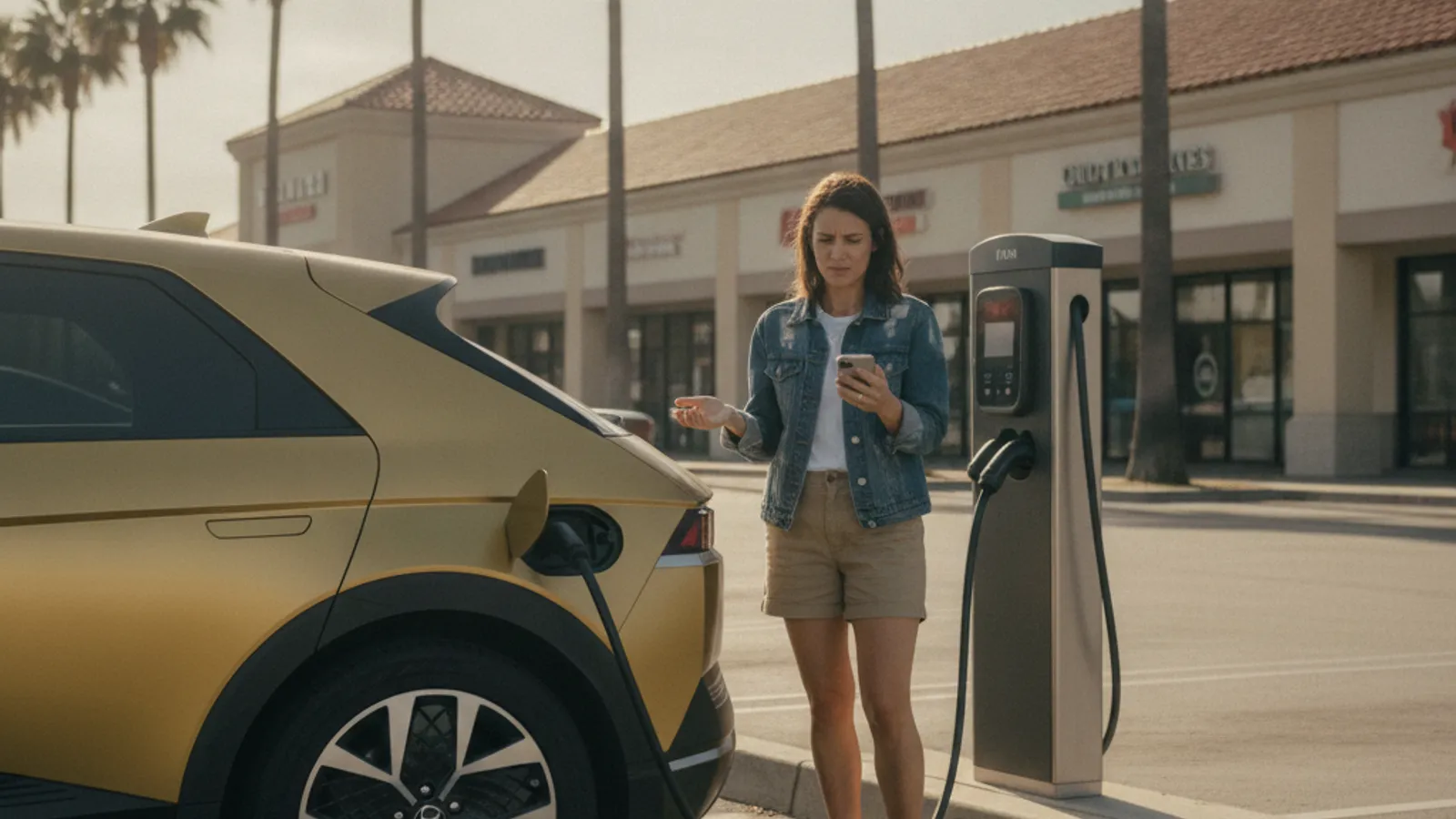
Charge Pro SF doesn’t do the wiring
Charge Pro SF is a referral line, not an electrical contractor. It matches stranded EV drivers with independent local operators. It holds no contractor license and owns no trucks. The operators we connect you with bring a 240-volt Level 2 source to the car. They don’t open your panel, pull permits, or replace a breaker. If the wall circuit is tripping, a licensed electrician owns that work. Use this page to describe the pattern clearly when you call one.
Pre-1980 Bay Area panels trip first
Level 2 charging is a long, steady 240-volt load. Older service wasn’t sized for hours of that draw. Census ACS 2019-2023 counts homes built in 1979 or earlier. That share is a proxy for panel-limited, plug-less stock. It isn’t an inspection of your garage.
The numbers split hard by city. About 77.2% of San Francisco housing predates 1980. San Bruno and El Cerrito sit at 81.9%. Daly City is 78.7%. Pacifica is 81.1%. Berkeley is 80.8%. Oakland is 77.9%. Those are the places where a wall charger often trips the breaker. The pack can still be fine.
Newer cities tell the other half. Brentwood’s pre-1980 share is 10.9%. Dublin’s is 21.0%. San Ramon’s is 23.8%. A 2010s tract in East Contra Costa is more likely to have headroom. A mid-century bungalow in Berkeley or a Daly City garage often isn’t. Your electrician still has to read the panel in person.
A Berkeley panel upgrade versus a rescue is the same split. House work runs on the electrician’s calendar. The car still needs range while you wait.
Shared circuits open after the session is rolling
Older Peninsula and East Bay garages often never got a dedicated EV run. The receptacle shares a dryer, a freezer, or a shop of tools. The charger alone might hold. Add a second load and the breaker opens. That pattern usually shows up 10 to 30 minutes in, not at the first click of the plug.
Don’t keep adding loads to test the run. That’s how you mask an overload. A dedicated circuit sized for the EVSE is electrician work. Home 240-volt charging versus a roadside 240-volt rescue is the other fork. The wall circuit is a house project. A mobile Level 2 visit doesn’t use it.
Two ground-fault layers on one outlet
Most Level 2 EVSE units already watch for a ground fault. Some outdoor receptacles add a second GFCI device. The charger also sends a small test current to confirm an earth path. That tiny current can trip the extra GFCI even when nothing is leaking. It’s a known clash of two protection layers, not a defect you imagined.
Electricians often hardwire the station so it isn’t sitting on a plug-in GFCI receptacle. Ask the licensed electrician you hire how they want to land it. Charge Pro SF doesn’t pull permits, and it doesn’t install the station.
Coastside moisture, inland heat
Outdoor boxes on the Coastside sit in marine air. Pacifica, Half Moon Bay, and unincorporated El Granada are in that belt. A wet NEMA 14-50, or a damp plug end, can trip as a real safety response. If the outlet is uncovered, dry it before you assume the panel is too small.
Inland weather is a different stress. Livermore’s July normal high, 1961-1990 vintage, is 89.7F. Antioch’s is 90.4F. Gilroy’s is 88.3F. San Francisco’s July normal high is 71.5F. Heat doesn’t invent a ground fault. It does make a long Level 2 session on a thin circuit less forgiving.
East Contra Costa also has much newer housing. A Brentwood-area charger install is the house side of that stock. It still can’t charge a car that’s already empty.
When the charger or cable is the culprit
This case is less common. The wall unit or the portable cable can fail inside. Then it trips every time it tries to deliver full power. If a different charger on the same outlet holds, the equipment is the suspect. If every charger kills the same breaker, stay with the circuit.
A Sunnyvale wall charger that failed is that same fork. Wait on a new install, or get range from a mobile visit first.
What the trip pattern is saying
| What you see | What it usually means | Who handles it |
|---|---|---|
| Trips at plug-in, every session | Ground fault, moisture, or a bad EVSE | Electrician, or try a different EVSE first |
| Trips after 10 to 30 minutes | Undersized or overloaded circuit | Electrician |
| Trips only with another load running | Shared circuit | Electrician |
| Trips after rain or an uncovered outdoor box | Moisture in the outlet or connector | Dry it, then electrician if it repeats |
| Trips with your cable, not with another EVSE | Faulty charging gear | Maker support or a replacement unit |
Checks that stay outside the panel
Reset the breaker once and watch the pattern. Look at the outlet and the plug for water or corrosion. Let it dry if it’s wet. Note whether a dryer, heater, or tool was on at the same time. Don’t keep resetting a breaker that opens again. Don’t pull the cover to chase wires. The trip is doing its job. Repeated resets hide a fault that can get worse.
PG&E delivers power in most of the metro. Santa Clara uses Silicon Valley Power. Palo Alto uses City of Palo Alto Utilities. The City of Alameda uses Alameda Municipal Power. Those names matter for outage lines and published rebate programs. They don’t diagnose your breaker. Your electrician still does.
Range while the house waits
A dedicated circuit, or a fuller panel job, runs on the electrician’s schedule. The operators Charge Pro SF connects you with don’t wait on that work. They bring a 240-volt Level 2 source to the driveway. Native NACS on Teslas. A CCS or J1772 adapter for other brands. A typical session adds 10 to 20 miles in 15 to 30 minutes of charging. That’s charging time, never an arrival time.
Mobile EV charging is that visit. The operator quotes you before starting and bills you directly. Charge Pro SF sets no price and promises no clock. If the pack is already low, what to do before you’re stuck is the better next read.
Frequently asked questions
Should you keep resetting a breaker that trips on EV charging?
No. A breaker that opens is protecting the circuit from a real condition. That can be overload, moisture, or a ground fault. If it trips more than once or twice, stop resetting it. Call a licensed electrician for the circuit.
Can a bad charging cable trip the breaker by itself?
Yes. An internal fault in the cable or the EVSE can open the breaker every time it tries to push power. That can happen on a correctly sized circuit. Testing with a different charger, or a different outlet, helps separate equipment from wiring.
Does Charge Pro SF install or repair home EV chargers?
No. Charge Pro SF is a referral line for mobile rescue. It doesn’t wire circuits, install chargers, or pull permits. For a breaker or wiring problem, you need a licensed electrician. The operators we connect you with can still add range at the car while that work gets scheduled.
The operators we connect you with are licensed and insured. Call Charge Pro SF at (415) 630-6268 if you need a mobile charge while the electrician handles the panel.