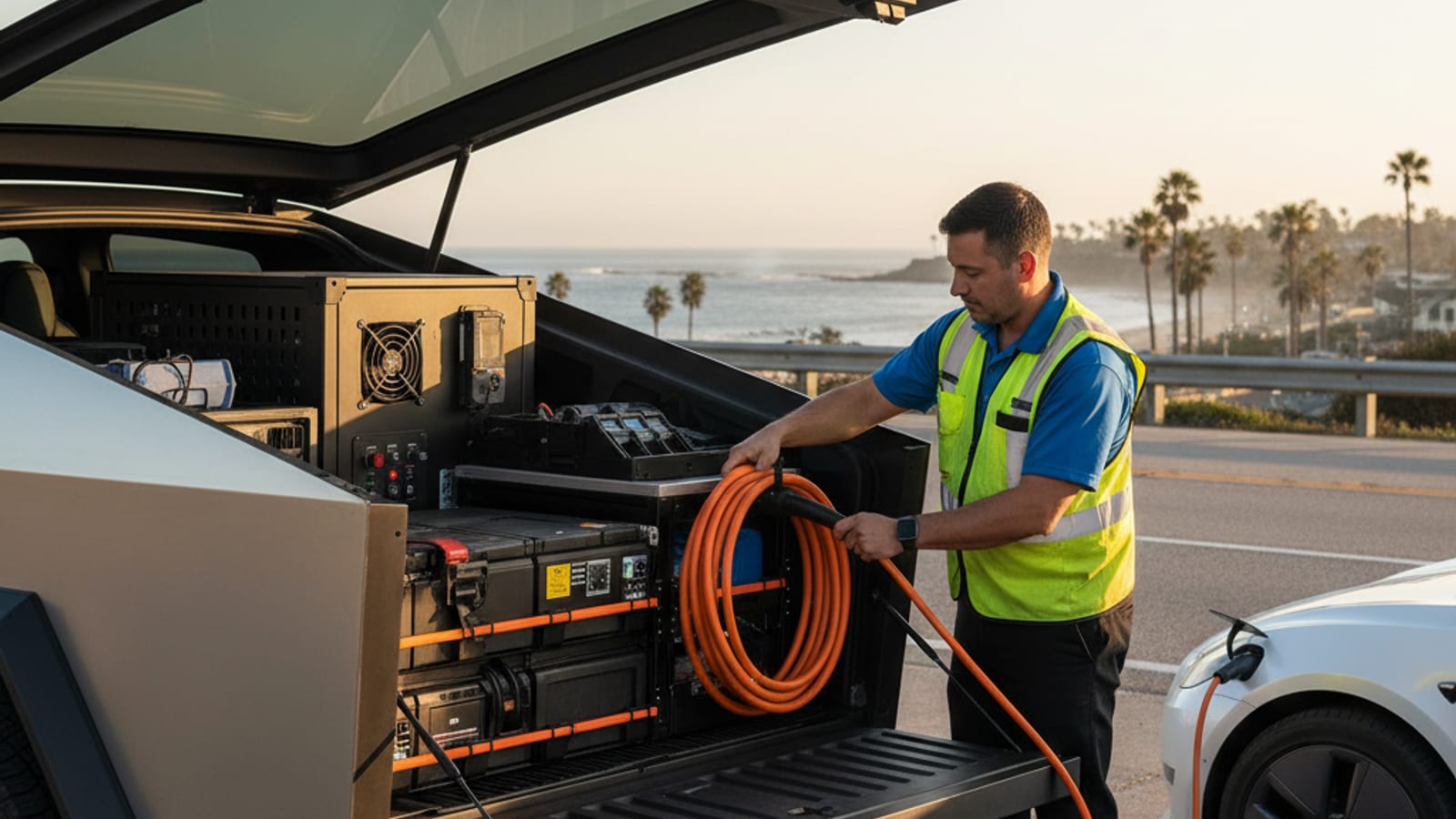
A mobile EV rescue rig is a van or pickup with a 240V Level 2 inverter in the bed, a stack of charging cables, a lithium jump pack, and a small stock of 12V batteries. Charge Pro SF does not own any of it. We are a referral line. We match drivers with independent operators who run these rigs and bill you directly. The pros we connect you with are licensed and insured.
This post walks through what a working rig carries, what each piece does, and what a rig cannot do. The list below is the working standard on a Bay Area EV rescue vehicle. Not every rig carries every piece. Operators quote before any work starts.
The 240V Level 2 source
The heart of a rescue rig is a 240V Level 2 inverter. Most rigs run a 9.6 kW unit, which adds roughly 25 to 30 miles of range per hour of charging. A typical session at the curb is 15 to 30 minutes, which adds 10 to 20 miles of range. That is enough driving room to reach a working DC fast charger, a home charger, or a garage outlet.
The 240V source runs off the rig’s engine or off an onboard battery bank. Engine-driven inverters are the most common on vans and pickups because they do not need a shore power connection. The operator pulls up, sets the parking brake, and starts the inverter. The cable unspools. The session begins.
The output is not a DC fast charge. A 9.6 kW Level 2 source is much slower than a 150 kW or 250 kW post. That is on purpose. The rig is a backstop, not a primary charging network. The goal is to put enough range in the pack to reach a real charger. The rig is not trying to fill the pack.
The cable set
A working rig carries the three plugs that cover the Bay Area fleet. NACS for Tesla. CCS for Hyundai, Kia, Ford, Rivian, Lucid, and most newer EVs. J1772 for older EVs and PHEVs. Adapters bridge the gap where a vehicle uses a different standard than the cable ends in.
The cable bundle includes a J1772 to Tesla adapter for older Model S and X cars in the Bay Area that still use the legacy plug. Newer Tesla cars have NACS as the native port. The adapter set is the operator’s choice. Drivers do not need to bring their own cable.
A rig that runs only NACS handles Tesla cleanly but cannot help a CCS car without an adapter. A rig that runs all three is the working standard on the Bay Area network. Charge Pro SF matches you with operators who carry the standard set.
The lithium jump pack
Every rig carries a lithium jump pack rated for 1000A peak. The pack wakes a dead 12V battery. A 12V that has been drained by a long sit, a failed post, or a flood of accessory load is the most common Bay Area roadside call. The jump pack costs less than a tow and gets the car awake without a service visit.
The jump pack goes on the front underhood jump terminals for Hyundai and Kia E-GMP vehicles, on the frunk pigtails for Tesla, or on the under-hood posts for Ford and Rivian. Each brand has a different access point. Operators know the access points for every major EV.
A set of gas-car jumper cables is not a substitute. The Hyundai service manual and the Tesla manual both warn against jumping from a running gas car. Voltage spikes from a running alternator can damage the body control module. A lithium pack is the right tool.
The 12V stock
Working rigs carry one or two common 12V batteries on board. The H6 and H7 group sizes cover most EVs. The 12V on a Tesla, a Hyundai E-GMP vehicle, and a Ford Lightning all share similar sizes.
A 12V that is more than four years old or has been deeply drained more than a few times does not recover. The operator can swap a 12V at the curb with a fresh unit. That saves the driver a service visit and gets the car back in service that day.
Operators quote a 12V swap before they start. The price is much less than a dealer service visit. The pros we connect you with are licensed and insured for the work.
The trailer hitch and the flatbed
Some rigs carry a trailer hitch or a small flatbed for vehicles that cannot take a charge or a jump. A Model S with a dead high-voltage pack, a Lucid with a battery fault, or any EV in a flood incident goes on the flatbed.
A flatbed is the right answer for a car that cannot be safely jumped or charged. Most Bay Area roadside calls do not need a flatbed. They need a jump or a Level 2 add. The flatbed is the backstop, not the default.
What a rig cannot do
A roadside rig cannot DC fast charge at 150 kW or 250 kW. The inverter on a working rig is 9.6 kW. That is enough for a backstop session, not a full refill.
A roadside rig cannot tow long distances at speed. Operators serve a regional radius. A flatbed across the Bay Bridge or over the Altamont is a different kind of dispatch.
A roadside rig cannot pull a car out of a ditch, a snowbank, or a flood. That work needs a heavy wrecker, not an EV rescue rig.
A roadside rig cannot program keys, clear fault codes, or perform software updates. Those are dealer or service-center work. The rig’s role is to wake the car and put enough range in it to reach one of those places.
What the rig does that the dealer cannot
The rig comes to you. A dealer or service center requires the driver to bring the car in. A roadside rescue rig meets the car at the curb, the garage, the parking lot, or the shoulder. That is the value of the Bay Area rescue network: response at the car, not a tow across town.
The rig also handles Tesla, Hyundai, Kia, Ford, Rivian, Lucid, and the rest on the same visit. A dealer may be brand-specific. A working rig is multi-brand by design.
What to expect when you call
Call Charge Pro SF at (415) 630-6268. The line answers every call. The operator on the other end takes the vehicle make and model, the location, the situation, and quotes before any work starts. The work covers every Bay Area city and community, from Pacifica to Brentwood and from San Mateo to San Jose.
Nobody on this line promises an arrival clock. Operators are independent. They quote a 12V jump, a Level 2 add, a 12V swap, or a flatbed tow depending on what the situation needs. The pros we connect you with are licensed and insured.
FAQ
How much range does a roadside Level 2 add?
A 9.6 kW Level 2 source adds roughly 25 to 30 miles per hour of charging. A typical 15 to 30 minute session at the curb adds 10 to 20 miles.
What plugs do rescue rigs carry?
NACS for Tesla. CCS for most newer non-Tesla EVs. J1772 for older EVs and PHEVs. Adapters bridge the gap between standards.
Can a roadside rig jump a Tesla 12V?
Yes. A working rig carries a lithium jump pack rated for 1000A peak. Tesla exposes front pigtails on most model years. The operator connects, waits 30 seconds, and the car wakes.
Can a roadside rig replace a 12V on site?
Yes, for most EVs. The operator quotes a 12V swap before they start. Common group sizes like H6 and H7 are usually on the truck.
Will the rig bill my insurance?
Most roadside services do not bill insurance directly. The operator bills you at the curb. You can submit the receipt to your insurer if your policy covers it.
Call (415) 630-6268 when the rig is what you need. The operator quotes the work before any cable goes on. Nobody on this line promises an arrival clock.