Tesla publishes a roadside help number for stranded owners. The number is national and routes through a third-party contractor network. Bay Area drivers report waits of several hours when service centers are slammed, and the contractor may or may not have the right tool for the situation. A local operator is a separate call with EV-specific equipment and same-day dispatch.
This post walks through the Tesla roadside number, the cases where the contractor dispatch works, and the cases where a Bay Area local operator is the better call.
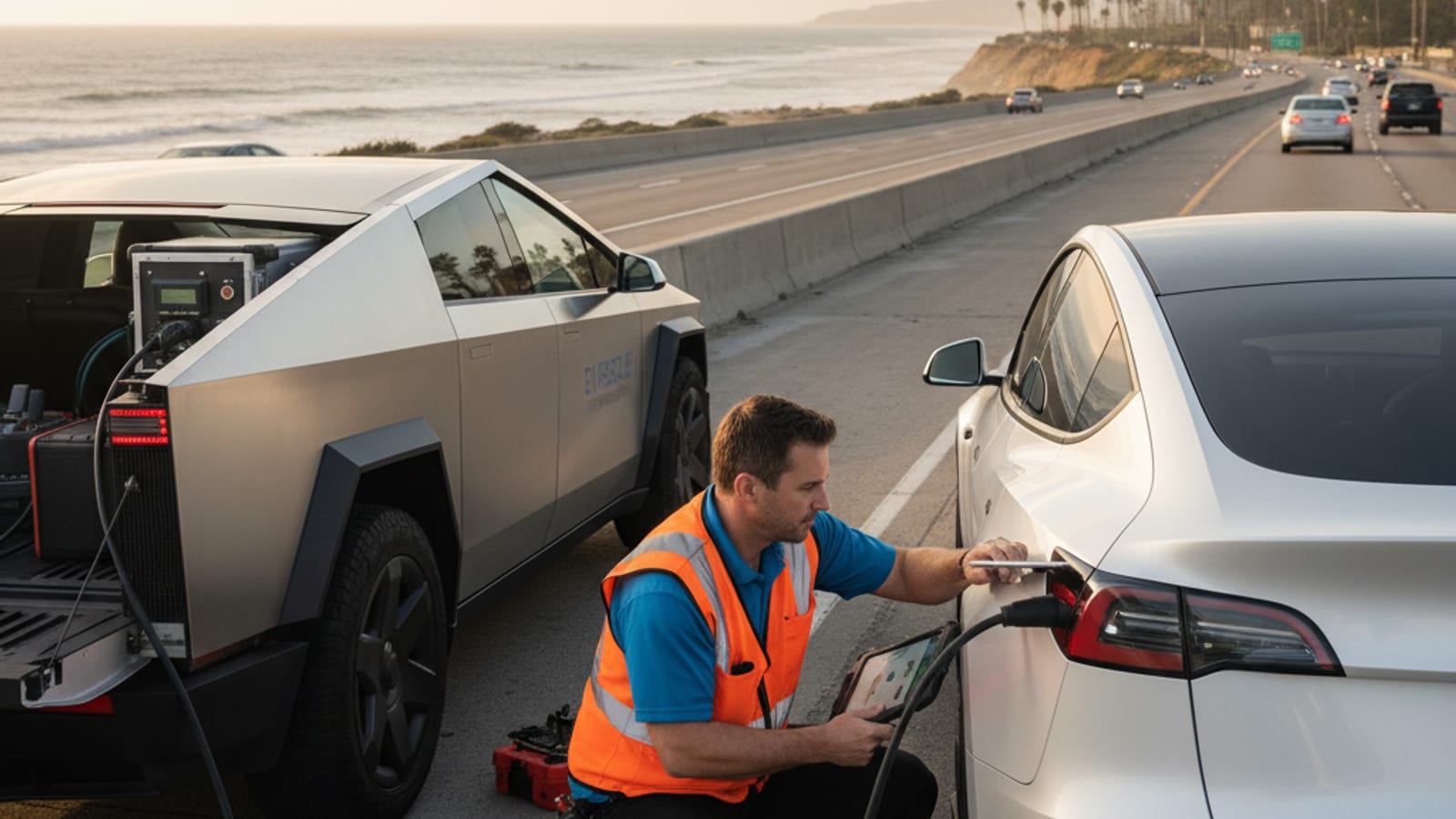
The Tesla roadside number
Tesla publishes the roadside number in the Tesla app under Service, then Roadside. The number is also on the Tesla website. The dispatcher takes calls every day. The dispatcher asks for the location, the situation, and the VIN. The dispatcher then routes to a contractor network that Tesla manages.
The dispatch is supposed to be fast. In practice the contractor network is bottlenecked through the same call centers that handle Tesla mobile service appointments. Bay Area drivers report waits of several hours when service centers are slammed. The contractor brings what the dispatch described: a tow truck, a jump box, a tire kit, or a lockout tool.
The wait is the most common Bay Area complaint. The wrong tool is the second most common.
When the Tesla number is the right call
The Tesla number is the right call when the situation fits the contractor’s standard tools and the ETA is reasonable.
A flat tire on 101 with a Tesla-spec wheel and tire. The contractor arrives with the right tire and the work is covered under the included window. The wait is the only variable.
A lockout with a dead key fob. The contractor has the lockout tool and the work is covered.
A 12V that needs a jump and the contractor is bringing a lithium jump pack. Confirm with the dispatcher before you accept the dispatch that the contractor is bringing a lithium jump pack, not gas-car jumper cables.
These are the cases where Tesla’s contractor network is the right answer. The dispatch is covered under the included window, the tool fits the situation, and the ETA is reasonable.
When the local backup is the better call
A local operator is the better call when the situation needs a specific tool the contractor network may not carry, or when the ETA is too long.
A dead pack that needs range at the car. Tesla’s dispatch covers a tow to a charger, not a Level 2 add at the car. A local operator brings a 240V Level 2 source to the Tesla and adds 10 to 20 miles of range at the curb.
A 12V that needs replacement on site. Tesla’s dispatch covers a jump, not a swap. A local operator can swap the 12V at the curb with a compatible unit.
A stranded Tesla in a Coastside shoulder, a Tri-Valley cul-de-sac, or an East Contra Costa dead end. The wait for a Tesla contractor in those areas is much longer than the wait for a local operator.
A failed public post session that left the cable locked. Tesla’s dispatch covers a tow, not a manual release. A local operator jumps the 12V first, then the cable releases cleanly.
In each case the local operator arrives with EV-specific equipment and quotes before any work starts. The pros we connect you with are licensed and insured.
How to call a local operator
Call Charge Pro SF at (415) 630-6268. The line answers every call. The operator on the other end takes the vehicle make and model, the location, the situation, and quotes before any work starts.
Nobody on this line promises an arrival clock. Operators are independent. They quote a 12V jump, a Level 2 add, a 12V swap, or a flatbed tow depending on what the situation needs. The pros we connect you with are licensed and insured.
The work covers every Bay Area city and community, from Pacifica to Brentwood and from San Mateo to San Jose. Confirm with the operator at the time of the call what the work covers and what the bill looks like.
Why drivers keep both numbers
Bay Area drivers keep both numbers because the two services fit different situations. The Tesla number is the right call for covered emergencies with standard tools. The local number is the right call for same-day dispatch with EV-specific equipment.
A driver who only has the Tesla number waits hours for the wrong tool. A driver who only has the local number misses the covered emergencies that Tesla handles for free. Both numbers on speed dial covers both cases.
What the local operator brings that the Tesla contractor may not
A working Bay Area EV rescue rig carries a 240V Level 2 inverter, a stack of NACS, CCS, and J1772 cables, a lithium jump pack rated for the right body control module, and a small stock of 12V batteries for on-site swaps.
The rig is multi-brand by design. Tesla, Hyundai, Kia, Ford, Rivian, Lucid, and the rest all see the same equipment set. A contractor that Tesla dispatches is typically dispatched based on the reported situation, not the brand.
The result is that a Tesla-specific call may go to a contractor with gas-car jumper cables, not a lithium jump pack. The contractor may not know the Tesla front pigtails sit under the tow-eye cover. The driver waits an hour for a contractor who arrives with the wrong tool. A local operator arrives with the right tool.
How to choose
The choice is the same in every stranded case. Ask what tool the responder is bringing. Ask how long the wait is. Ask what the bill looks like.
A Tesla dispatch with a confirmed contractor carrying a lithium jump pack and an ETA of under an hour is a fine answer. A Tesla dispatch with a contractor carrying gas jumper cables and an ETA of “later today” is a sign to call a local operator.
A local operator with the right tool, a quote in writing, and a bill at the end is a different kind of value. The choice depends on the situation.
FAQ
What is the Tesla roadside number?
The number is in the Tesla app under Service, then Roadside, and on the Tesla website. Confirm current terms with Tesla at the time of the call.
Does Tesla roadside run all day?
Tesla publishes a roadside line that takes calls every day. The line is staffed. The dispatch that follows is a separate operation.
How long does Tesla roadside take in the Bay Area?
Confirm the ETA at the time of the call. Bay Area drivers report waits of several hours during peak times.
Does Tesla roadside bring a Level 2 charger?
No. Tesla roadside dispatches a contractor with a jump pack or a tow truck. A Level 2 add at the car is a local operator service.
When should I call a local operator instead?
When you need a Level 2 add at the car, a Tesla-specific 12V swap, or a quick fix that does not require a dealer visit. Charge Pro SF matches you with operators who carry the right tool.
Call (415) 630-6268 when you need a local operator. The line quotes before any work starts. Nobody on this line promises an arrival clock.