A Rivian R1T or R1S charge port can refuse to release the cable after wet weather, a long sit, or a failed public post session. The latch holds the cable by a small pin. Water in the latch recess can freeze the pin against the connector. A 12V that has dipped low cannot fire the release solenoid. Either way, the cable stays locked. The fix is usually a manual release at the port or a 12V wake. A local operator handles both on site.
This post walks through the order to try, the order to skip, and what a local operator does when the manual release is not enough.
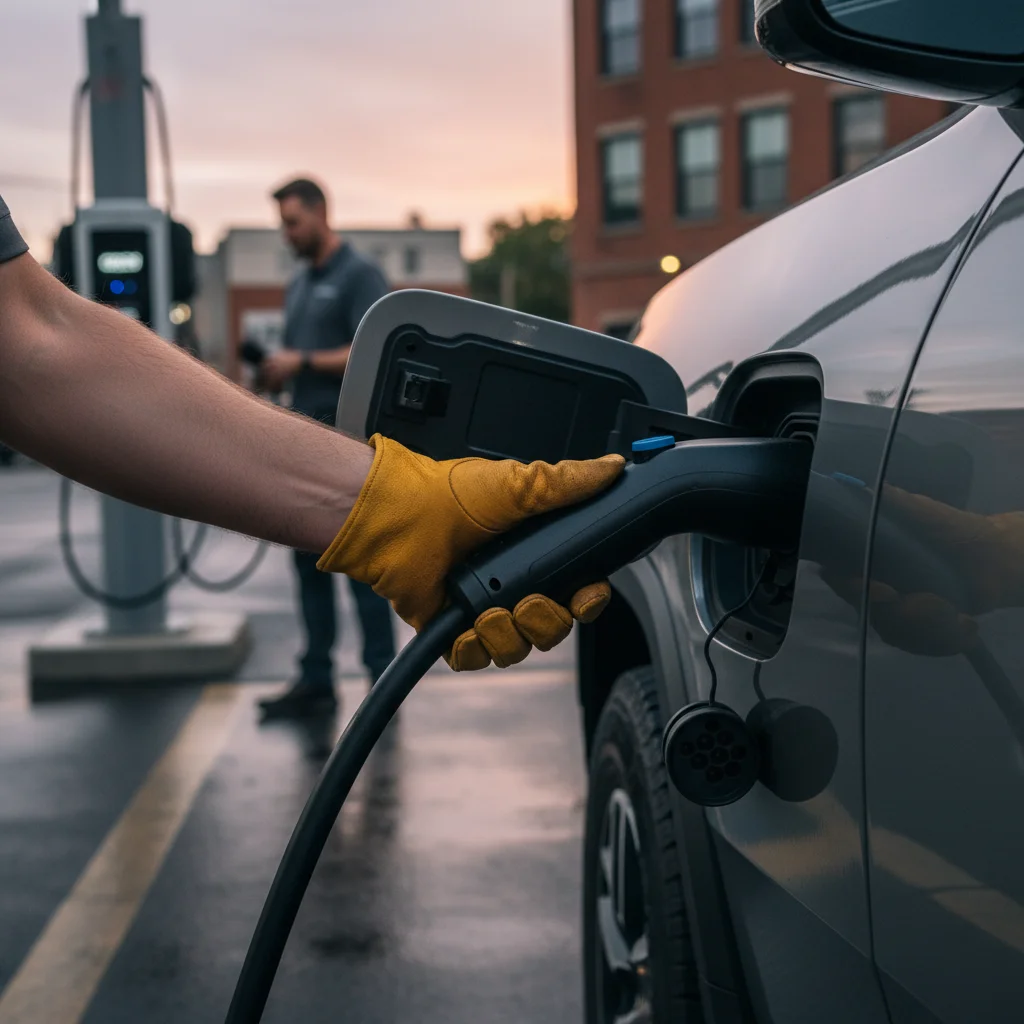
Why the port sticks on a Rivian
The Rivian R1T and R1S use a CCS charge port on the driver’s side front fender. The latch holds the cable by a pin. Water in the recess freezes the pin against the connector. Cold morning rain on a Daly City or Pacifica curb is the typical pattern.
A low 12V is a separate cause. The Rivian runs the wake logic off a 12V battery that lives under the hood. If the 12V is dead, the latch solenoid cannot pull. The pack is fine. The car cannot wake to use it.
A failed public post session can leave the cable locked too. The post holds the cable locked until the session ends cleanly. End the session on the post’s screen, then try the release.
The order to try before calling
Three steps in this order, then call.
Lock the truck. Walk ten paces away. Walk back. Press unlock, then press the door handle to wake the truck. The cycle resets the latch state on most R1T and R1S model years. Wait 30 seconds before trying again.
Stop the charge session through the post first, then try the release. End the session on the post, not the truck. Many posts hold the cable locked until the session ends cleanly. Then pull the connector.
Use the manual release. The Rivian exposes a small access panel at the front of the charge port. Open the panel with a flat tool or your key. Pull the release tab. The cable should release immediately.
If the manual release does nothing, do not pry at the latch with a screwdriver. The plastic housing breaks, and the repair is a service center visit, not a roadside fix. Move to the next step.
When the manual release is not enough
The most common reason the manual release fails is that the truck cannot wake. The 12V is dead, and even the manual release signal has to pass through the body control module. In that case the latch stays locked because the body module is asleep.
A local operator handles this case differently than a tow. They arrive with a lithium jump pack, jump the 12V through the Rivian under-hood posts, and then the cable releases cleanly. The 12V access on the R1T and R1S sits under the front hood with a red positive post and a marked ground.
If the 12V wakes up the truck but the cable still does not release, the latch itself is jammed. That is the rare case where a flatbed is the right call. A local operator can quote a flatbed tow to your home charger or a service center.
What about charging time after release
Once the cable is out and the 12V is alive, the question becomes whether to charge or call. The answer depends on what you have left.
If the app shows a healthy pack and you were topping off, drive home or to a different post. Wet Bay Area weather is a 20 minute reset. Many posts work again after a hard reset.
If the app shows you are low, the operator that freed the cable can also add a Level 2 session on site. The Rivian takes CCS. The operator brings a 240V source and a CCS cable. A typical session adds 10 to 20 miles, which is enough driving room to reach a working DC fast charger, a home charger, or a garage outlet. Charging time is 15 to 30 minutes.
Three failure modes that look the same from the curb
The truck shows the cable as connected. The cable will not release. The dash may show a charge fault or a port fault. Three failure modes create the same scene.
A wet or frozen latch. Try the manual release. If it works, drive away.
A dead 12V. The manual release does nothing because the body module is asleep. The operator jumps the 12V and the cable releases.
A misaligned cable on a worn public post. Wiggle the connector gently while pulling the manual release. If the post is the issue, switch to a different stall on the same site or move to a different site.
Mixing them up is how people request a tow that did not need to happen. The 12V jump and the manual release solve two of the three without a flatbed.
Why Bay Area public posts see this more
The Bay Area has a high EV density and a moderate public post density. Rivian is overrepresented around Mountain View and Palo Alto because of the company’s proximity. Posts in those cities see heavy rotation. Atmospheric-river rain spikes handshake failures.
Atmospheric-river rain soaks the latch. A cold morning freezes the thin water film. The driver returns to a cable that will not release. The fix is the manual release tab, and the longer-term answer is keeping the 12V awake so the latch can fire.
Coastal fog around Pacifica and Half Moon Bay adds a different layer. The salt air accelerates corrosion on the connector pins. A driver who charges at the same post every week may find the third charge is the one that fails.
A note on adapters and the post port
The Rivian R1T and R1S use CCS at the port. Newer model years support NACS with an adapter. If you carry a NACS adapter in the gear tunnel and use it on a Tesla Supercharger post, the manual release still works the same way. The latch geometry is the same regardless of which connector is seated.
Charge Pro SF does not invent connector geometry. We connect drivers with operators who carry the standard adapters and the right jump pack.
FAQ
Where is the Rivian manual charge port release?
At the front of the charge port, behind a small panel. Open the panel and pull the release tab.
Will a dead 12V keep the Rivian cable locked?
Yes. The body control module has to be awake for the latch to fire. A dead 12V makes the latch stay locked even after the manual release.
Can I yank a stuck cable out?
No. Yanking can break the latch pin and the connector housing. Use the manual release tab first.
Does Rivian cover this under warranty?
Latch failures that are manufacturing defects are typically covered. A frozen latch from weather exposure is not. Confirm current terms with Rivian before you assume warranty applies.
What if the post itself is broken?
End the session on the post, not the truck. Try a different stall on the same site. If the site is fully down, drive to a different site on your remaining range or call a local operator.
Call (415) 630-6268 when the manual release is not enough. The operator quotes a 12V jump or a Level 2 add at the truck. Nobody on this line promises an arrival clock.