A Honda Prologue that sat two weeks often won’t go Ready. The 12V auxiliary battery is the usual cause. The Ultium pack can still hold plenty of energy. The car just can’t close the contactors that connect it.
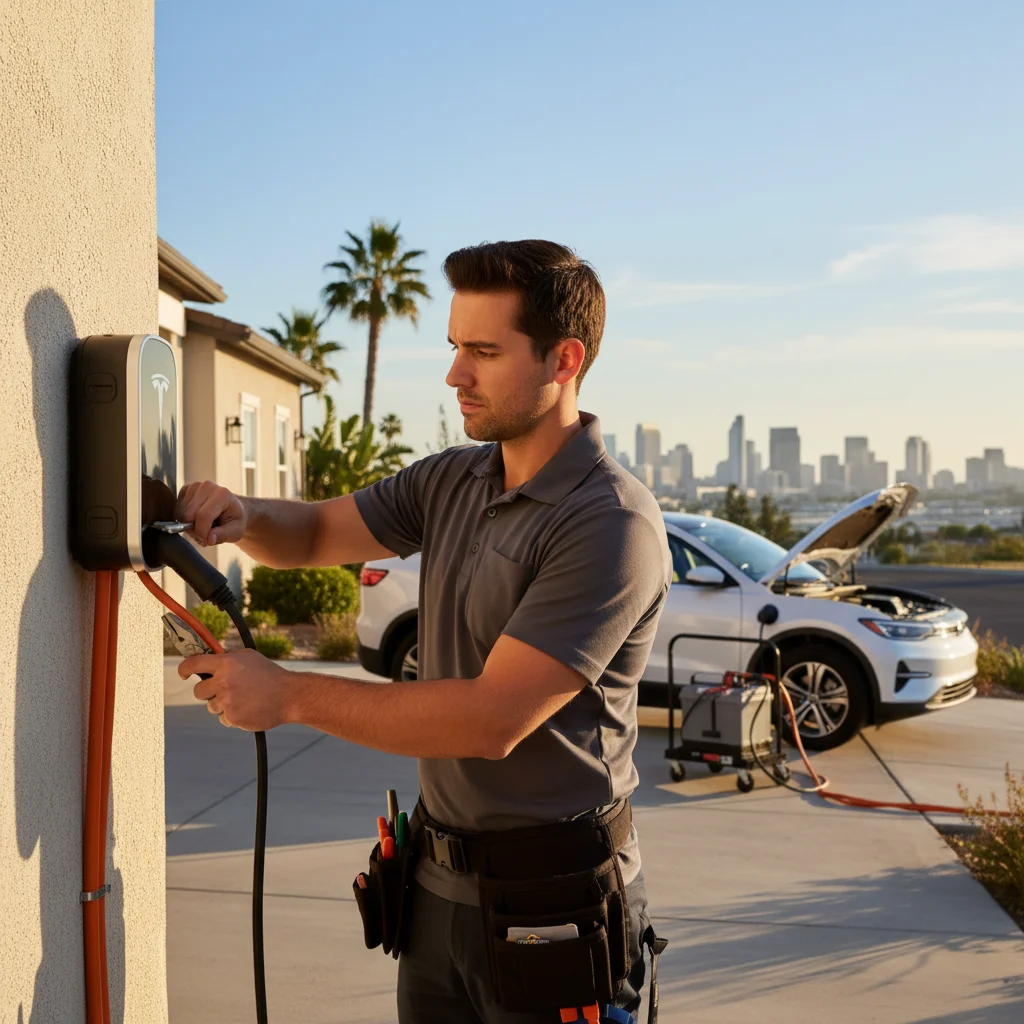
That sit happens all over the Bay Area. It follows a week at SFO or a San Bruno garage. It also follows street parking in San Francisco while you fly. You come back, press the fob, and nothing happens. The charge door stays shut and the dash stays black. This isn’t a failed traction pack yet. It’s a small 12V that kept modules alive until it couldn’t.
What “won’t start” looks like on a Prologue
This Honda doesn’t crank, and there’s no starter motor to hear. Ready mode never appears. Cabin lights stay dim, or they stay off. The fob that worked last month now needs to touch the pillar. You press the brake and hear no click, no relay, and no wake.
A dim dash with no Ready usually means a weak 12V. A fully dark car usually means that battery is flat. Start there before you call a dealer tow. The Prologue keeps the 12V under the hood, like a gas Honda. Labeled jump posts sit next to it, and those posts are what you jump. Leave the orange high-voltage cables alone.
The 12V is the switch, not the pack
The traction pack stores the miles. The 12V runs the electronics. Locks, the cluster, and the charge-port latch all sit on that small battery. So do the modules that close the high-voltage contactors. When the 12V drops too low, those contactors stay open. A pack that still shows plenty of range doesn’t help. The car still acts dead.
Last week’s battery icon can look fine. The car still won’t wake until the 12V comes back. For the longer explanation, see what happens when an EV 12-volt battery dies.
The long sit is how Bay Area Prologues die
San Francisco’s housing is old. ACS 2019-2023 puts 77.2 percent of the city’s structures at 1979 or earlier. Daly City sits at 78.7 percent. San Bruno sits at 81.9 percent. Oakland is 77.9 percent. Berkeley is 80.8 percent. A lot of those buildings mean street parking or a shared garage. Many of those stalls have no dedicated 240-volt outlet. The car sits unplugged, and the 12V keeps feeding modules. After a week or two, the fob is quiet.
You also see this after air travel. SFO publishes an EV charging page at flysfo.com/parking/electric-vehicle-charging. Stall counts and rates weren’t confirmed in this research pass. Check that page before you leave the car. Airport sites don’t cover a Prologue that won’t wake after a week. That 12V check is on you when you get back. Peninsula sit details are in EV roadside help in San Bruno after a long stay at SFO.
SJC’s parking page lists Economy, Hourly, Daily, and a cell-phone waiting area. EV charging isn’t shown on that page. OAK lists Economy, ValuPark, Hourly, and the Park & Call zone. Confirm charging on the airport site before you park. Either way, a dark Prologue after a trip is still a 12V job first.
Inland heat makes the same sit harder. 1961-1990 NWS normals put San Francisco’s July average high at 71.5 F. Livermore’s July average high is 89.7 F. Antioch’s is 90.4 F. Gilroy’s is 88.3 F. San Jose runs around 82 F. A Prologue that sat in Livermore or Antioch in July is a 12V suspect first. A foggy Pacifica curb is gentler. A long sit still drains the auxiliary battery there too.
South Bay campus lots write the same story. A Prologue in Sunnyvale or Santa Clara can sit all week. The pack can look fine. The 12V still sags.
Checks you can run from the curb
Work through these before you assume the pack failed.
The dash and cabin lights are dim or fully dark. The fob range has been shrinking for weeks. The car sat more than two weeks without a drive or a plug. The charge-port door ignores the button. The doors won’t unlock on the fob. The brake pedal produces no click.
If a phone app still shows a healthy pack on a dark car, that’s the 12V. If the dash is bright and range is near zero, that’s an empty pack instead. Those two problems need different help.
How to jump the Prologue 12V
Pop the hood if you can. A fully dead car may freeze the interior hood release. Your owner’s manual has the emergency path for your year. Find the labeled positive and negative jump posts. Use a portable 12V pack or a gas donor car. You’re waking the small battery. You’re not charging the Ultium pack.
Stay on the labeled 12V points. Never clip onto orange high-voltage cables. Don’t try to pull energy from another EV’s drive battery. Once the dash lights, leave the car awake a few minutes before you disconnect. Then drive it or plug it in so the car can refill the 12V.
If it dies again after a short sit, the 12V is finished. Another jump is a delay, not a fix. An operator can replace that battery on site. For steps that work on any EV, use how you jump-start an EV on the 12V only.
Ultium cousins share the same no-start
The Prologue sits on GM’s Ultium platform. The Acura ZDX is the mechanical twin. They share the 12V dependency and the full-pack dead-car misread.
Use Acura ZDX won’t start: the 12V checks to run first. Then see Chevy Blazer EV won’t start: causes and the 12V fix. A charge session that won’t begin, with a live dash, is a different Ultium fault. Try another stall or let the car cool, then retry.
A stuck charge connector after a session is its own problem. Don’t yank the handle. Check the owner’s manual release, then call if it still won’t unlatch.
When Ready works and you still can’t go far
Sometimes the Prologue wakes and the problem is range. The dash is bright, Ready is on, and miles sit at or near zero. That’s an empty traction pack, not a 12V. You need energy in the port.
Charge Pro SF is a referral line. We match you with independent local operators. We don’t own trucks, and we don’t employ technicians. The pros we connect you with are licensed and insured. The operator quotes you before work starts and bills you directly. The rig they bring is a 240V Level 2 source. It uses a CCS or J1772 adapter on a Prologue. Typical add is 10 to 20 miles of range. That’s in 15 to 30 minutes of charging. That’s charging time, never an arrival time.
That’s enough to reach a public stall or get home on a short hop. It isn’t a full fill. BART publishes Level 2 plugs at Warm Springs / South Fremont and at Lafayette. Confirm they’re working before you count on them. For the empty-pack path, see out-of-charge recovery. For Honda and every other non-Tesla, see non-Tesla EV rescue in the Bay Area.
If the Prologue dies on a freeway shoulder
Stopping on a freeway is restricted. California Vehicle Code 21718 has a disabled-vehicle exception. You can stop when the car can’t move and you’ve summoned help. California Vehicle Code 22651(f) allows removal after more than four hours. That applies on a full-access-control freeway when the car can’t move under its own power. Call for help, then stay out of traffic.
This comes up on I-880, US-101, and I-580 over the Altamont. The Freeway Service Patrol is a partnership of MTC, CHP, and Caltrans. Hours on 511.org are Monday to Friday, 6 to 10 AM and 3 to 7 PM. Dial 511 and say “Freeway Assist,” or use a call box. The MTC page lists a free gallon of gas, jump-starts, and radiator refills. It doesn’t mention electric vehicles or out-of-charge help. Don’t wait on FSP for a mobile charge.
Outside those hours, calls go to the CHP Rotation Tow Program. You don’t pick the vendor. Caltrans District 4 covers highway conditions for the nine Bay Area counties.
Who to call when the 12V won’t hold
Tell the operator what the dash is doing. Dark car after a sit is a 12V jump or a replacement. Live dash and zero miles is a Level 2 charge. A charge port that won’t latch is a different job. The operator prices the work. Charge Pro SF doesn’t.
Call (415) 630-6268 when you’re ready for a local operator. Describe the sit, the dash, and where the car is. We connect Honda Prologue drivers across the Bay Area.
Frequently asked questions
Why won’t my Honda Prologue start if it’s charged?
A full traction pack doesn’t wake the car by itself. The 12V powers the modules that close the high-voltage contactors. If that small battery is dead, Ready never comes. The car may not unlock or charge either. A 12V jump is the first fix to try.
Can I jump-start a Honda Prologue like a gas car?
You jump the 12V, never the high-voltage pack. The Prologue has labeled under-hood posts for this. A portable jump pack or a gas donor car connects there. Stay off the orange cables. If the car is fully dead, use the manual’s hood-release steps first.
Is the Honda Prologue the same as the Acura ZDX or Blazer EV?
They share GM’s Ultium architecture. The ZDX is the Prologue’s twin. The Blazer EV and Equinox EV use the same 12V dependency and similar charging behavior. A 12V jump that works on one of those cars is the right first move. It applies to a Prologue too.